THE CLASSIC COLLECTION✦The art of fictionCLASSIC FREE BOOKS
The art of fiction
Walter Besant
THE CLASSIC COLLECTION · 1892
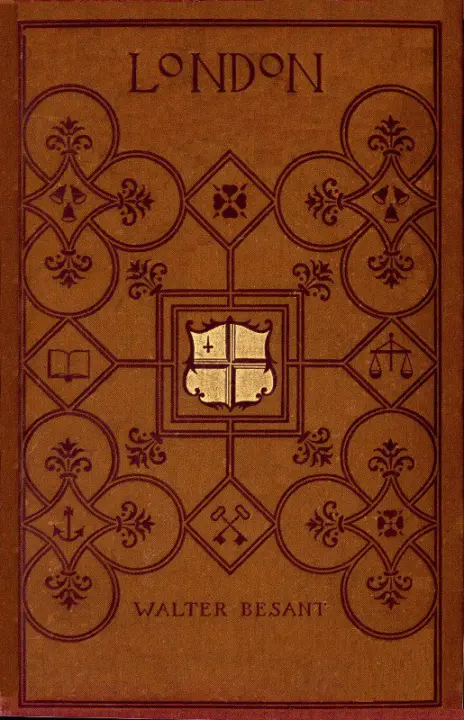
"London" by Walter Besant is a historical account, written in the late 19th century. The work aims to depict the city of London through vivid snapshots that reflect its streets, buildings, and especially its citizens engaging in various aspects of daily life, from trade to celebrations. Besant intends to delve into the lives of ordinary Londoners across different periods, offering readers a unique perspective on the social fabric of the city. The beginning of "London" introduces the author's intention to create a comprehensive portrayal of the city, highlighting the need to capture the essence of its history and the lives of its people. Besant references historical authorities such as Gildas and the Anglo-Saxon Chronicle to explain the context of London's evolution following the departure of the Romans. He elaborates on the city's topographical significance and its dramatic changes, indicating continuity in life despite conquests and societal shifts. Overall, the opening sets the stage for an in-depth exploration of London's transformation through various historical phases and its impact on the everyday lives of its inhabitants.
Introduction adapted from the source catalogue; source summaries may be automatically generated.
Free to read · English · 119,737 words · No account needed
MAKE TIME FOR A GOOD BOOK
On by default. Untick to stop anonymous reading totals. Each page counts after 10 seconds in view. How this works.
Anonymous counting is on unless you have switched it off.
-- commercial centre of the world, temp. Elizabeth, 293
-- conquest of, by the men of Essex, compared with that of Jerusalem
by Titus, 40
-- conversion of, A.D. 604, 45
-- craftsmen of, 215
-- described by William Fitz-Stephen, 48
-- desolate state of, after the Roman period, 34
-- drinking and fires the pests of, 52
-- found deserted by the East Saxons, 34
-- mediæval, description of, 157, 185
-- merchant generally a gentleman, 200
-- municipal history of, 91
-- not mentioned in Anglo-Saxon Chronicle, 12
-- population of, temp. Richard II., 49
-- rebuilding of, after Great Fire, 398
-- Saxon and Norman, described, 92
-- veritable mother of saints, 45
London Bridge, chapel on, 78
-- -- first stone, 77
-- -- songs on, 81
Londoners in the time of Elizabeth, 278
Long Bowstring-makers' Company, 454
Loriners' Company, 454
Mail-coaches, 464
Malpas, Philip, 238
Manners, City, in time of Charles II., 407
Manny, Sir Walter, 120
Matilda, Queen of Henry I., 65
-- wife of King Stephen, founds St. Katherine's by the Tower, 65
Maurice, Bishop, 53
May-day in the City, 231
May Fair, 457
May-pole, the, 332
Mediæval furniture, 181
-- London, description of, 157
-- names, survival of, 19
Megusers' Company, 453
Mellitus, first Bishop of London, 39
Mercers' Chapel, 142
Merchant adventurers, the, 295, 296
-- London, generally a gentleman, 200
-- Taylors' School, 303
Misrule, feast of, 309
"Mithridate" water, 473
Mitre Tavern, 351
Monastery towns grow rapidly and prosper, 46
Monk in Chaucer, 150
Moorfields, people camped in, after the Great Fire, 399
More, Sir Thomas, and Crosby Hall, 170
Morris-dancing, 233
Mughouse, a kind of music-hall, 480
"Mumpus," the, 416
Municipal London, history of, 91
Mystery plays, 94
Nennius, 1
New Abbey, 133
-- -- pulled down, 263
Newspapers about 1750, 465
Nobility, residences of, in City, 177
Norman House, description of, 86
-- London, monuments of, 52
Northumberland House, 288
-- -- site originally of Hospital of St. Mary Rounceval, 141
Nunneries in Saxon times, 93
Old Jewry, branch of the Fratres de Saccâ established in, 139
"Oxford Clerk" in Chaucer, 150
Pads, 415
Pageants, City, 224
-- Elizabethan, 305
Palaces of the nobility in the City, 174
Papey College, 144
Pardon Church-yard, 121
"Pardoner" in Chaucer, 153
Parish organization in time of George II., 439
Patten-makers' Company, 454
Pattens, 484
Pecock, Reginald, Bishop of Chichester, 194
Pembroke, Earl, and Baynard's Castle, 166
Pepys' Diary, 417
Pepys on the Great Fire of London, 395
-- on the Plague, 377
Perranazabuloe Church, 75
Pewterers' Company, 454
Philippa, Queen, a benefactor of St. Katherine's by the Tower, 66
"Philo Puttonists," 415
Philpot, Sir John, 190
Picard, Sir Henry, 179
Pilgrims, 57
-- consecration of, 60
-- office of, 58
Pillory, the, 247
"Pimpinios," 415
Plague, the, 376
-- at Astrakhan in 1879, 387
-- at Marseilles in 1720, 387
-- Daniel Defoe on, 377
-- loss caused to trade by, 384
-- Pepys on, 377
-- remedies for, advertised, 408
-- water, 473
Plagues, 376
-- of London, 120
Plagues of 1603 and 1625, 387
Plantagenet London, religious houses the most conspicuous feature of, 107
Poisoning, men boiled and women burned for, 318
Population of London according to Fitz-Stephen, 84
Post-office rates about 1750, 464
Prentice, London, temp. Charles II., 414
Prices of food about 1750, 462
-- -- in time of Charles II., 462
Your reading position is saved on this browser. Take it to another device with a library code. Reading pages adapt to text, rather than matching a printed edition.
Walter Besant
Walter Besant

Walter Besant

Walter Besant
BEHIND THE BOOK
This eBook is for the use of anyone anywhere in the United States and most other parts of the world at no cost and with almost no restrictions whatsoever. You may copy it, give it away or re-use it under the terms of the Project Gutenberg License included with this eBook or online at www.gutenberg.org. If you are not located in the United States, you will have to check the laws of the country where you are located before using this eBook. Read the source licence.
The original source file, including credits and licence, is retained by this library. Request an original-format copy at no charge. Please include the book title and Project Gutenberg identifier #45752.
KEEP YOUR CURIOSITY GOING
Cécile Tormay

Moritz Busch
John L. Ransom
Frances Wright
Cécile Tormay

Mabel Potter Daggett