THE CLASSIC COLLECTION✦The art of fictionCLASSIC FREE BOOKS
The art of fiction
Walter Besant
THE CLASSIC COLLECTION · 1892
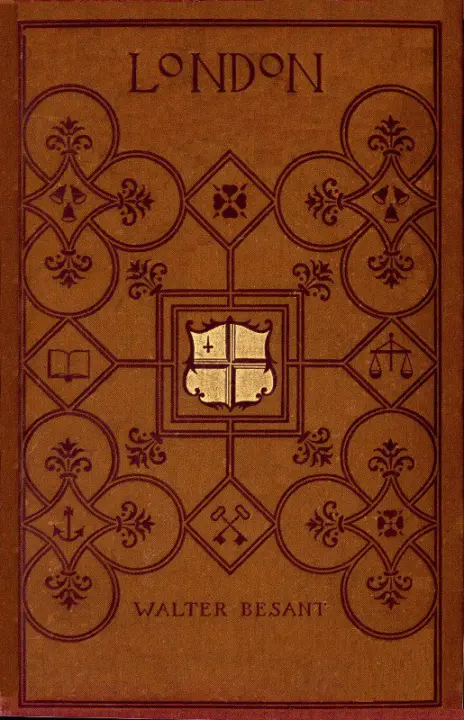
"London" by Walter Besant is a historical account, written in the late 19th century. The work aims to depict the city of London through vivid snapshots that reflect its streets, buildings, and especially its citizens engaging in various aspects of daily life, from trade to celebrations. Besant intends to delve into the lives of ordinary Londoners across different periods, offering readers a unique perspective on the social fabric of the city. The beginning of "London" introduces the author's intention to create a comprehensive portrayal of the city, highlighting the need to capture the essence of its history and the lives of its people. Besant references historical authorities such as Gildas and the Anglo-Saxon Chronicle to explain the context of London's evolution following the departure of the Romans. He elaborates on the city's topographical significance and its dramatic changes, indicating continuity in life despite conquests and societal shifts. Overall, the opening sets the stage for an in-depth exploration of London's transformation through various historical phases and its impact on the everyday lives of its inhabitants.
Introduction adapted from the source catalogue; source summaries may be automatically generated.
Free to read · English · 119,737 words · No account needed
MAKE TIME FOR A GOOD BOOK
On by default. Untick to stop anonymous reading totals. Each page counts after 10 seconds in view. How this works.
Anonymous counting is on unless you have switched it off.
The still-room was of the greatest importance to the housewife. She no longer distilled strong waters for cordials, but she made her preserves and her pickles. She made rose-water, and lavender-water, and hysterical-water; Plague-water, angelica-water, and all kinds of wonderful waters, whose names and virtues are now quite forgotten. The horror of the Plague, which survived to a hundred years ago, is shown by the extraordinary complications of the Plague-mixture. We are to take a pound each of twenty roots, sixteen flowers, nineteen seeds; we are to take also an ounce each of nutmeg, cloves, and mace; we are to shred the flowers, bruise the berries, and pound the roots and spices; to these we must add a peck of green walnuts; after mixing all together they must be steeped in wine lees; after a week they must be distilled.
She also made cherry-brandy, currant-gin, damson-brandy, and certain medicinal wines or confections, of which the following is a specimen. It is called Gascony wine. It comforts the vital parts, cures dropsy, and keeps the old alive. Yet we have neglected so sovereign a medicine!
"Take ginger, galingale, cinnamon, nutmeg, grains of paradise, cloves bruised, fennel seed, caraway seeds, origanum, one ounce each. Next, take sage, wild marjorum, pennyroyal, mint, red roses, thyme, pellitory, rosemary, wild thyme, camomile, lavender, one handful of each. Beat the spices small, bruise the herbs, put all into a limbeck with wine for twelve hours; then distil."
The great thing was to have as many ingredients as possible. Thus the Plague-water took fifty-nine ingredients; the famous water called "Mithridate" took forty-six; and the Venice treacle, sixty-two. When they were once made, they were warranted to "rectify and maintain the body, clarify the blood, surfle the cheek, perfume the skin, tinct the hair, and lengthen the appetite."
The London citizen of the lower class never called in a physician unless he was in immediate danger; the herbalist physicked him, and the wise woman. Very often his own wife was an abyss of learning as to herbs and their properties; the bone-setter belonged to a distinct branch of the medical profession. There were apothecaries who prescribed as well as sold drugs. For instance, early in the century, one Dalmahoy kept a shop on Ludgate Hill, where he sold, among other things, drugs, potions, electuaries, powders, sweetmeats, washes for the complexion, scented hair-oil pomades, dentifrices, love charms, Italian masks to sleep in, spermaceti salt, and scammony squills. And the doctor who wished to attract the confidence of citizens found a little stage management useful. He wore black, of course, with a huge wig; he carried a gold-headed cane, with a pomander box on the top; he kept his hands always in a muff, so that they might be soft, warm to the touch, and delicate; he hung his consulting-room with looking-glasses, and he littered it with vials; he had on the mantel-shelf a skull, and hanging to the wall the skeleton of a monkey; on his table stood a folio in Greek; and he preserved a Castilian gravity of countenance. Besides the physician, the apothecary, the herbalist, and the wise woman, there was the barber-surgeon. His pole was twined with colors three--white, red, and blue. But I know not how long into the century the alliance of surgeon and barber continued.
Your reading position is saved on this browser. Take it to another device with a library code. Reading pages adapt to text, rather than matching a printed edition.
Walter Besant
Walter Besant

Walter Besant

Walter Besant
BEHIND THE BOOK
This eBook is for the use of anyone anywhere in the United States and most other parts of the world at no cost and with almost no restrictions whatsoever. You may copy it, give it away or re-use it under the terms of the Project Gutenberg License included with this eBook or online at www.gutenberg.org. If you are not located in the United States, you will have to check the laws of the country where you are located before using this eBook. Read the source licence.
The original source file, including credits and licence, is retained by this library. Request an original-format copy at no charge. Please include the book title and Project Gutenberg identifier #45752.
KEEP YOUR CURIOSITY GOING
Cécile Tormay

Moritz Busch
John L. Ransom
Frances Wright
Cécile Tormay

Mabel Potter Daggett