THE CLASSIC COLLECTION✦The art of fictionCLASSIC FREE BOOKS
The art of fiction
Walter Besant
THE CLASSIC COLLECTION · 1892
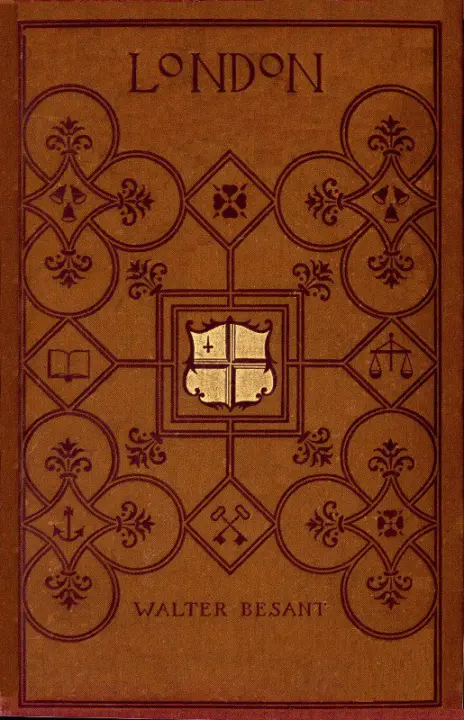
"London" by Walter Besant is a historical account, written in the late 19th century. The work aims to depict the city of London through vivid snapshots that reflect its streets, buildings, and especially its citizens engaging in various aspects of daily life, from trade to celebrations. Besant intends to delve into the lives of ordinary Londoners across different periods, offering readers a unique perspective on the social fabric of the city. The beginning of "London" introduces the author's intention to create a comprehensive portrayal of the city, highlighting the need to capture the essence of its history and the lives of its people. Besant references historical authorities such as Gildas and the Anglo-Saxon Chronicle to explain the context of London's evolution following the departure of the Romans. He elaborates on the city's topographical significance and its dramatic changes, indicating continuity in life despite conquests and societal shifts. Overall, the opening sets the stage for an in-depth exploration of London's transformation through various historical phases and its impact on the everyday lives of its inhabitants.
Introduction adapted from the source catalogue; source summaries may be automatically generated.
Free to read · English · 119,737 words · No account needed
MAKE TIME FOR A GOOD BOOK
On by default. Untick to stop anonymous reading totals. Each page counts after 10 seconds in view. How this works.
Anonymous counting is on unless you have switched it off.
There are certain dangers and inconveniences in walking along the streets: the finest dress may be ruined by the carelessness of a dustman or a chimney-sweep; the custom of exposing meat on open bulkheads leads to many an irreparable stain of grease. Bullies push the peaceful passenger into the gutter--it is a great time for street swagger; barbers blow the flour into wigs at open doorways, causing violent wrath among those outside; mad bulls career up and down the streets; men quarrel, make a ring, and fight it out before the traffic can go on; pickpockets are both numerous and dexterous; footpads abound in the open squares of Lincoln's Inn, Bloomsbury, and Portman; highwaymen swarm on all the roads; men-servants are insolent and rascally; the noise in the leading streets is deafening; in a shower the way becomes impassable from the rain-spouts on the roof, which discharge their contents upon the streets below.
We who now object to the noise of a barrel-organ in the street, or a cry of milk, or a distant German band, would be driven mad by a single day of George the Second's London streets. Hogarth has touched the subject, but only touched it. No one could do more in a picture than indicate the mere fringe of this vast subject. Even on the printed page we can do little more than the painter. For instance, here were some of the more common and every-day and all-day-long noises. Many of the shopkeepers still kept up the custom of having a prentice outside bawling an invitation to buy--buy--buy. To this day, butchers at Clare Market cry out at the stalls, all day long, "Rally up, ladies! Rally up! Buy! Buy! Buy!" In the streets of private houses there passed a never-ending procession of those who bawled things for sale. Here were a few of the things they bawled--I am conscious that it is a very imperfect list. There were those who offered to do things--mend chairs, grind knives, solder pots and pans, buy rags or kitchen stuff, rabbit skins, hair, or rusty swords, exchange old clothes or wigs, mend old china, cut wires--this excruciating, rasping operation was apparently done in the open--or cooper casks. There were, next, the multitude of those who carried wares to sell--as things to eat and drink--saloop, barley broth, rice, milk, furmity, Shrewsbury cakes, eggs, lily-white vinegar, hot peascods, rabbits, birds, pullets, gingerbread, oysters, honey, cherry ripe, Chaney oranges, hot codlins, pippins, fruit of all kinds, fish taffity tarts, fresh-water, tripe, tansy, greens, mustard, salt, gray pease, water-cresses, shrimps, rosemary, lavender, milk, elder-buds; or things of domestic use--lace, ribbons, almanacs, ink, small coal, sealing-wax, wood to cleave, earthen-ware, spigots, combs, buckles, leghorns, pewter pots, brooms in exchange for old shoes, things of horn, Holland socks, woollen socks and wrappers, brimstone matches, flint and steel, shoelaces, scissors and tools, straps, and the thousand-and-one things which are now sold in shops. The bearward came along with his animal and his dogs and his drum, the sweep shouted from the house-top, the ballad-singer bawled in the road, the tumbler and the dancing-girl set up their pitch with pipe and drum. Nobody minded how much noise was made. In the smaller streets the good-wives sat with open doors, running in and out, gossiping over their work; they liked the noise, they liked this perambulating market--it made the street lively, it brought the neighbors out to look, and it pleased the baby. Then the wagons went ponderously grinding over the round stones of the road, the carts rumbled, the brewers' sledges growled, the chariot rattled, the drivers quarrelled, cursed, and fought. A great American, now, alas! gone from us, spoke of the continual murmur of London as of Niagara afar off. A hundred years ago he would have spoken of the continual roar.
Your reading position is saved on this browser. Take it to another device with a library code. Reading pages adapt to text, rather than matching a printed edition.
Walter Besant
Walter Besant

Walter Besant

Walter Besant
BEHIND THE BOOK
This eBook is for the use of anyone anywhere in the United States and most other parts of the world at no cost and with almost no restrictions whatsoever. You may copy it, give it away or re-use it under the terms of the Project Gutenberg License included with this eBook or online at www.gutenberg.org. If you are not located in the United States, you will have to check the laws of the country where you are located before using this eBook. Read the source licence.
The original source file, including credits and licence, is retained by this library. Request an original-format copy at no charge. Please include the book title and Project Gutenberg identifier #45752.
KEEP YOUR CURIOSITY GOING
Cécile Tormay

Moritz Busch
John L. Ransom
Frances Wright
Cécile Tormay

Mabel Potter Daggett