THE CLASSIC COLLECTION✦The art of fictionCLASSIC FREE BOOKS
The art of fiction
Walter Besant
THE CLASSIC COLLECTION · 1892
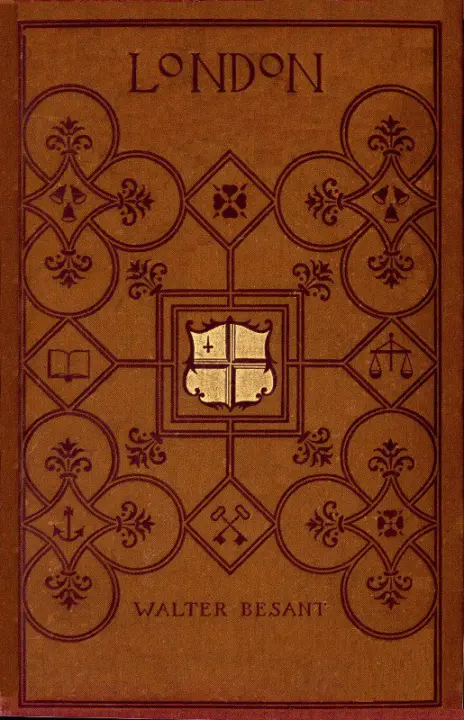
"London" by Walter Besant is a historical account, written in the late 19th century. The work aims to depict the city of London through vivid snapshots that reflect its streets, buildings, and especially its citizens engaging in various aspects of daily life, from trade to celebrations. Besant intends to delve into the lives of ordinary Londoners across different periods, offering readers a unique perspective on the social fabric of the city. The beginning of "London" introduces the author's intention to create a comprehensive portrayal of the city, highlighting the need to capture the essence of its history and the lives of its people. Besant references historical authorities such as Gildas and the Anglo-Saxon Chronicle to explain the context of London's evolution following the departure of the Romans. He elaborates on the city's topographical significance and its dramatic changes, indicating continuity in life despite conquests and societal shifts. Overall, the opening sets the stage for an in-depth exploration of London's transformation through various historical phases and its impact on the everyday lives of its inhabitants.
Introduction adapted from the source catalogue; source summaries may be automatically generated.
Free to read · English · 119,737 words · No account needed
MAKE TIME FOR A GOOD BOOK
On by default. Untick to stop anonymous reading totals. Each page counts after 10 seconds in view. How this works.
Anonymous counting is on unless you have switched it off.
We have been rambling all the night,
And almost all the day,
And now returning back again
We have brought you a branch of May.
A branch of May we have brought you,
And at your door it stands;
It is but a sprout, but it's well budded out,
By the work of our Lord's hands.
And there was morris-dancing, with Robin Hood, Friar Tuck, Little John, Tom the Piper, and Tom the Fool, with hobby-horses, pipe and tabor, mummers and devils, and I know not what; and Chepe and Cornhill and Gracechurch Street were transformed into leafy lanes and woodland ways and alleys cut through hawthorn and wild rose. You may see to-day the hawthorn and the wild rose growing in Epping Forest, just as they grew four hundred years ago. But the forest has been miserably curtailed of its proportions. A great slice, wedge-shaped, has been cut out bodily, and is now built upon. Hainault Forest has perished these forty years, and is converted into farms, save for a fragment, and of Middlesex Forest nothing remains except the little piece enclosed in Lord Mansfield's park. But in those days the forest came down to the hamlet of Iseldun, afterwards Merry Islington.
And in the month of June there were the burning of bonfires to clear and cleanse the air, and the marching of the watch on the vigils of St. John Baptist and St. Peter.
Hear the testimony of Stow:
In the months of June and July, on the vigils of festival days and on the same festival days in the evenings after the sun setting, there were usually made bonfires in the streets, every man bestowing wood or labour towards them; the wealthier sort also, before their doors near to the said bonfires, would set out tables on the vigils, furnished with sweet bread and good drink, and on the festival days with meats and drinks plentifully, whereunto they would invite their neighbours and passengers also to sit and be merry with them in great familiarity, praising God for His benefits bestowed on them. These were called bonfires as well of good amity amongst neighbours, that being before at controversy, were there, by the labour of others, reconciled, and made of bitter enemies loving friends; and also for the virtue that a great fire hath to purge the infection of the air. On the vigil of St. John the Baptist, and on St. Peter and Paul the Apostles, every man's door being shadowed with green birch, long fennel, St. John's wort, orpin, white lillies, and such like, garnished upon with garlands of beautiful flowers, had also lamps of glass, with oil burning in them all the night; some hung out branches of iron curiously wrought, containing hundreds of lamps alight at once, which made a goodly show, namely, in New Fish Street, Thames Street, &c. Then had ye besides the standing watches all in bright harness, in every ward and street of this city and suburbs, a marching watch, that passed through the principal streets thereof, to wit, from the little conduit by Paul's Gate to West Cheap, by the stocks through Cornhill, by Leadenhall to Aldgate, then back down Fenchurch Street, by Grass Church, about Grass Church conduit, and up Grass Church Street into Cornhill, and through it into West Cheap again. The whole way for this marching watch extendeth to three thousand two hundred tailor's yards of assize; for the furniture whereof with lights, there were appointed seven hundred cressets, five hundred of them being found by the companies, the other two hundred by the Chamber of London. Besides the which lights every constable in London, in number more than two hundred and forty, had his cresset: the charge of every cresset was in light two shillings and fourpence, and every cresset had two men, one to bear or hold it, another to bear a bag with light, and to serve it, so that the poor men pertaining to the cressets, taking wages, besides that every one had a straw hat, with a badge painted, and his breakfast in the morning, amounted in number to almost two thousand. The marching watch contained in number about two thousand men, part of them being old soldiers of skill, to be captains, lieutenants, sergeants, corporals, &c., whifflers, drummers, and fifes, standard and ensign-bearers, sword-players, trumpeters on horseback, demilances on great horses, gunners with hand guns, or half hakes, archers in coats of white fustian, signed on the breast and back with the arms of the city, their bows bent in their hands, with sheaves of arrows by their sides, pikemen in bright corslets, burganets, &c., halberds, the like billmen in almaine rivets, and aprons of mail in great number; there were also divers pageants, morris dancers, constables, the one-half, which was one hundred and twenty, on St. John's Eve, the other half on St. Peter's Eve, in bright harness, some overgilt, and every one a jornet of scarlet thereupon, and a chain of gold, his henchman following him, his minstrels before him, and his cresset light passing by him, the waits of the city, the mayor's officers for his guard before him, all in a livery of worsted or say jackets party-coloured, the mayor himself well-mounted on horseback, the sword-bearer before him in fair armour well mounted also, the mayor's footmen, and the like torch-bearers about him, henchmen twain upon great stirring horses, following him. The sheriff's watches came one after the other in like order, but not so large in number as the mayor's; for where the mayor had besides his giant three pageants, each of the sheriffs had besides their giants but two pageants, each their morris dance, and one henchman, their officers in jackets of worstead or say party-coloured, differing from the mayor's, and each from other, but having harnessed men a great many, &c.
Your reading position is saved on this browser. Take it to another device with a library code. Reading pages adapt to text, rather than matching a printed edition.
Walter Besant
Walter Besant

Walter Besant

Walter Besant
BEHIND THE BOOK
This eBook is for the use of anyone anywhere in the United States and most other parts of the world at no cost and with almost no restrictions whatsoever. You may copy it, give it away or re-use it under the terms of the Project Gutenberg License included with this eBook or online at www.gutenberg.org. If you are not located in the United States, you will have to check the laws of the country where you are located before using this eBook. Read the source licence.
The original source file, including credits and licence, is retained by this library. Request an original-format copy at no charge. Please include the book title and Project Gutenberg identifier #45752.
KEEP YOUR CURIOSITY GOING
Cécile Tormay

Moritz Busch
John L. Ransom
Frances Wright
Cécile Tormay

Mabel Potter Daggett