THE CLASSIC COLLECTION✦The art of fictionCLASSIC FREE BOOKS
The art of fiction
Walter Besant
THE CLASSIC COLLECTION · 1892
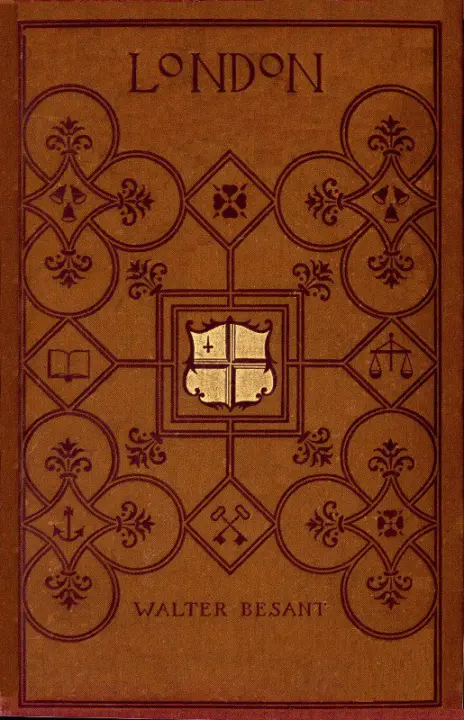
"London" by Walter Besant is a historical account, written in the late 19th century. The work aims to depict the city of London through vivid snapshots that reflect its streets, buildings, and especially its citizens engaging in various aspects of daily life, from trade to celebrations. Besant intends to delve into the lives of ordinary Londoners across different periods, offering readers a unique perspective on the social fabric of the city. The beginning of "London" introduces the author's intention to create a comprehensive portrayal of the city, highlighting the need to capture the essence of its history and the lives of its people. Besant references historical authorities such as Gildas and the Anglo-Saxon Chronicle to explain the context of London's evolution following the departure of the Romans. He elaborates on the city's topographical significance and its dramatic changes, indicating continuity in life despite conquests and societal shifts. Overall, the opening sets the stage for an in-depth exploration of London's transformation through various historical phases and its impact on the everyday lives of its inhabitants.
Introduction adapted from the source catalogue; source summaries may be automatically generated.
Free to read · English · 119,737 words · No account needed
MAKE TIME FOR A GOOD BOOK
On by default. Untick to stop anonymous reading totals. Each page counts after 10 seconds in view. How this works.
Anonymous counting is on unless you have switched it off.
The trades carried on within the walls covered very nearly the whole field of manufacture. A mediæval city made everything that it wanted--wine, spices, silks, velvets, precious stones, and a few other things excepted, which were brought to the port from abroad; but the City could get on very well without those things. Within the walls they made everything. It is not until one reads the long lists of trades collected together by Riley that one understands how many things were wanted, and how trades were subdivided. Clothing in its various branches gave work to the wympler, who made wimples or neckerchiefs for women; the retunder, or shearman of cloth; the batour, or worker of cloth; the caplet-monger; the callere, who made cauls or coifs for the head; the quilter; the pinner; the chaloner, who made chalons or coverlets; the bureller, who worked in burel, a coarse cloth; the tailor; the linen armorer; the chaucer, or shoemaker; the plumer, or feather-worker; the pelliper, pellercer, or furrier; the white tawyer, who made white leather; and many others. Arms and armor wanted the bowyer; the kissere, who made armor for the thighs; the bokelsmyth, who make bucklers; the bracere, who made armor for arms; the gorgiarius, who made gorgets; the taborer, who made drums; the heaulmere, who made helmets; the makers of haketons, pikes, swords, spears, and bolts for crossbows. Trades were thus already divided; we see one man making one thing and nothing else all his life. The equyler made porringers, the brochere made spits, the haltier made halters, the corder made ropes, the sacker made sacks, the melmallere made hammers, and so on.
The old City grows gradually clearer to the vision when we think of all these trades carried on within the walls. There were mills to grind the corn; breweries for making the beer--one remains in the City still; the linen was spun within the walls, and the cloth made and dressed; the brass pots, tin pots, iron utensils, and wooden platters and basins were all made in the City; the armor, with its various pieces, was hammered out and fashioned in the streets; all kinds of clothes, from the leathern jerkin of the poorest to the embroidered robes of a princess, were made here; nothing that was wanted for household use in the country but was made in London town. Some of those trades were offensive to their neighbors. Under Edward I., for instance, the melters of tallow and lard were made to leave Chepe, and to find a more convenient place at a distance from that fashionable street. The names of Stinking Lane, Scalding Lane, and Sheer Hog sufficiently indicate the pleasing effect of the things done in them upon the neighbors. The modern City of London--the City proper--is a place where they make nothing, but sell everything. It is now quite a quiet city; the old rumbling of broad-wheeled wagons over a stone-laid roadway has given way to the roll of the narrow wheel over the smooth asphalt; the craftsmen have left the City. But in the days of Whittington there was no noisier city in the whole world; the roar and the racket of it could be heard afar off--even at the rising of the Surrey Hills or the slope of Highgate, or the top of Parliament Hill. Every man in the City was at work except the lazy men-at-arms of my lord's following in the great house that was like a barrack. They lay about waiting for the order to mount and ride off to the border, or the Welsh march, or to fight the French. But roundabout these barracks the busy craftsmen worked all day long. From every lane rang out without ceasing the tuneful note of the hammer and the anvil; the carpenters, not without noise, drove in their nails, and the coopers hooped their casks; the blacksmith's fire roared; the harsh grating of the founders set the teeth on edge of those who passed that way; along the river-bank, from the Tower to Paul's stairs, those who loaded and those who unloaded, those who carried the bales to the warehouses, those who hoisted them up, the ships which came to port and the ships which sailed away, did all with fierce talking, shouting, quarrelling, and racket. Such work must needs be carried on with noise. The pack-horses plodded along the streets, coming into the City and going out. Wagons with broad wheels rumbled and groaned along; the prentices bawled from the shops; the fighting-men marched along to sound of trumpet; the church bells and the monastery bells rang out all day long, and all night too. And at the doors of the houses or the open windows, where there was no glass, but a hanging shutter, sat or stood the women, preparing the food, washing, mending, sewing, or spinning, their children playing in the street before them. There are many towns of France, especially Southern France, which recall the mediæval city. Here the women live and do their work in the door-ways; the men work at the open windows; and all day there is wafted along the streets and up to the skies the fragrance of soup and onions, roasted meats and baked confections, with the smell of every trade which the people carry on.
Your reading position is saved on this browser. Take it to another device with a library code. Reading pages adapt to text, rather than matching a printed edition.
Walter Besant
Walter Besant

Walter Besant

Walter Besant
BEHIND THE BOOK
This eBook is for the use of anyone anywhere in the United States and most other parts of the world at no cost and with almost no restrictions whatsoever. You may copy it, give it away or re-use it under the terms of the Project Gutenberg License included with this eBook or online at www.gutenberg.org. If you are not located in the United States, you will have to check the laws of the country where you are located before using this eBook. Read the source licence.
The original source file, including credits and licence, is retained by this library. Request an original-format copy at no charge. Please include the book title and Project Gutenberg identifier #45752.
KEEP YOUR CURIOSITY GOING
Cécile Tormay

Moritz Busch
John L. Ransom
Frances Wright
Cécile Tormay

Mabel Potter Daggett