
The Dwelling House
George Vivian Poore
THE CLASSIC COLLECTION · 1889
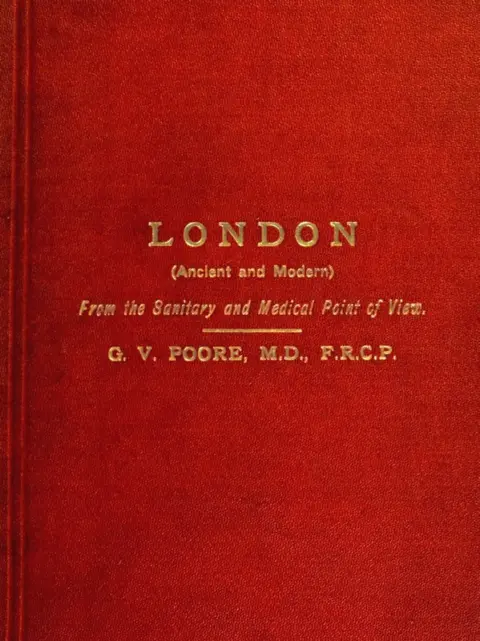
"London (Ancient and Modern) from the Sanitary and Medical Point of View" by G. V. Poore, M.D., F.R.C.P., is a scientific publication written in the late 19th century. The work examines the sanitary conditions of London over time, detailing the evolution of public health and medical practices from ancient Roman times through the medieval period to the author's contemporary period. It focuses on the health implications of London's geography, architecture, and public policies, providing a thorough exploration of health challenges and improvements in the city. At the start of the book, the author emphasizes the historical significance of London and its sanitation challenges, highlighting how the city developed amid poor sanitary practices that led to disease outbreaks. Poore discusses the impact of London's geography, referencing its proximity to marshy lands and the Thames River, which historically contributed to health issues. He also begins to outline various aspects of public sanitation and the evolution of medical practices, setting the stage for a detailed analysis of how these elements shaped the health of the population throughout different eras in London's history.
Introduction adapted from the source catalogue; source summaries may be automatically generated.
Free to read · English · 36,386 words · No account needed
MAKE TIME FOR A GOOD BOOK
On by default. Untick to stop anonymous reading totals. Each page counts after 10 seconds in view. How this works.
Anonymous counting is on unless you have switched it off.
Hodges is by no means silent on the important subject of prevention, and he justly says: “When the nature and peculiar qualities of this disease are known and reported by physicians, such laws should be provided as might best conduce to prevent its spreading, if not to its utter extirpation.” The punishment of those who frighten the populace by prophecies and the like; the timely separation of the sick from the well; house-to-house visitation (which was actually carried out); the disinfection of the air by fumigations; the daily cleansing of streets, sinks, and canals (“because stench and nastiness are justily reckoned the entertainers of infection”); the burning of pastilles; the killing of “dogs, cats, and other domestic brutes,” which carry the infection from place to place; and great attention to personal health, are among the measures which he advocates. He has no belief in the benefit to be derived from taking excrement and urine, which were given as antidotes by some old nurses; but, on the other hand, he had implicit faith in liberal potations of sack (“middle-aged, neat, fine, bright, racy, and of a walnut flavour”). With regard to the use of tobacco, he says: “I must confess myself at uncertainties about it, though as to myself I am its professed enemy, and was accustomed to supply its place as an antidote with sack.” He did not believe in amulets, which were then much in vogue; some being alleged to have a diffusive magnetic value; others drawing the poison out of the body “as amber attracts straws,” some serving to invigorate nature. Walnut shells filled with mercury, arsenic mixed with wax and a variety of other drugs, and dried toads seem to have been the amulets most generally worn.
Among the physicians who stayed in London to minister to the sick, Hodges mentions “Dr. Glisson, Regius Professor at Cambridge, Dr. Nath. Paget, Dr. Wharton, Dr. Berwick, Dr. Brookes, and many others.” And he further states that of these, eight or nine died. Hodges, however, survived, and he says: “I think it not amiss to recite the means which I used to preserve myself from the infection during the continual course of my business among the sick. As soon as I rose in the morning early, I took the quantity of a nutmeg of the antipestilential electuary; then, after the dispatch of private concerns in my family, I entered into a large room, where crowds of citizens used to be in waiting for me; and there I commonly spent two or three hours, as in an hospital, examining the several conditions and circumstances of all who came thither; some of which had ulcers yet uncured, and others to be advised under the first symptoms of seizure; all which I endeavoured to dispatch with all possible care to their various exigencies. As soon as this crowd could be discharged, I judged it not proper to go abroad fasting, and therefore got my breakfast. After which, till dinner-time, I visited the sick at their houses.... After some hours visiting in this manner I returned home. Before dinner I always drank a glass of sack, to warm the stomach, refresh the spirits, and dissipate any beginning lodgement of the infection. I chose meats for my table that yielded an easy and generous nourishment, roasted before boiled, and pickles, not only suitable to the meats but the nature of the distemper (and, indeed, in this melancholy time, the city greatly abounded with variety of all good things of that nature). I seldom likewise rose from dinner without drinking more wine. After this I had always many persons come for advice, and as soon as I could dispatch them I again visited till eight or nine at night, and then concluded the evening by drinking to cheerfulness of my old favourite liquor, which encouraged sleep and an easy breathing through the pores all night. But if in the daytime I found the least approaches of the infection upon me, as giddiness, loathing at stomach, and faintness, I immediately had recourse to a glass of this wine, which easily drove these beginning disorders away by transpiration. Yet in the whole course of the infection I found myself ill but twice; but was soon again cleared of its approaches by these means, and the help of such antidotes as I kept always by me.” It should be mentioned that during the infection Dr. Hodges wore an “issue” as a preventive measure, and he says: “Whenever I was most beset with pestilential fumes I could then immediately perceive a shooting pain in my issue, and had a great deal of ill-conditioned matter discharge therefrom; and this I always looked upon as a sure warning to have timely recourse to alexipharmicks.” The facts given by Dr. Munk concerning Hodges are the following: Nathaniel Hodges, son of the vicar of Kensington, was born in 1629, educated at Westminster, Cambridge, and Oxford, and appears to have been a Parliamentarian; M.D., 1659; F.R.C.P., 1672; censor, 1682; Harveian orator, 1683. During the latter part of his life he received a pension from the City on account of his services during the plague. He fell into debt, and died in Ludgate Prison in 1688. There is a tablet to his memory in St. Stephen’s, Walbrook. Let us not be hard on this brave man. He did his duty nobly. True, he was fond of sack and got into debt. Perhaps had his nature been less generous, and had he been less full of the milk of human kindness, he might have amassed a large fortune. He is a noble exception to Chaucer’s doctrine that “gold in physick is a cordial,” and it would ill become us to sit in judgment on one who in an important respect affords us an example of noble conduct.
Your reading position is saved on this browser. Take it to another device with a library code. Reading pages adapt to text, rather than matching a printed edition.
George Vivian Poore
BEHIND THE BOOK
This eBook is for the use of anyone anywhere in the United States and most other parts of the world at no cost and with almost no restrictions whatsoever. You may copy it, give it away or re-use it under the terms of the Project Gutenberg License included with this eBook or online at www.gutenberg.org. If you are not located in the United States, you will have to check the laws of the country where you are located before using this eBook. Read the source licence.
The original source file, including credits and licence, is retained by this library. Request an original-format copy at no charge. Please include the book title and Project Gutenberg identifier #54904.
KEEP YOUR CURIOSITY GOING
Cécile Tormay

Moritz Busch
John L. Ransom
Frances Wright
Cécile Tormay

Mabel Potter Daggett