
The Dwelling House
George Vivian Poore
THE CLASSIC COLLECTION · 1889
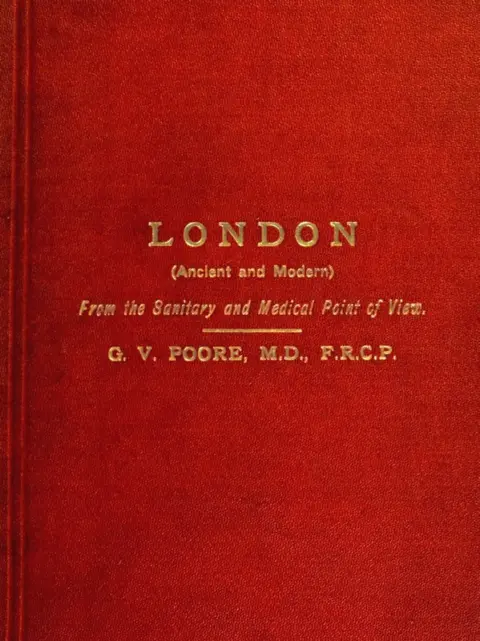
"London (Ancient and Modern) from the Sanitary and Medical Point of View" by G. V. Poore, M.D., F.R.C.P., is a scientific publication written in the late 19th century. The work examines the sanitary conditions of London over time, detailing the evolution of public health and medical practices from ancient Roman times through the medieval period to the author's contemporary period. It focuses on the health implications of London's geography, architecture, and public policies, providing a thorough exploration of health challenges and improvements in the city. At the start of the book, the author emphasizes the historical significance of London and its sanitation challenges, highlighting how the city developed amid poor sanitary practices that led to disease outbreaks. Poore discusses the impact of London's geography, referencing its proximity to marshy lands and the Thames River, which historically contributed to health issues. He also begins to outline various aspects of public sanitation and the evolution of medical practices, setting the stage for a detailed analysis of how these elements shaped the health of the population throughout different eras in London's history.
Introduction adapted from the source catalogue; source summaries may be automatically generated.
Free to read · English · 36,386 words · No account needed
MAKE TIME FOR A GOOD BOOK
On by default. Untick to stop anonymous reading totals. Each page counts after 10 seconds in view. How this works.
Anonymous counting is on unless you have switched it off.
The “Gilbertyn” of Chaucer’s doctor was =Gilbertus Anglicus=, an Englishman who wrote a work on medicine about the year 1290, and it is remarkable from the fact that it gave the first description of leprosy written by western writers, leprosy being a disease which has long ceased to exist in this country. He treated apoplexy with ants’ eggs, scorpions’ oil, and the flesh of lions; but where he obtained this latter commodity it is hard to tell. For urinary calculi he advised the administration of the blood of a he-goat fed upon parsley and saxifrage.
=John of Gaddesden= was a graduate of Merton College, Oxford, and wrote his famous medical treatise, “Rosa Anglica,” about 1305. He is said to have been greedy of money, and he recommends his contemporaries to make arrangements about fees before undertaking a case. He was an ecclesiastic, and was court physician to Edward II. and Edward III. He tells us that bleeding is hurtful at the time of the feasts of St. John and St. Stephen, but necessary at Christmas because of the custom of overloading the stomach with cakes at that season. Pigs’ dung was his favourite hæmostatic; and when the son of the King had small-pox, he was careful that everything about his couch should be red.
In South’s “Craft of Surgery” is a most interesting and full account of =John of Arderne=, one of the earliest English writers on surgery. This worthy was a specialist for the cure of fistula, and dwelt at Newark between 1349 and 1370, when he moved to London. His work “Praxis Medica” is among the Sloane Manuscripts in the British Museum. He made his great reputation by curing Sir Adam Everyngham of fistula after he had been pronounced incurable by the chief doctors in France. He relates the cases (some of them with details) of other patients. The most interesting of the writings of John of Arderne is that entitled “Of ye Manere of ye Leche,” because it throws a flood of light on professional manners and ethics in the fourteenth century. The following paragraphs (taken from South) are well worth quoting; but in doing so I think it advisable to (in some degree) modernise the spelling and the expressions:--“First, it behoveth him that will profit in this craft that he set God ever before him in all his works, and evermore call meekly with heart and mouth his help, and occasionally, according to his power, give of his earnings to the poor, that they by their prayers may get him grace of the Holy Ghost. Let him not be found rash or boastful in his words or deeds. And let him abstein from much speaking, especially among the great. And let him answer questions warily, lest he be overtaken by his words.... Also be a leche not much laughing nor much playing, and let him as much as may be fly the fellowship of knaves and disreputable persons. And be he evermore occupied in things beholding to his craft, whether he read or study, write or pray, for the exercise of books whorshippeth a leche.... And above all this, it profiteth to him that he be found evermore sober, for drunkenness destroyeth all virtue, and bringeth it to nought, as sayth a wise man. Be he content in strange places with the meat and drink there found, using measure in all things.... Scorn he no man.... And if there be made speech to him of any leche, neither set him at nought, nor praise him too much, nor commend him, but thus may he courteously answer: ‘I have not any knowledge of him, but I have neither learned nor heard of him but good and honest.’... Consider he not over openly the lady or the daughters, or other fair women in great men’s houses, ‘ne profre them not to kisse, ... that he come not in to the indignacion of the lord ne of noon of his.’... When such men come to the leche to ask help or counsel, it speedeth that he make seeming excuses, that he may not incline to their asking without harming or without indignation of some great man or friend, or for necessary occupation; or feign he him hurt, or for to be sick, or some other convenient cause by which he may likely be excused. Therefore if he will favour to any man’s asking, make he covenant for his travail and take it beforehand.... And if he see the patient, pursue busily the cure then, and ask he boldly more or less, but ever be he warre of scarce askings, for over scarce askings setteth at nought both the market and the thing. Therefore for the cure of fistula in ano, when it is curable, ask he competently of a worthy man and a great an hundred marks or forty pounds, with robez and feez of an hundred shillyns terme of life, by year. And take he not less than an hundred shillyns, for never in als my life took I less than an hundred shillyns for cure of that sekeness.” John of Arderne advises that prognosis should be very guarded, and that as to the time of recovery it is good to say double what you think, and if the patient ask “why he putte him so long a time of curying, sithe that he heled him by the halfe? Answer he, that it was for that the patient was strong hearted and suffered well sharp things, and that he was of good complexion and had able flesh to heal, and feign he other causes pleasable to the patient, for patients of such words are proud and delighted.” The leech is further advised to dress like a clerk (i.e., a priest), “for why it seemeth any discrete man clad with clerk’s clothing to occupy gentlemen’s boards.” “Have the leche also clean hands and well shapen nails, cleansed from all blackness and filth.” There are many other directions for conduct given in this remarkable document, and sundry extracts from Scripture are given as suitable for quotation by the bedside: “And it speedeth that a leech can talk of good tales and of honest that may make the patient to laugh, as well of the biblee as of other tragediez.” Finally, he is charged to most scrupulously observe all professional confidences. It is evident that John of Arderne was a consummate man of the world, and knew all the tricks of his trade. His fees seem to have been enormous, and, indeed, he is only one out of many examples among our early professional forerunners who made very large professional incomes.
Your reading position is saved on this browser. Take it to another device with a library code. Reading pages adapt to text, rather than matching a printed edition.
George Vivian Poore
BEHIND THE BOOK
This eBook is for the use of anyone anywhere in the United States and most other parts of the world at no cost and with almost no restrictions whatsoever. You may copy it, give it away or re-use it under the terms of the Project Gutenberg License included with this eBook or online at www.gutenberg.org. If you are not located in the United States, you will have to check the laws of the country where you are located before using this eBook. Read the source licence.
The original source file, including credits and licence, is retained by this library. Request an original-format copy at no charge. Please include the book title and Project Gutenberg identifier #54904.
KEEP YOUR CURIOSITY GOING
Cécile Tormay

Moritz Busch
John L. Ransom
Frances Wright
Cécile Tormay

Mabel Potter Daggett