THE CLASSIC COLLECTION✦The Star of IndiaCLASSIC FREE BOOKS
The Star of India
Edward Sylvester Ellis
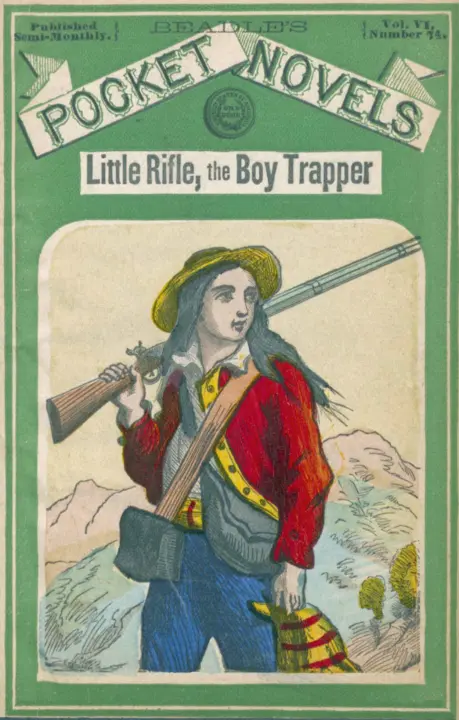
THE CLASSIC COLLECTION · 1877
"Little Rifle; or, The Young Fur Hunters" by Edward Sylvester Ellis is a novel written in the late 19th century. The story follows a young boy named Little Rifle, who is an aspiring trapper and hunter living in the wilderness of the Pacific Northwest, particularly around the Upper Columbia River. As he navigates the challenges of this dangerous environment, he faces threats from both wildlife and the indigenous Blackfoot warriors, all while seeking to uncover the mysteries of his own past. The opening portion presents Little Rifle as a resourceful and skilled young boy, adept at moving stealthily through the woods as he sets traps for beavers. His solitude is palpable as he reflects on his life and his unknown origins, having been raised by the trapper Old Ruff Robsart. This segment builds tension effectively, highlighting an impending confrontation with a Blackfoot Indian while introducing themes of survival, solitude, and the search for identity. As the narrative progresses, Little Rifle's bravery and wit become apparent, especially when he cleverly outsmarts an enemy hunter, setting the stage for further adventures in the wild.
Introduction adapted from the source catalogue; source summaries may be automatically generated.
Free to read · English · 35,675 words · No account needed
MAKE TIME FOR A GOOD BOOK
On by default. Untick to stop anonymous reading totals. Each page counts after 10 seconds in view. How this works.
Anonymous counting is on unless you have switched it off.
Like a flash of lightning, the red-skin turned so as to face the sound, and doing so, saw the rifle not more than twenty feet distant, pointed straight at his breast, and with the finger resting upon the trigger. It was, indeed, only a hair’s breadth between him and eternity.
Accustomed as was the savage to the most desperate emergencies, he was completely taken off his guard by this unexpected turn of events, and for a moment he stood like one transfixed.
Then he began, almost imperceptibly, to lean his left side over, preparatory to making a sudden snatch for his gun; but Little Rifle was too thorough a scout to lose the advantage he had gained by his superior wit.
He had learned considerable of the Blackfoot tongue from old Ruff Robsart, and he now made the best use of it. Detecting the purpose of the red-skin on the instant, he called out:
“Stir a foot before I tell you, and I will shoot!”
Such a command was not to be mistaken, and the savage straightened himself with a suddenness that made him appear ridiculous. Men like him have too much dread of death to invite it by any direct means, and treacherous and vindictive as he was, he comprehended his danger in all its fullness.
“Now, get,” added Little Rifle, still holding his piece at a dead level, and closing one eye, as if to convince his enemy that he was determined to make no mistake in the aim.
This peculiarly American expression, naturally enough, was not very clear to the red-skin, who stood motionless and undecided as to what was expected of him.
“Move off; go away from the canoe!” said the boy, accompanying the order by a swaying motion to the left, that did not lessen his command of aim, and, at the same time, made his meaning perfectly intelligible.
It went against the grain to obey the order, but there was no question but that Little Rifle was master of the situation, and he had the nerve to hold his vantage-ground. Noting the hesitation of his captive, he made a shifting motion, as if he had decided to fire. This was enough, and the Blackfoot, with one sidelong bound, landed nearly a dozen feet to the right of his canoe, and kept on walking, as if he had concluded to leave such an uncongenial neighborhood altogether, but our hero was not quite ready to give his permission.
“Hold on!” he commanded, in the same authoritative voice, and the Blackfoot did hold on, wheeling about and staring at his master, with an angry, defiant expression, which said, as plainly as the words:
Your reading position is saved on this browser. Take it to another device with a library code. Reading pages adapt to text, rather than matching a printed edition.
Edward Sylvester Ellis
Edward Sylvester Ellis
Edward Sylvester Ellis
Edward Sylvester Ellis
BEHIND THE BOOK
This eBook is for the use of anyone anywhere in the United States and most other parts of the world at no cost and with almost no restrictions whatsoever. You may copy it, give it away or re-use it under the terms of the Project Gutenberg License included with this eBook or online at www.gutenberg.org. If you are not located in the United States, you will have to check the laws of the country where you are located before using this eBook. Read the source licence.
The original source file, including credits and licence, is retained by this library. Request an original-format copy at no charge. Please include the book title and Project Gutenberg identifier #65923.
KEEP YOUR CURIOSITY GOING
Coulson Kernahan

Maurice Baring
Frances Wright
Cécile Tormay

Frederic Jesup Stimson

W. H. P. (William Henry Pope) Jarvis