THE CLASSIC COLLECTION✦Little Prudy’s Cousin GraceCLASSIC FREE BOOKS
Little Prudy’s Cousin Grace
Sophie May
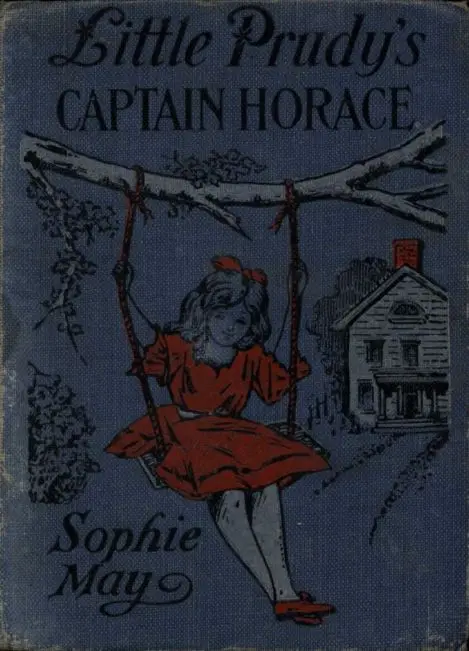
THE CLASSIC COLLECTION · 1892
"Little Prudy's Captain Horace" by Sophie May is a children's novel written in the early 20th century. The book revolves around young Horace and his sister Grace Clifford, who navigate the joys and challenges of childhood, such as making candy, camping adventures, and the longing for their father's return from the war. The narrative captures the innocence and mischief of childhood while exploring themes of family, obedience, and growing up. The opening of the story introduces the Clifford family's warm domestic life and sets the stage for Horace's vibrant personality. Known as a boy with a strong imagination, Horace delights in playful banter with Grace as they watch the stars and eagerly anticipate making candy. The interactions between Horace and Grace reveal their sibling dynamics—particularly Horace's spirited nature and Grace's sensible demeanor. As they venture into the kitchen, their excitement about the candy-making process showcases their youthful enthusiasm, hinting at the delightful escapades that are to come throughout the book.
Introduction adapted from the source catalogue; source summaries may be automatically generated.
Free to read · English · 23,847 words · No account needed
MAKE TIME FOR A GOOD BOOK
On by default. Untick to stop anonymous reading totals. Each page counts after 10 seconds in view. How this works.
Anonymous counting is on unless you have switched it off.
"Me no hurt trees," said he gravely; and he did not: he only cut off a few limbs from each one, leaving the trees as handsome as ever.
"Bully for you!" cried Horace, forgetting the blue book.
"He's as spry as a squirrel," said Grasshopper, in admiration; "how many boughs has he got? One, two, three."
"Me say 'em quickest," cried little Wampum. "Een, teen, teddery, peddery, bimp, satter, latter, doe, dommy, dick."
"That's ten," put in Horace, who was keeping 'count.
"Een-dick," continued the little Indian, "teen-dick, teddery-dick, peddery-dick, bumpin, een-bumpin, teen-bumpin, teddery-bumpin, peddery-bumpin, jiggets."
"Hollo!" cried Grasshopper; "that's twenty; jiggets is twenty;" and he rolled over on the ground, laughing as if he had made a great discovery.
Little by little they made Wampum tell how he lived at home, what sort of boys he played with, and what they had to eat. The young Indian assured them that at Oldtown "he lived in a house good as white folks; he ate moose-meat, ate sheep-meat, ate cow-meat."
"Cook out doors, I s'pose," said Grasshopper.
Wampum looked very severe. "When me lives in wigwam, me has fires in wigwam: when me lives in tent, me puts fires on grass;--keep off them things," he added, pointing at a mosquito in the air; "keep smoke out tent," pointing upward to show the motion of the smoke.
Horace felt so much pleased with his new companion that he resolved to treat him to a watermelon. So, without saying a word to the hoys, he ran into the house to ask his grandmother.
"What! a whole watermelon, Horace?"
"Yes, grandma, we three; me, and Grasshopper, and Wampum."
Mrs. Parlin could not help smiling to see how suddenly Horace had
adopted a new friend.
"You may have a melon, but I think your mother would not like to have you play much with a strange boy."
"He's going to make me a splendid basket; and besides, aren't Indians and negroes as good as white folks? 'Specially tame Indians," said Horace, not very respectfully, as he ran back, shoeknife in hand, to cut the watermelon.
This was the beginning of a hasty friendship between himself and Wampum. For a few days there was nothing so charming to Horace as the wild life of this Indian family. He was made welcome at their tent, and often went in to see them make baskets.
"I trust you," said Mrs. Clifford; "you will not deceive me, Horace. If you ever find that little Wampum says bad words, tells falsehoods, or steals, I shall not be willing for you to play with him. You are very young, and might be greatly injured by a bad playmate."
Your reading position is saved on this browser. Take it to another device with a library code. Reading pages adapt to text, rather than matching a printed edition.
Sophie May
Sophie May
Sophie May
Sophie May
BEHIND THE BOOK
This eBook is for the use of anyone anywhere in the United States and most other parts of the world at no cost and with almost no restrictions whatsoever. You may copy it, give it away or re-use it under the terms of the Project Gutenberg License included with this eBook or online at www.gutenberg.org. If you are not located in the United States, you will have to check the laws of the country where you are located before using this eBook. Read the source licence.
The original source file, including credits and licence, is retained by this library. Request an original-format copy at no charge. Please include the book title and Project Gutenberg identifier #53306.
KEEP YOUR CURIOSITY GOING
Cécile Tormay

Moritz Busch
Coulson Kernahan
John L. Ransom

Maurice Baring
Frances Wright