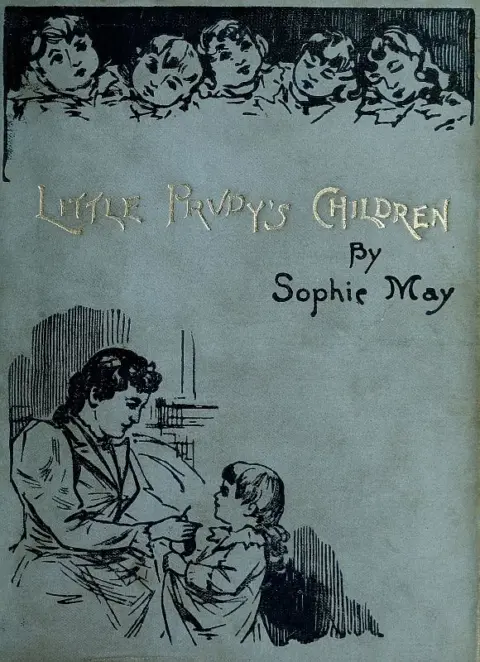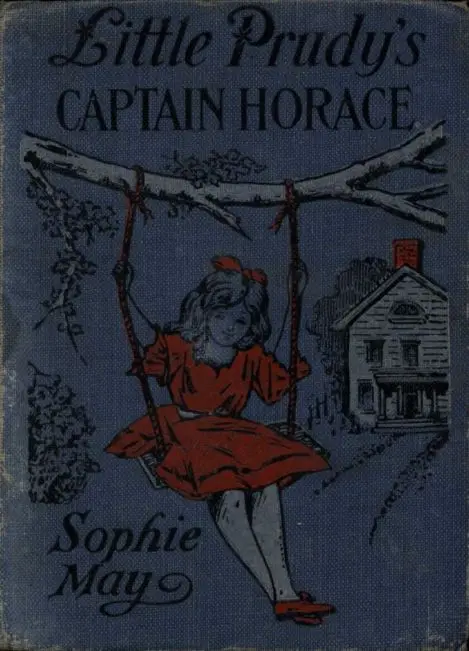
Little Prudy’s Captain Horace
Sophie May
THE CLASSIC COLLECTION · 1871
"Little Folks Astray" by Sophie May is a children's novel written in the late 19th century. The story revolves around a young girl named Flyaway and her adventures, particularly as she journeys to New York City with her brother Horace for the holidays. Their escapades are filled with charming and humorous moments, showcasing the naivete and curiosity of childhood. The opening of the novel introduces us to several key characters, primarily the Clifford family, including Flyaway, her mother, and brother Horace. We learn that despite being tucked into bed, Flyaway and her siblings cannot resist the temptation to get up and see their visitors. The chapter unfolds with Flyaway feeding her pet mice and engaging in dialogue with her brother, revealing her innocent and playful personality. As the story progresses, we see hints of a journey to visit their Aunt Madge in New York, setting the stage for the adventures to come. The interactions highlight the dynamics of sibling relationships and the innocent mischief of childhood as they prepare for their exciting trip.
Introduction adapted from the source catalogue; source summaries may be automatically generated.
Free to read · English · 24,662 words · No account needed
MAKE TIME FOR A GOOD BOOK
On by default. Untick to stop anonymous reading totals. Each page counts after 10 seconds in view. How this works.
Anonymous counting is on unless you have switched it off.
"Topknot, how could you be so rude?" said Horace, severely; "little girls should be seen, and not heard."
"But she speaked to me first," said Flyaway. "I wasn't goin' to say nuffin, and then she speaked."
A young gentleman and lady opposite seemed very much amused.
"I'm afraid of your bright eyes, little dear. I'll give you some candy if you won't tell me how I look," said the young lady, showering sweetmeats into Flyaway's lap.
"Why, I wasn't goin' to tell her how she looked," whispered Fly, very much surprised, and trying to nestle out of sight behind Horace's shoulder.
When they left the omnibus, the children had a discussion about the painted lady, and could not decide whether they were glad or sorry that Fly had spoken out so plainly.
"Good enough for her," said Dotty.
"But it was such a pity to hurt her feelings!" said Prudy.
"Who hurted 'em?" asked Fly, looking rather sheepish.
"Poh! her feelings can't be worth much," remarked Horace; "a woman that'll go and rig herself up in that style."
"She must be near-sighted," said Aunt Madge. "She certainly can't have the faintest idea how thick that paint is. She ought to let somebody else put it on."
"But, auntie, isn't it wicked to wear paint on your cheeks?"
"No, Dotty, only foolish. That woman was handsome once, but her beauty is gone. She thinks she can make herself young again, and then people will admire her."
"O, but they won't; they'll only laugh."
"Very true, Dotty; but I dare say she never thought of that till this
little child told her."
"Fly," said Horace, "You are doing a great deal of good going round
hurting folks' feelings."
"Poor woman!" said Aunt Madge, with a pitying smile; "she might comfort herself by trying to make her soul beautiful."
"That would be altogether the best plan," said Horace, aside to Prudy; "she can't do much with her body, that's a fact; it's too dried up."
All this while they were passing elegant shops, and Aunt Madge let the children pause as long as they liked before the windows, to admire the beautiful things.
"Whose little grampa is that?" cried Fly, pointing to a Santa Claus standing on the pavement and holding out his hands with a very pleasant smile; "he's all covered with a snow-storm."
"He isn't alive," said Dotty; "and the snow is only painted on his coat
in little dots."
"Well, I didn't spect he was alive, Dotty Dimple, only but he made believe he was. And O, see that hossy! he's dead, too, but he looks as if you could ride on him."
Your reading position is saved on this browser. Take it to another device with a library code. Reading pages adapt to text, rather than matching a printed edition.
BEHIND THE BOOK
This eBook is for the use of anyone anywhere in the United States and most other parts of the world at no cost and with almost no restrictions whatsoever. You may copy it, give it away or re-use it under the terms of the Project Gutenberg License included with this eBook or online at www.gutenberg.org. If you are not located in the United States, you will have to check the laws of the country where you are located before using this eBook. Read the source licence.
The original source file, including credits and licence, is retained by this library. Request an original-format copy at no charge. Please include the book title and Project Gutenberg identifier #11257.
KEEP YOUR CURIOSITY GOING
Coulson Kernahan

Maurice Baring
Frances Wright
Cécile Tormay

Frederic Jesup Stimson

W. H. P. (William Henry Pope) Jarvis