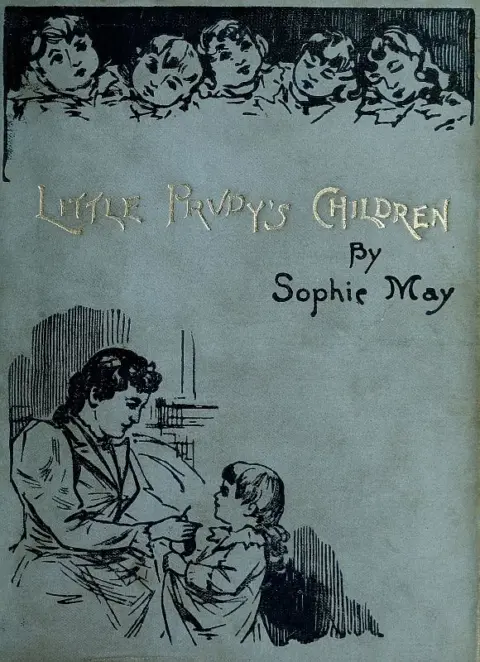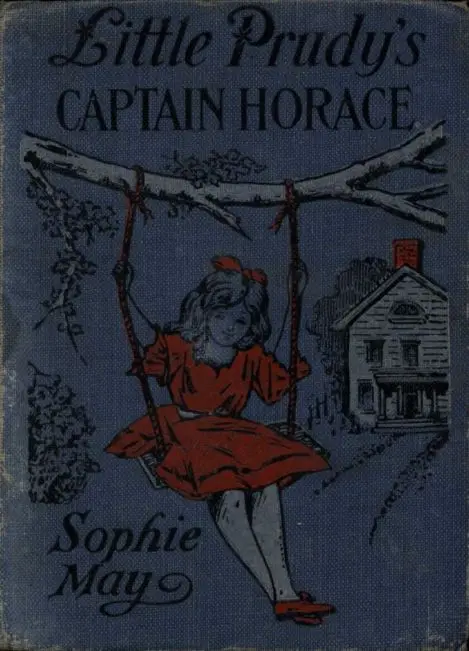
Little Prudy’s Captain Horace
Sophie May
THE CLASSIC COLLECTION · 1871
"Little Folks Astray" by Sophie May is a children's novel written in the late 19th century. The story revolves around a young girl named Flyaway and her adventures, particularly as she journeys to New York City with her brother Horace for the holidays. Their escapades are filled with charming and humorous moments, showcasing the naivete and curiosity of childhood. The opening of the novel introduces us to several key characters, primarily the Clifford family, including Flyaway, her mother, and brother Horace. We learn that despite being tucked into bed, Flyaway and her siblings cannot resist the temptation to get up and see their visitors. The chapter unfolds with Flyaway feeding her pet mice and engaging in dialogue with her brother, revealing her innocent and playful personality. As the story progresses, we see hints of a journey to visit their Aunt Madge in New York, setting the stage for the adventures to come. The interactions highlight the dynamics of sibling relationships and the innocent mischief of childhood as they prepare for their exciting trip.
Introduction adapted from the source catalogue; source summaries may be automatically generated.
Free to read · English · 24,662 words · No account needed
MAKE TIME FOR A GOOD BOOK
On by default. Untick to stop anonymous reading totals. Each page counts after 10 seconds in view. How this works.
Anonymous counting is on unless you have switched it off.
"Yes, I do," said Fly, quickly; "my eyes'll open out; but that's no matter, 'cause I don't want to go to sleep; I'd ravver not."
They went up stairs, into a beautiful room, which aunt Madge had arranged for them with two beds, to suit a whim of Dotty's.
"Now isn't this just splendid?" said Miss Dimple; "the carpet so soft your boots go in like feathers; and then such pictures! Look, Fly! here are two little girls out in a snow-storm, with an umbrella over 'em. Aren't you glad it isn't you? And here are some squirrels, just as natural as if they were eating grandpa's oilnuts. And see that pretty lady with the kid, or the dog. Any way she is kissing him; and it was all she had left out of the whole family, and she wanted to kiss somebody."
"Yes," said aunt Madge.
"'Her sole companion in a dearth
Of love upon a hopeless earth.'
"If that makes you look so sober, children, I'm going to take it down. Here, on this bracket, is the head of our blessed Saviour."
"O, I'm glad," said Fly. "He'll be right there, a-looking on, when we
say our prayers."
"Hear that creature talk!" whispered Dotty.
"And these things a-shinin' down over the bed: who's these?" said Flyaway, dancing about the room, with "opened-out" eyes.
"Don't you know? That's Christ blessing little children," said Dotty, gently. "I always know Him by the rainbow round His head."
"Aureole," corrected Aunt Madge.
"But wasn't it just like a rainbow--red, blue and green?"
"O, no; our Saviour did not really have any such crown of light, Dotty. He looked just like other men, only purer and holier. Artists have tried in vain to make his expression heavenly enough; so they paint him with an aureole."
Prudy said nothing; but as she looked at the picture, a happy feeling came over her. She remembered how Christ "called little children like lambs to his fold," and it seemed as if He was very near to-night, and the room was full of peace. Aunt Madge had done well to place such paintings before her young guests; good pictures bring good thoughts.
"All, everywhere, it's so spl-endid!" said Fly; "what's that thing with
a glass house over it!"
"A clock."
"What a funny clock! It looks like a little dog wagging its tail."
"That's the penderlum," explained Dotty; "it beats the time. Every clock has a penderlum. Generally hangs down before though, and this hangs behind. I declare, Prudy, it does look like a dog wagging its tail."
Your reading position is saved on this browser. Take it to another device with a library code. Reading pages adapt to text, rather than matching a printed edition.
BEHIND THE BOOK
This eBook is for the use of anyone anywhere in the United States and most other parts of the world at no cost and with almost no restrictions whatsoever. You may copy it, give it away or re-use it under the terms of the Project Gutenberg License included with this eBook or online at www.gutenberg.org. If you are not located in the United States, you will have to check the laws of the country where you are located before using this eBook. Read the source licence.
The original source file, including credits and licence, is retained by this library. Request an original-format copy at no charge. Please include the book title and Project Gutenberg identifier #11257.
KEEP YOUR CURIOSITY GOING
Coulson Kernahan

Maurice Baring
Frances Wright
Cécile Tormay

Frederic Jesup Stimson

W. H. P. (William Henry Pope) Jarvis