THE CLASSIC COLLECTION✦The blight of AsiaCLASSIC FREE BOOKS
The blight of Asia
George Horton
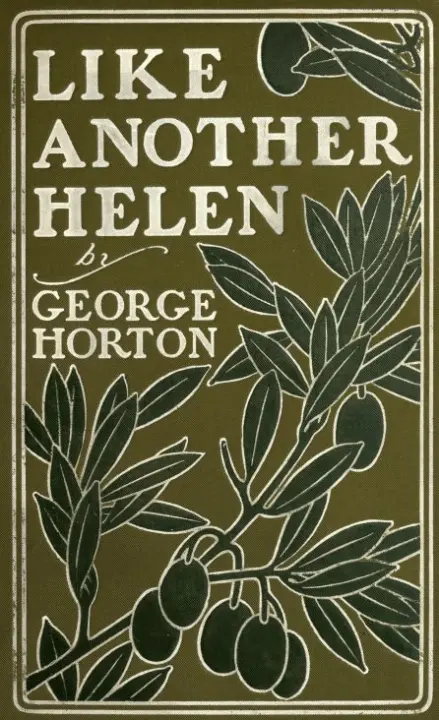
THE CLASSIC COLLECTION · 1900
"Like Another Helen" by George Horton is a historical novel written in the late 19th century. The narrative unfolds during a time of tumultuous conflict in Crete, capturing the youthful enthusiasm of its central character, John Curtis, as he embarks on an adventure that intertwines themes of war, liberty, and personal discovery. The story introduces various characters, including young Cretan fighters and foreign enthusiasts, all drawn by a shared cause against oppression. The opening of the book sets the stage with a caique secretly delivering weapons to the insurgents in Crete during a period of rising rebellion. Amidst the excitement of the impending conflict, we meet John Curtis, who, inspired by his surroundings and the passionate fervor of the locals, decides to immerse himself in the events unfolding in Crete. He forms connections with characters such as Lieutenant Peter Lindbohm and Michali Papadakes, both of whom share a commitment to the Cretan cause. The narrative expresses the thrill and danger they encounter as they navigate through a blend of camaraderie and national pride, establishing a foundation for the adventures that lie ahead.
Introduction adapted from the source catalogue; source summaries may be automatically generated.
Free to read · English · 70,377 words · No account needed
MAKE TIME FOR A GOOD BOOK
On by default. Untick to stop anonymous reading totals. Each page counts after 10 seconds in view. How this works.
Anonymous counting is on unless you have switched it off.
"Yes, one way. There is, what you call it--a cut in the hill--"
"A ravine," suggested Curtis.
"Yes, I think so. A ravine, very deep and very crooked. But the shepherds watch him all the time."
The conversation did not progress rapidly, because Greek politeness demanded that Michali translate every word for the demarch, whose own remarks, moreover, it was necessary to turn into English.
"Would you like to see the inside of my store?" asked the latter, a lull in the conversation making him feel that he must do something for the entertainment of his guests. Michali had again described the shipwreck, the English had been denounced as barbarians, worse than the Turks, and the demarch had told a story of a famous battle in which thirty Cretans slew two hundred Mohammedans, on which occasion he himself had led the victorious party. There seemed to be nothing more to talk about.
"I have some very fine pictures inside," said the mayor. "Come, Lieutenant, Mr. Stork, Michali."
"Where are the pictures?" asked Curtis, when they had entered, hoping that his host possessed a collection of Byzantine, or perhaps Venetian, works of art. Kyr' Nikolaki glanced about the room and waved his hand majestically.
"They are hanging on the walls," he replied.
Borrowing Lindbohm's cane, he made the circuit of the room, pointing to the wretched prints that were hung high up, close to the ceiling.
"This," he explained, "is Marko Botsares, a famous Greek patriot of the war of independence. Have you ever heard of him?"
"Heard of him!" cried Curtis.
"At midnight in his guarded tent
The Turk lay dreaming of the hour,
When Greece, her knee in suppliance bent
Should tremble at his power!"
"And this is Ali Pasha, with his head in the lap of his favorite wife," continued the mayor. "He lived at Janina. He was finally killed, as he deserved to be. He terrified Albania, Epirus and a part of Macedonia, but the Suliotes he could not terrify. Their women preferred to die rather than submit to Turks." Kyr' Nikolaki was reciting, after the manner of a lecturer, one of those glorious incidents in modern Greek history which all Greeks know by heart.
"Why do you go to Suli for an example of heroism?" cried Michali, springing to his feet, his eyes blazing with excitement. "He will tell you of the deeds of the brave Suliote women, and how they blew themselves up with their own powder, or danced, singing, over the edge of one cliff, to save their honor. Why shall he not tell rather of the convent of Arkadia?"
"Ah, certainly, certainly, tell them of Arkadia," cried the demarch,
catching the name.
Your reading position is saved on this browser. Take it to another device with a library code. Reading pages adapt to text, rather than matching a printed edition.
BEHIND THE BOOK
This eBook is for the use of anyone anywhere in the United States and most other parts of the world at no cost and with almost no restrictions whatsoever. You may copy it, give it away or re-use it under the terms of the Project Gutenberg License included with this eBook or online at www.gutenberg.org. If you are not located in the United States, you will have to check the laws of the country where you are located before using this eBook. Read the source licence.
The original source file, including credits and licence, is retained by this library. Request an original-format copy at no charge. Please include the book title and Project Gutenberg identifier #58115.
KEEP YOUR CURIOSITY GOING
Cécile Tormay

Moritz Busch
Coulson Kernahan
John L. Ransom

Maurice Baring
Frances Wright