THE CLASSIC COLLECTION✦The blight of AsiaCLASSIC FREE BOOKS
The blight of Asia
George Horton
THE CLASSIC COLLECTION · 1900
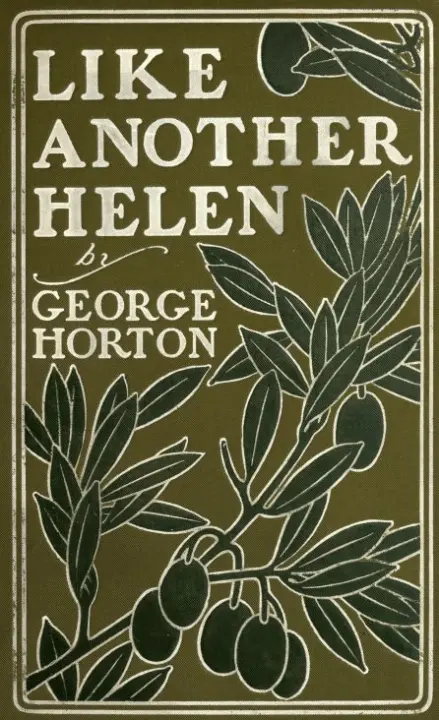
"Like Another Helen" by George Horton is a historical novel written in the late 19th century. The narrative unfolds during a time of tumultuous conflict in Crete, capturing the youthful enthusiasm of its central character, John Curtis, as he embarks on an adventure that intertwines themes of war, liberty, and personal discovery. The story introduces various characters, including young Cretan fighters and foreign enthusiasts, all drawn by a shared cause against oppression. The opening of the book sets the stage with a caique secretly delivering weapons to the insurgents in Crete during a period of rising rebellion. Amidst the excitement of the impending conflict, we meet John Curtis, who, inspired by his surroundings and the passionate fervor of the locals, decides to immerse himself in the events unfolding in Crete. He forms connections with characters such as Lieutenant Peter Lindbohm and Michali Papadakes, both of whom share a commitment to the Cretan cause. The narrative expresses the thrill and danger they encounter as they navigate through a blend of camaraderie and national pride, establishing a foundation for the adventures that lie ahead.
Introduction adapted from the source catalogue; source summaries may be automatically generated.
Free to read · English · 70,377 words · No account needed
MAKE TIME FOR A GOOD BOOK
On by default. Untick to stop anonymous reading totals. Each page counts after 10 seconds in view. How this works.
Anonymous counting is on unless you have switched it off.
"She was the daughter of some friends of ours," broke in Curtis, volubly, as Lindbohm waved his hand toward him. "Her father, a priest, befriended us. We were shipwrecked and I stepped on some sort of a damned thing, a kind of sea-pincushion stuck full of pins, and it poisoned me. And the priest took me in and took care of me, and the Turks swooped down on the village and murdered half the inhabitants and carried the girl and her father off. Then they killed the old man. This Kostakes--"
"That must have been one of the chaps that we hanged last night,"
interrupted Lieutenant Jones.
"Yust so," said Lindbohm, "and now we want to know what has become of Panayota. My friend here--"
"The fact is we feel very grateful and we want to know what has become of the girl," interrupted Curtis, determined at all hazards to head off Lindbohm's explanation to this civilized Englishman, who might be inclined to smile at a tale of romance.
"The commandant is out, but I think I am the very man you want to see," said the Englishman. "This gentleman, Kostakes, it seems, had three wives, two Turkish ladies besides the Greek--"
"The Greek was not his wife!" interrupted Lindbohm, with dignity.
"Well, however that may be, they all came back to the ruins of his house--it seems his house got in the way of one of our shells and there wasn't much left of it. Well, there they all stood, the two houris, wringing their hands and howling and the Greek quiet enough, but looking sort of dazed. I was out with a squad and came across them myself. Well, to make a long story short, we're assisting all the Turks to emigrate from here that feel so disposed, and we sent off the three women this morning."
"My God--where to?" asked Lindbohm.
"Why, the Greek, it seems, had some friends in Athens. She has had enough of Mohammedanism, and wanted to be put off there. So we gave her a pass to Athens. The other two go on to Constantinople."
"When does the next boat go to Athens?" asked Curtis, looking up
suddenly.
"There's an Austrian Lloyd to-morrow morning at ten which stops at
Athens."
"For--?"
"Trieste."
The Englishman accompanied his two callers to the gate.
"I'd like to hear the story of your adventures with the insurgents," he said. "You must have had some lively experiences. Good day, gentlemen."
"By the way," cried Lindbohm, turning back, "lest there be any mistake, was this Greek girl very beautiful?"
"Ye-es, yes, I should call her a very fine woman."
"What was the color of her hair? Brown?"
Your reading position is saved on this browser. Take it to another device with a library code. Reading pages adapt to text, rather than matching a printed edition.
BEHIND THE BOOK
This eBook is for the use of anyone anywhere in the United States and most other parts of the world at no cost and with almost no restrictions whatsoever. You may copy it, give it away or re-use it under the terms of the Project Gutenberg License included with this eBook or online at www.gutenberg.org. If you are not located in the United States, you will have to check the laws of the country where you are located before using this eBook. Read the source licence.
The original source file, including credits and licence, is retained by this library. Request an original-format copy at no charge. Please include the book title and Project Gutenberg identifier #58115.
KEEP YOUR CURIOSITY GOING
Cécile Tormay

Moritz Busch
Coulson Kernahan
John L. Ransom

Maurice Baring
Frances Wright