THE CLASSIC COLLECTION✦The blight of AsiaCLASSIC FREE BOOKS
The blight of Asia
George Horton
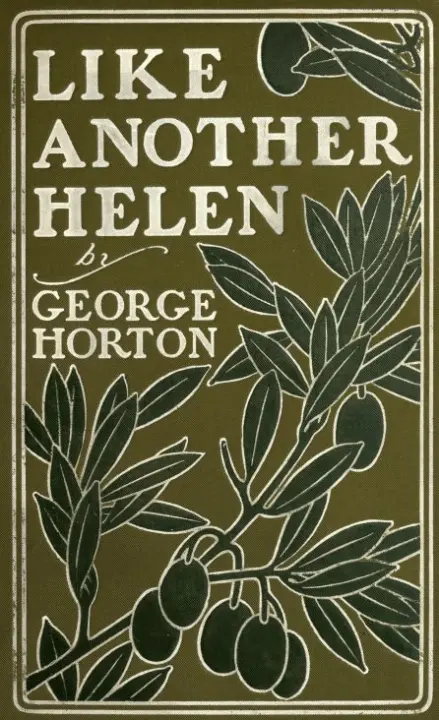
THE CLASSIC COLLECTION · 1900
"Like Another Helen" by George Horton is a historical novel written in the late 19th century. The narrative unfolds during a time of tumultuous conflict in Crete, capturing the youthful enthusiasm of its central character, John Curtis, as he embarks on an adventure that intertwines themes of war, liberty, and personal discovery. The story introduces various characters, including young Cretan fighters and foreign enthusiasts, all drawn by a shared cause against oppression. The opening of the book sets the stage with a caique secretly delivering weapons to the insurgents in Crete during a period of rising rebellion. Amidst the excitement of the impending conflict, we meet John Curtis, who, inspired by his surroundings and the passionate fervor of the locals, decides to immerse himself in the events unfolding in Crete. He forms connections with characters such as Lieutenant Peter Lindbohm and Michali Papadakes, both of whom share a commitment to the Cretan cause. The narrative expresses the thrill and danger they encounter as they navigate through a blend of camaraderie and national pride, establishing a foundation for the adventures that lie ahead.
Introduction adapted from the source catalogue; source summaries may be automatically generated.
Free to read · English · 70,377 words · No account needed
MAKE TIME FOR A GOOD BOOK
On by default. Untick to stop anonymous reading totals. Each page counts after 10 seconds in view. How this works.
Anonymous counting is on unless you have switched it off.
"Now, we are ready," he said, to Michali; "lead on to breakfast."
"I think," replied Michali, "that we must to the sea go down, and pass around the shore to where the caique wished to come up. There we shall find Greeks waiting. Embros!" (forward.)
But, alas, when they arrived at the beach again they found that the little stretch of sand which had been their salvation ended against an abrupt wall of rock.
"We must go around the hill the other way," said Curtis.
"We may happen on a shepherd or see a village," suggested Michali, cheerfully. "Many people live along this northern coast of the island."
So they returned again to the bit of sandy beach where they had landed. By this time it was ten o'clock.
"Hello! What's this?" cried Curtis, who was walking nearer the sea than the others. They looked. He was holding between his finger and thumb a small, spherical object, that looked like a bluish-black apple, stuck full of pins of the same color.
"Bravo!" shouted Michali. "Bravo! I think it will be our breakfast.
It is an achinoos."
"Eat that?" asked Lindbohm, regarding the object doubtfully. "I would yust as soon bite into a live hedgehog."
Michali produced a large pocket knife and cut the creature in two. It contained about a spoonful of yellow eggs and a quantity of dark, muddy substance. Carefully collecting the contents upon the point of his knife, he offered the dainty morsel to Lindbohm and Curtis, who each took a little on the tip of his finger and tasted.
"Tastes like salt mud," said the Swede.
"Nevertheless, if it will sustain life, and if more of them can be found"--suggested the American.
Removing their shoes and arming themselves with sticks, the three adventurers waded out a little way from shore and began to poke among the rocks for sea urchins.
In a short time a pile of living pincushions rewarded their efforts. The spines moved continually, as though rooted in loose skin, and occasionally one of the queer creatures rolled slowly seaward, walking on the tips.
"Kind of a globular centipede, with the legs sticking in all directions, isn't he?" observed Curtis, regarding one in motion.
"You would have thought so had you on one stepped!" replied Michali; "the spines are sometimes--what you call him, poisonous. You would not have put on your boot for many days."
"They are slow eating," said the Swede, sucking the contents from the half of one noisily, as though it were a teacup.
"Nevertheless, with bread they are delicious," persisted Michali.
"Anything would be delicious with bread yust now," observed the
Lieutenant.
Your reading position is saved on this browser. Take it to another device with a library code. Reading pages adapt to text, rather than matching a printed edition.
BEHIND THE BOOK
This eBook is for the use of anyone anywhere in the United States and most other parts of the world at no cost and with almost no restrictions whatsoever. You may copy it, give it away or re-use it under the terms of the Project Gutenberg License included with this eBook or online at www.gutenberg.org. If you are not located in the United States, you will have to check the laws of the country where you are located before using this eBook. Read the source licence.
The original source file, including credits and licence, is retained by this library. Request an original-format copy at no charge. Please include the book title and Project Gutenberg identifier #58115.
KEEP YOUR CURIOSITY GOING
Cécile Tormay

Moritz Busch
Coulson Kernahan
John L. Ransom

Maurice Baring
Frances Wright