THE CLASSIC COLLECTION✦In furthest IndCLASSIC FREE BOOKS
In furthest Ind
Sydney C. Grier
THE CLASSIC COLLECTION · 1902
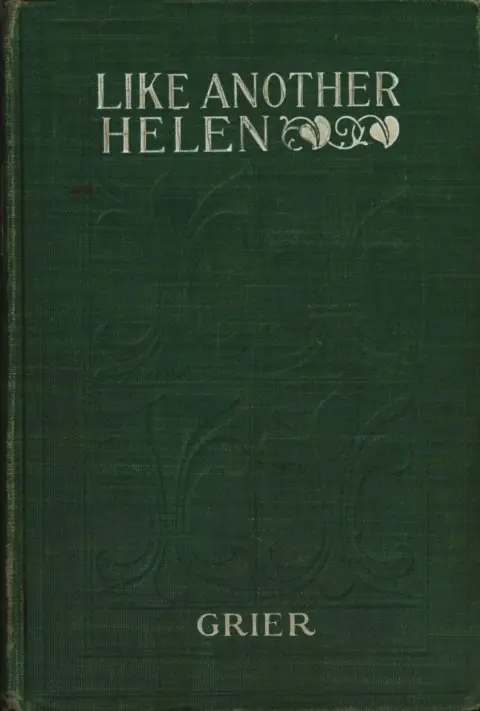
"Like Another Helen" by Sydney C. Grier is a historical novel written in the early 20th century. The story is set against the backdrop of Indian history and follows the experiences of a young lady named Sylvia Freyne as she embarks on a journey to India, filled with potentially transformative and tumultuous encounters. As she navigates her departure from England and her arrival in an unfamiliar land, readers can expect themes of friendship, societal expectations regarding marriage, and romance. The opening of the novel reveals Sylvia's deep emotional turmoil as she prepares to leave the only home she has ever known. Through letters to her friend Amelia, Sylvia expresses sorrow at her farewell, including the fond memories of her school days and the emotional farewells she experiences. As she travels towards her new life, she meets various companions, including Mr. Colvin Fraser and Mr. Ranger, who are also bound for India. The initial pages establish Sylvia's character as a reflective and thoughtful young woman, while hinting at the social pressures and romantic entanglements she will face in her new homeland. This opening sets the stage for a story that blends personal growth with historical and cultural exploration.
Introduction adapted from the source catalogue; source summaries may be automatically generated.
Free to read · English · 187,126 words · No account needed
MAKE TIME FOR A GOOD BOOK
On by default. Untick to stop anonymous reading totals. Each page counts after 10 seconds in view. How this works.
Anonymous counting is on unless you have switched it off.
But I have wandered from my mention of Mr Watts’ intrepid journey, from which he returned safely, and which brought to me such a confirmation of my hopes as served to repay me in full for all my arduous labours for Miss Freyne’s release. For Mirza Shaw, coming from attending his master in his dangerous passage, approached the varendar where I sat.
“Siab,” he said, “Nezmennessa Beeby is the Beeby you seek.”
“What!” I cried, “have you spoke with her?”
“Nay,” said he, “but it chanced that as we passed the house to-day one of the gwallers that was bearing Watch Siab’s palanqueen slipped and fell, and the rest raised a great talk and shouting. There’s a small barred window high in the wall just there, and when I glanced at it I saw a woman looking out. She was very white, and she wore a head-dress such as the Beebies of Calcutta wear.”
“Heaven be praised for this certainty!” I cried. “Did the lady make
any sign to you?”
“Nay, Siab; how should she know who I might be? She disappeared from the window suddenly as I looked at her, and your honour’s servant saw no more.”
“But wait, Mirza Shaw. Was the lady in good health? How did she look?”
“Why, Siab, she appeared pale, as the European Beebies always do. I can’t tell if she was ill, since I never saw her before.”
And this cold-hearted rascal had beheld my beloved, yet could tell me no more of her than this! Pity me, madam, seeing me so tantalised. But this en’t the last of my trials. Yesterday Mr Watts despatched Omar-beg, a Moorman, an officer of Meer Jaffier’s, to Calcutta with the treaty (I fear I would be right in saying the two treaties, the white and the red), but announced to us his purpose of remaining at Muxidavad until the last extremity. Dr Dacre is still here with us, and we have just been joined by Mr Ranger, whose occupation is now gone, since the garrison of the Cossimbuzar factory, which was reduced at the end of April to no more than a corporal and six European soldiers besides the bucksarries, has now been wholly withdrawn by Colonel Clive’s orders, and the men are on their way to Calcutta. My pleasant friend refused to accompany them, being determined, as he says, to be in at the death, which will be his own, indeed, as much as ours. Mr Watts has desired us all to be ready on the shortest notice to take flight, or at least to remove to Maudipore,[17.28] a country house that he occupies two miles to the south of Cossimbuzar, whence we may seek to refuge at Calcutta. This order has filled me with apprehension, for what’s to be done if Mr Watts desire to send us away before we have released Miss Freyne? and work as hard as we may during the hours of darkness, the Tartar and I have not yet been able entirely to complete our preparations. Worst of all, Miss Freyne has no knowledge of ’em, for Mirza Shaw has in vain endeavoured to obtain access to her in his disguise as a pedlar. The women of the house, even, I believe, her own attendant, will come and examine his wares, but he can’t get sight of the lady. And now the Nabob, who has shut himself up in his castle of Herautjeel, in the midst of the city, is exchanging menaces with Meer Jaffier, whose fortified palace is separated from his by the river, and it’s expected that the Prince will shortly call up his army, and open upon our friend the pretender with his cannon, when Mr Watts will questionless order us out of the city....
Your reading position is saved on this browser. Take it to another device with a library code. Reading pages adapt to text, rather than matching a printed edition.
Sydney C. Grier

Sydney C. Grier
Sydney C. Grier
Sydney C. Grier
BEHIND THE BOOK
This eBook is for the use of anyone anywhere in the United States and most other parts of the world at no cost and with almost no restrictions whatsoever. You may copy it, give it away or re-use it under the terms of the Project Gutenberg License included with this eBook or online at www.gutenberg.org. If you are not located in the United States, you will have to check the laws of the country where you are located before using this eBook. Read the source licence.
The original source file, including credits and licence, is retained by this library. Request an original-format copy at no charge. Please include the book title and Project Gutenberg identifier #66471.
KEEP YOUR CURIOSITY GOING
Cécile Tormay

Moritz Busch
Coulson Kernahan
John L. Ransom

Maurice Baring
Frances Wright