THE CLASSIC COLLECTION✦In furthest IndCLASSIC FREE BOOKS
In furthest Ind
Sydney C. Grier
THE CLASSIC COLLECTION · 1902
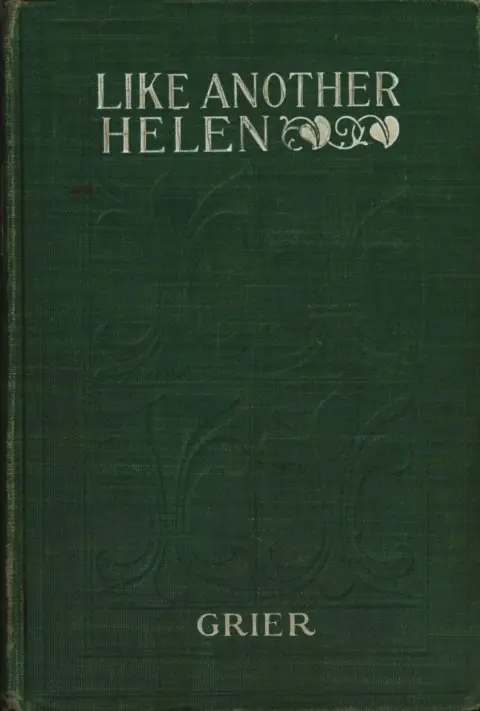
"Like Another Helen" by Sydney C. Grier is a historical novel written in the early 20th century. The story is set against the backdrop of Indian history and follows the experiences of a young lady named Sylvia Freyne as she embarks on a journey to India, filled with potentially transformative and tumultuous encounters. As she navigates her departure from England and her arrival in an unfamiliar land, readers can expect themes of friendship, societal expectations regarding marriage, and romance. The opening of the novel reveals Sylvia's deep emotional turmoil as she prepares to leave the only home she has ever known. Through letters to her friend Amelia, Sylvia expresses sorrow at her farewell, including the fond memories of her school days and the emotional farewells she experiences. As she travels towards her new life, she meets various companions, including Mr. Colvin Fraser and Mr. Ranger, who are also bound for India. The initial pages establish Sylvia's character as a reflective and thoughtful young woman, while hinting at the social pressures and romantic entanglements she will face in her new homeland. This opening sets the stage for a story that blends personal growth with historical and cultural exploration.
Introduction adapted from the source catalogue; source summaries may be automatically generated.
Free to read · English · 187,126 words · No account needed
MAKE TIME FOR A GOOD BOOK
On by default. Untick to stop anonymous reading totals. Each page counts after 10 seconds in view. How this works.
Anonymous counting is on unless you have switched it off.
My dear girl will scarce credit it, but I am convinced that my persecutor entertains himself during his absences with devising fresh miseries for me. He comes to the house muffled in various disguises, and is at huge pains to explain to me that he runs an incredible risque of being tracked by spies, and that he can’t set out to pay me a visit save when he has seen the Nabob engrossed in some new and delightful plan of wickedness. “Then,” says he, “I fly on the wings of love to my charmer, confident that one short hour in her presence will stimulate my invention even to the point of devising fresh pleasures for Saradjot Dollah, such as may gain me a further audience of her.”
“Indeed, sir,” I said, “I can’t but think it a pity that you don’t attempt to lead the Nabob into the paths of virtue. In so novel a pursuit the Prince--and perhaps Meer Sinzaun also--would find a freshness and singularity far more agreeable than the dulness of the evenings you are so obliging as to sacrifice to the poor prisoner here.”
“Dulness! sacrifice!” he cried, brushing away my suggestion lightly; “sure Clarissa must be seeking for compliments. I’m hugely grateful, madam, for your obliging thought, but I’ll assure you that I amuse myself infinitely during these visits. I can’t recall any occasion of my life on which I have been better entertained.”
I can well believe it, Amelia. I never look at him if I can help it, for so great is the loathing with which the man inspires me that I can’t bear to meet his eye, but when through inadvertence I have done so, I perceive in it a sort of sombre ferocity united with delight in my sufferings that makes me tremble. Can my dear Miss Turnor figure to herself the being forced to enter a tyger’s cage for the purpose of diverting the tyger? Which would be the worse, does she think, this, or that the tyger should be so obliging as to exert himself to entertain you? I think she’ll say that one is as bad as the other, and this is my case with Sinzaun. I suffer equally when he compels me to speak and when he speaks himself, for the man, my dear, is an atheist. I would not write this terrible charge, lest my indignation against him should have caused me to judge him harshly, if I had not heard it from his own lips, but he has assured me more than once that the one deity in which he believes is gain, and the one incentive that moves men is advantage. “I believe in my Clarissa,” was the utmost I could get from him when I pressed him strongly on the point, and he added that his life had taught him there was no Providence, either to punish the evil or protect the good, but only a blind fate, out of whose unsteady dispositions the wise man must shape his own road to success. En’t this cruelty indeed, to seek to deprive a poor creature of her faith in God just when she needs it most? But sure Meer Sinzaun has overreached himself in this, for I need not go far to learn of the existence of the devil, and to disbelieve in God on the devil’s word would questionless be the extremest folly in the world. But having thus unfolded to me what he called the wise man’s creed, which he said he had gathered both from European philosophers and from the sages of the East, Sinzaun went on to show its practical application, desiring to prove that there was no truth nor honour nor virtue in the world, any more than Divine justice nor providence, and proceeded to turn into ridicule the very books he had been praising to me a month before. I can but be grateful he don’t know his Bible as well as he does Mr Richardson’s works, for sure ’twas only ignorance, and not good will, made him stop short of attacking that. He cited instance after instance to prove that there was no virtue in goodness, and no reward for’t if there were, and no shame in sin, nor punishment neither, and I could not hope to contend with him. You know, Amelia, I was always the one to be worsted in an argument. How I wished that my dear Mrs Hurstwood were present, with her ready tongue, to give the assailant as good as he brought, and to silence, if she could not convince him, whereas I could but sit quiet, or protest without hope of moving him, while he attacked everything in which the Christian believes. At last he took his leave, and summoning my courage, I said as I curtseyed to him--
Your reading position is saved on this browser. Take it to another device with a library code. Reading pages adapt to text, rather than matching a printed edition.
Sydney C. Grier

Sydney C. Grier
Sydney C. Grier
Sydney C. Grier
BEHIND THE BOOK
This eBook is for the use of anyone anywhere in the United States and most other parts of the world at no cost and with almost no restrictions whatsoever. You may copy it, give it away or re-use it under the terms of the Project Gutenberg License included with this eBook or online at www.gutenberg.org. If you are not located in the United States, you will have to check the laws of the country where you are located before using this eBook. Read the source licence.
The original source file, including credits and licence, is retained by this library. Request an original-format copy at no charge. Please include the book title and Project Gutenberg identifier #66471.
KEEP YOUR CURIOSITY GOING
Cécile Tormay

Moritz Busch
Coulson Kernahan
John L. Ransom

Maurice Baring
Frances Wright