THE CLASSIC COLLECTION✦In furthest IndCLASSIC FREE BOOKS
In furthest Ind
Sydney C. Grier
THE CLASSIC COLLECTION · 1902
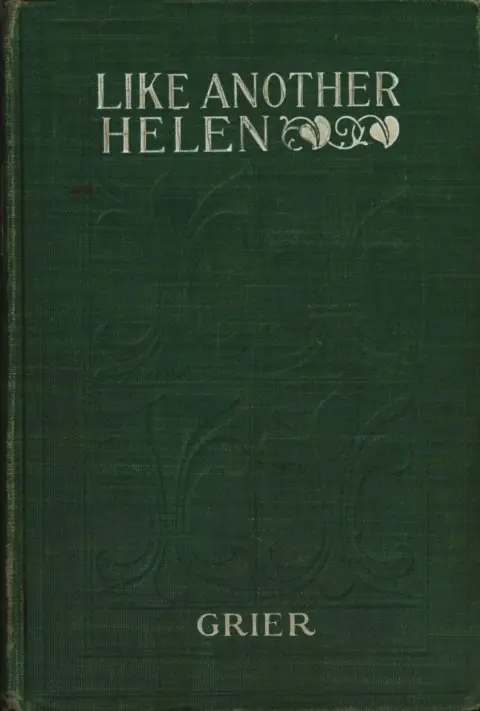
"Like Another Helen" by Sydney C. Grier is a historical novel written in the early 20th century. The story is set against the backdrop of Indian history and follows the experiences of a young lady named Sylvia Freyne as she embarks on a journey to India, filled with potentially transformative and tumultuous encounters. As she navigates her departure from England and her arrival in an unfamiliar land, readers can expect themes of friendship, societal expectations regarding marriage, and romance. The opening of the novel reveals Sylvia's deep emotional turmoil as she prepares to leave the only home she has ever known. Through letters to her friend Amelia, Sylvia expresses sorrow at her farewell, including the fond memories of her school days and the emotional farewells she experiences. As she travels towards her new life, she meets various companions, including Mr. Colvin Fraser and Mr. Ranger, who are also bound for India. The initial pages establish Sylvia's character as a reflective and thoughtful young woman, while hinting at the social pressures and romantic entanglements she will face in her new homeland. This opening sets the stage for a story that blends personal growth with historical and cultural exploration.
Introduction adapted from the source catalogue; source summaries may be automatically generated.
Free to read · English · 187,126 words · No account needed
MAKE TIME FOR A GOOD BOOK
On by default. Untick to stop anonymous reading totals. Each page counts after 10 seconds in view. How this works.
Anonymous counting is on unless you have switched it off.
“You are a Moorwoman now, Beebee,” says the presumptuous Misery, “and of course you’ll wear the Moorish dress.”
“I en’t a Moorwoman, and I won’t wear a Moorish dress,” said I, upon which the old woman had the insolence to mutter that since Meer Sinzaun furnished the clothes I might as well wear what he sent.
“On the contrary,” said I, “I’ll have ’em as unlike as possible to those he sent, that so I may forget the humiliation sooner. How dare you, woman, bring me these shocking gaudy colours, when you know I’m lamenting the loss of the most tender and deeply honoured of parents? Fetch me some decent black stuff, and a tailor to make a gown according to my taste, for I won’t wear these things.”
Finding me so angry, Misery became vastly submissive, as is her way when I assert my will, and entreated with tears that I would pardon my slave, for there was no such thing as a black stuff to be had in all Muxadavad, since none of the Indians wear this mournful hue, and that to send to any of the foreign factories for it would cause suspicion that ’twas a European desired so unusual a fabric.
“Very well,” I said, “I en’t unreasonable. You may bring me white or gray or purple, and I’ll wear it, provided the tailor knows his business.”
But at this Misery fell down at my feet again, and struck her head against the floor, lamenting that ’twas impossible to employ a tailor. He would demand a muster,[16.01] she said, and when he had my old gown given him, there would be no concealing that ’twas part of a European dress. This was true enough, and I resigned with some regret the notion of the tailor, for these men are extraordinary ingenious in copying any pattern given to ’em, and produce wonderful pieces of work with their rusty needles and scissors that scarce hang together at the rivet. “Come,” I said to Misery, “you and the other maid-servants shall do the sewing, and I’ll tell you what I wish done.” But to hear the cry she raised, you would think she had never touched a needle in all her life, which I can hardly credit. Then, imagining that she had vanquished me, she sat up upon her heels with a smile of assurance to see me put on the Persian clothes. But this I was resolved not to do, for the dress would have been the very livery of slavery, implying that I laid down willingly the privileges of our own free and enlightened land to take up the wretched degraded existence of the Indian women. “Not at all, Misery,” I said; “see that the stuff is got, and I’ll do the sewing myself.” At this there was another shriek of protest, but this time I was firm, and when next the steward came to the curtain to enquire my wishes, I demanded stuff and needles and thread. (My own needles were gone out of my hussy. I fear Misery knows more about them than she feigned to do.) The steward appeared to consider my request in the highest degree extraordinary, more especially when Misery had spoke to him for some time in the Persic[16.02] language, which I don’t understand, but upon my recalling to him sharply his master’s orders, he besought my pardon humbly for his hesitation and promised obedience. More, he asked me whether I was content with my woman, or if I found her saucy, and would prefer another, but to this I answered that she was well enough, and I desired no change. You perceive, my dear, I know that Misery is false to me, but with another I might be in doubt whether she was to be trusted or no, and so perhaps be led into rash confidences. My forbearance gained me much credit with Misery, who came to me afterwards and placed my foot upon her head, thanking me, in her usual insinuating, deceitful style, for my goodness in passing over her pert behaviour.
Your reading position is saved on this browser. Take it to another device with a library code. Reading pages adapt to text, rather than matching a printed edition.
Sydney C. Grier

Sydney C. Grier
Sydney C. Grier
Sydney C. Grier
BEHIND THE BOOK
This eBook is for the use of anyone anywhere in the United States and most other parts of the world at no cost and with almost no restrictions whatsoever. You may copy it, give it away or re-use it under the terms of the Project Gutenberg License included with this eBook or online at www.gutenberg.org. If you are not located in the United States, you will have to check the laws of the country where you are located before using this eBook. Read the source licence.
The original source file, including credits and licence, is retained by this library. Request an original-format copy at no charge. Please include the book title and Project Gutenberg identifier #66471.
KEEP YOUR CURIOSITY GOING
Cécile Tormay

Moritz Busch
Coulson Kernahan
John L. Ransom

Maurice Baring
Frances Wright