THE CLASSIC COLLECTION✦In furthest IndCLASSIC FREE BOOKS
In furthest Ind
Sydney C. Grier
THE CLASSIC COLLECTION · 1902
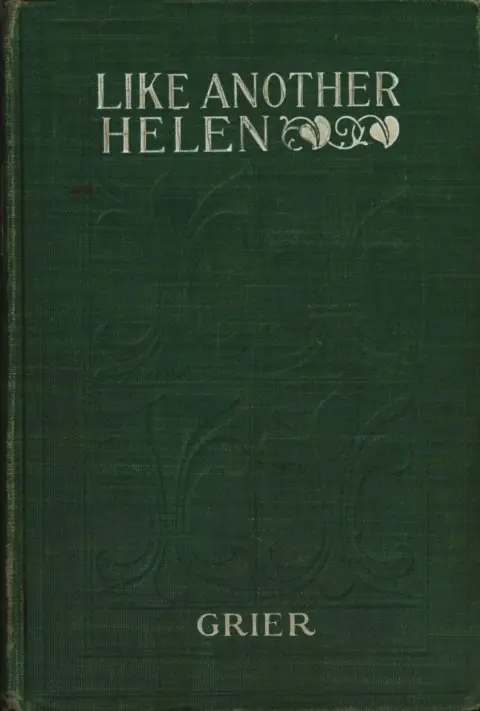
"Like Another Helen" by Sydney C. Grier is a historical novel written in the early 20th century. The story is set against the backdrop of Indian history and follows the experiences of a young lady named Sylvia Freyne as she embarks on a journey to India, filled with potentially transformative and tumultuous encounters. As she navigates her departure from England and her arrival in an unfamiliar land, readers can expect themes of friendship, societal expectations regarding marriage, and romance. The opening of the novel reveals Sylvia's deep emotional turmoil as she prepares to leave the only home she has ever known. Through letters to her friend Amelia, Sylvia expresses sorrow at her farewell, including the fond memories of her school days and the emotional farewells she experiences. As she travels towards her new life, she meets various companions, including Mr. Colvin Fraser and Mr. Ranger, who are also bound for India. The initial pages establish Sylvia's character as a reflective and thoughtful young woman, while hinting at the social pressures and romantic entanglements she will face in her new homeland. This opening sets the stage for a story that blends personal growth with historical and cultural exploration.
Introduction adapted from the source catalogue; source summaries may be automatically generated.
Free to read · English · 187,126 words · No account needed
MAKE TIME FOR A GOOD BOOK
On by default. Untick to stop anonymous reading totals. Each page counts after 10 seconds in view. How this works.
Anonymous counting is on unless you have switched it off.
Sir,--I send you these lines by the hand of Mess. Manningham and La Beaume, to whom is committed the melancholy task of announcing at Madrass the deplorable ruin that has lately fell upon our Calcutta factory. I make no excuse for addressing a letter to a gentleman that I know so slightly, and with whom my relations in the past have not been so friendly as I should have desired, seeing he had succeeded in inspiring such a tender interest in the bosom of my dearest friend. Mr Fraser don’t need me to tell him that I was always of opinion Miss Freyne might do vastly better than marry him, and that in aspiring even to the honour of her friendship he was pretending to a favour much above his deserts. True, sir, and even at this present time I can’t bring myself to feign otherwise, but I don’t think so ill of Mr Fraser as to imagine he will let my whimsies prejudice him against the lovely and innocent creature in whose behalf I now demand his help. What (you’ll say), I have changed my tune? Indeed, sir, I’ll assure you that the change springs only from the need of the moment, and ’twill require a very exceptional behaviour on your part to induce it to become permanent. But I do need your help,--nay, I demand it, and this because there’s no one else to whom I can confidently apply, and to whom Miss Freyne’s fate is a matter of such proper concern. My spouse knows that if there’s any question of attacking Muxadavad when reinforcements reach us, he must march with the troops to Miss Freyne’s rescue (if he be forced to do no more than carry a fire-rock in the ranks), or he shall never again call Charlotte Hamlin his wife, but the unreasonable creature persists in considering me before my dearest Sylvia, and won’t consent to take any present step that might interfere with his protecting me. Our excellent Mr Freyne is no more, and his lady is too much relieved to find herself suddenly liberated from the scandal that was beginning to threaten her name, and to believe herself the heir to all that her spouse has left behind him, to feign any interest in the recovery of her stepdaughter. Your cousin Colquhoun, the worthiest person of my acquaintance (you are aware of my opinion, that if you, sir, had possessed the Captain’s disposition, or he your youth and prospects, I need have sought no further for a spouse for my Sylvia), is also dead, and the only person left to watch over the dear creature’s fate is myself. The fearful news that my dearest girl had been carried into the most frightful and revolting slavery imaginable threw me at first into such a sickness that both Dr Knox and a Dutch physician from the factory here predicted my immediate dissolution, but, sir, I can’t, I won’t die, while my Sylvia needs a disinterested friend. If I can do no more than incite you to attempt her deliverance, I shan’t have lived in vain, but I fear that I don’t trust Mr Fraser sufficiently to die happy until I have seen him actually successful. Come, sir, I challenge you to undertake the task. You have declared that you love my incomparable Miss Freyne--or at least, at the end of a monstrous fine and flowery epistle of yours there was a postscriptum that the dear creature would not read to me, but to which her eyes returned ever and anon with a smile of sweet satisfaction when she thought I wasn’t looking at her--what, pray, is your love good for? Hitherto it has been fertile in producing the most fantastical letter ever wrote out of a romance, and the most unhappy expedient for sparing your punctilio and testing your mistress’s affection that ever set a gentleman and lady at cross purposes, but is it capable of anything more? You have confused and muddled your affairs in a style worthy only of a poet; is it possible to you to go to work like a man of sense to set ’em right? If so, let me see you throwing, for once, your prudence and calculation and worldly wisdom to the winds, and setting out to rescue Miss Freyne, if living, to avenge her, if dead. You’ll observe that I don’t condition with you to marry her if she be rescued. Your sentiments may have altered, and no man shall marry my Sylvia Freyne that would make a condescension of doing so. My house and my heart are always open to her; your part is only to restore her to the arms of, sir, your obedient servant,
Your reading position is saved on this browser. Take it to another device with a library code. Reading pages adapt to text, rather than matching a printed edition.
Sydney C. Grier

Sydney C. Grier
Sydney C. Grier
Sydney C. Grier
BEHIND THE BOOK
This eBook is for the use of anyone anywhere in the United States and most other parts of the world at no cost and with almost no restrictions whatsoever. You may copy it, give it away or re-use it under the terms of the Project Gutenberg License included with this eBook or online at www.gutenberg.org. If you are not located in the United States, you will have to check the laws of the country where you are located before using this eBook. Read the source licence.
The original source file, including credits and licence, is retained by this library. Request an original-format copy at no charge. Please include the book title and Project Gutenberg identifier #66471.
KEEP YOUR CURIOSITY GOING
Cécile Tormay

Moritz Busch
Coulson Kernahan
John L. Ransom

Maurice Baring
Frances Wright