THE CLASSIC COLLECTION✦An outlaw’s diary: the CommuneCLASSIC FREE BOOKS
An outlaw’s diary: the Commune
Cécile Tormay
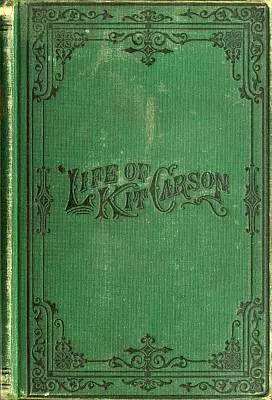
THE CLASSIC COLLECTION · 1869
"Life of Kit Carson, the Great Western Hunter and Guide" by Charles Burdett is a historical account written in the late 19th century. The narrative chronicles the life and adventures of Christopher Carson, known as Kit Carson, highlighting his legendary status as a frontiersman, hunter, guide, and Indian fighter in the American West. The book promises to deliver thrilling tales of Carson’s exploits among various cultures and landscapes, as he navigates the wild territories from the Mississippi River to the Pacific coast. At the start of the text, the author sets the stage for Kit Carson's extraordinary life, detailing his background, early influences, and the circumstances that shaped his character. From his modest beginnings in Missouri, Carson's transition from a saddler's apprentice to a daring hunter and trapper is vividly illustrated. The opening remarks emphasize Carson's modesty and bravery, as they prepare the reader for a series of captivating adventures filled with challenges and encounters with Native American tribes, detailing his experiences and the skills he honed in the rugged wilderness of the western frontiers.
Introduction adapted from the source catalogue; source summaries may be automatically generated.
Free to read · English · 76,144 words · No account needed
MAKE TIME FOR A GOOD BOOK
On by default. Untick to stop anonymous reading totals. Each page counts after 10 seconds in view. How this works.
Anonymous counting is on unless you have switched it off.
On the return of Messrs. Brevoort and Weatherhead from St. Louis, they presented Carson with a magnificent pair of pistols, upon whose silver mounting were inscribed such words as would laconically illustrate his noble deed, and the appreciation of the donors of the great service rendered.
The summer following was consumed in an excursion for trade, on behalf of himself and Maxwell, and a visit to the home of his daughter, now married in St. Louis; and which was prosecuted without incident worthy of note, until he came to a Cheyenne village on the Arkansas, upon his return. This village had received an affront from the officer of a party of United States troops bound to New Mexico, who had whipped one of their chiefs, some ten days before the arrival of Carson; and to have revenge upon some one of the whites, was now the passion of the whole tribe.
The conduct of this officer is only a specimen of that which thousands have exercised toward the Indians of the different tribes; and the result is the same in all cases. Carson's was the first party to pass the Indian village after this insult; and so many years had elapsed since he was a hunter at Bent's Fort, and so much had this nation been stirred by their numberless grievances, that Carson's name was no longer a talisman of safety to his party, nor even of respect to himself, in their then state of excitement; and as Carson went deliberately into the war council, which the Indians were holding on the discovery of his party, having ordered his men to keep their force close together, the Indians supposing he could not understand them, continued to talk freely of the manner of capturing the effects, and killing the whole party, and especially himself, whom they at once concluded was the leader. When Kit had heard all their plans, he coolly addressed them in the Cheyenne language, telling them who he was, his former association with and kindness to their tribe; and that now, he should be glad to render them any assistance they might need; but as to their having his scalp, he should claim the right of saying a word. The Indians departed, and Carson went on his way; but there were hundreds of the Cheyennes in sight upon the hills, and though they made no attack, Carson knew he was in their power, nor had they given up the idea of taking his train. His cool deliberation kept his men in spirits, and yet, except upon two or three of the whole fifteen, he could place no reliance in an emergency. At night the men and mules were all brought within the circle of wagons, grass was cut with their sheath-knives, and brought into the mules, and as large a guard was placed as possible. When all was quiet, Carson called outside the camp with him a Mexican boy of the party, and explaining to him the danger which threatened them, told him it was in his power to save the lives of the company, and giving him instructions how to proceed, sent him on alone to Rayedo, a journey of nearly three hundred miles, to ask an escort of United States troops to be sent out to meet him, telling the brave young Mexican to "put a good many miles between him and the camp before morning;" and so he started him, with a few rations of provisions, without telling the rest of the party that such a step was necessary. This boy had long been in Carson's service, and was well known to him as faithful and active, so that he had no doubts as to the faithful execution of the trust confided to him; and in a wild country like New Mexico, with the out-door life and habits of its people, a journey like the one on which he was dispatched, was not an unusual occurrence: indeed, in that country, parties on foot often accompany those on horse, for days together, and do not seem to feel the fatigue. Carson now returned to the camp to watch all night himself; and at break of day they were again upon the road. No Indians appeared until nearly noon, when five warriors came galloping toward them. As they came near enough to hear him, Carson ordered them to halt, and approaching, told them that the night before, he had sent a messenger to Rayedo, to inform the troops that their tribe were annoying him; and if he or his men were molested, terrible punishment would be inflicted by those who would surely come to his relief. The Indians replied, that they would look for the moccasin tracks, which they probably found, and Carson considered this the reason that induced the whole village to pass away toward the hills after a little time, evidently seeking a place of safety. The young Mexican overtook the party of troops whose officer had caused the trouble, to whom he told his story, and failing to secure sympathy, he continued to Rayedo, and procured thence immediate assistance. Major Grier dispatched a party of troops, under Lieutenant R. Johnston, which, making rapid marches, met Carson twenty-five miles below Bent's Fort; and, though they encountered no Indians, the effect of the quick transit of troops from one part of the country to another, could not be other than good, as a means of impressing the Indians with the effective force of the United States troops.
Your reading position is saved on this browser. Take it to another device with a library code. Reading pages adapt to text, rather than matching a printed edition.
BEHIND THE BOOK
This eBook is for the use of anyone anywhere in the United States and most other parts of the world at no cost and with almost no restrictions whatsoever. You may copy it, give it away or re-use it under the terms of the Project Gutenberg License included with this eBook or online at www.gutenberg.org. If you are not located in the United States, you will have to check the laws of the country where you are located before using this eBook. Read the source licence.
The original source file, including credits and licence, is retained by this library. Request an original-format copy at no charge. Please include the book title and Project Gutenberg identifier #41864.
KEEP YOUR CURIOSITY GOING
Cécile Tormay

Moritz Busch
John L. Ransom
Frances Wright
Cécile Tormay

Mabel Potter Daggett