
Life of Edwin Forrest, the American Tragedian. Volume 1 (of 2)
William Rounseville Alger & Horatio, Jr. Alger

THE CLASSIC COLLECTION · 1877
"Life of Edwin Forrest, the American Tragedian. Volume 2 (of 2)" by William Rounseville Alger is a historical account written in the late 19th century. The book explores the life and career of Edwin Forrest, one of America's most prominent actors in the 19th century, noting his impact on the dramatic arts as well as the public's and critics' reception of his performances. It delves into his struggles with criticism and the evolution of public perception, highlighting both the acclaim he received and the scorn from detractors. The beginning of this volume presents a rich discussion on the nature of newspaper criticism during Edwin Forrest's career, illustrating how different factions of critics regarded him. It outlines the complexities of dramatic art and the difficulties actors face in responding to public scrutiny. Additionally, it emphasizes Forrest's careful reading of critiques and his aspirations to improve his craft, as well as the influence of personal animosities and societal expectations on the perception of his work. The opening sets the stage for a nuanced exploration of Forrest's challenges and achievements in the theatrical world.
Introduction adapted from the source catalogue; source summaries may be automatically generated.
Free to read · English · 168,377 words · No account needed
MAKE TIME FOR A GOOD BOOK
On by default. Untick to stop anonymous reading totals. Each page counts after 10 seconds in view. How this works.
Anonymous counting is on unless you have switched it off.
To this Forrest replied thus:
“I answer your letter dated the 29th and received by me on the 31st ult., solely to prevent my silence being misunderstood. Mr. Godwin has told me that the tardy reply to the most material part of mine of the 24th was sent by his advice. I should indeed think from its whole tone and character that it was written under instructions. I do not desire to use harsh epithets or severe language to you; it can do no good. But you compel me to say that all the important parts of yours are utterly untrue. It is utterly untrue that the accusations I now bring against you are ‘new.’ It is utterly untrue that since the discovery of that infamous letter, which you callously call ‘foolish,’ I have ever, in any way, expressed my belief of your freedom from guilt. I could not have done so, and you know that I have not done it. But I cannot carry on a correspondence of this kind; I have no desire to injure or to crush you; the fatal wrong has been done to me, and I only wish to put a final termination to a state of things which has destroyed my peace of mind, and which is wearing out my life.
The next step in the tragedy was the filing of an application for divorce by Forrest in Philadelphia, instantly counterchecked by a similar application on the part of Mrs. Forrest in New York. He was led to his suit because, in his own words, “unwilling to submit to calumnies industriously circulated by my enemies that I had unmanfully wronged an innocent woman, the only choice open to me was either to assert my rectitude before the tribunals of my country or endure throughout life a weight of reproach which I trust my entire life proves undeserved.” Her obvious motive in the counter-suit was the instinctive impulse and the deliberate determination to protect herself from remediless disgrace and utter social ostracism. No woman with her spirit, and with the host of friends which she had in the most honored walk of the community, could willingly accept the fearful penalty of letting such a case go by default, whether she were innocent or guilty. To those who held her innocent, as the best people did, her attitude appealed to every chivalrous sentiment of admiration and sympathy; but to him who believed her guilty, as her husband did, it presented every motive to aggravate anger and resentment. The inevitable consequences resulted, and a prolonged struggle ensued, which was a desperate fight for moral existence. The miserable details need not be specified. As the combat thickened, the deeper grew the passions on each side, and the more damaging the charges and alleged disclosures. The hostile championship likewise became intenser and wider. The trial, with the incrimination of adultery and the recrimination of the same offence, began in December, 1851, and reached through six weeks. No trial of the kind in this country had ever awakened so eager and extended an interest. The evidence and arguments were minutely reproduced in the press, sold by wholesale in every corner of the land, and devoured by unnumbered thousands with every sort of scandalous gossip and comment. The completed report of the trial fills two enormous volumes of more than twelve hundred pages each. The lady gained much for her cause by her strict propriety of language, her elegant deportment, the unequalled ability and passionate zeal of her counsel, and the exalted character of her large circle of influential and unfaltering friends. The man lost as much for his cause by the partisan prejudices against him, by the imprudences of his more reckless friends, and especially by the repelling violence and coarseness of expression and demeanor to which in his exasperated state he was too often tempted. Abundant examples have already been furnished in these pages of his scholarly taste, intellectual dignity, moral refinement and strength. Justice to the truth requires the frank admission that there was also in him a rude and harsh element, a streak of uncivilized bluntness or barbaric honesty of impulse, shocking to people of conventional politeness. These people did him injustice by chiefly seeing this cruder feature in his character, for it was quite a subordinate part of his genuine nature. But it is only fair to give specimens of the level to which it not unfrequently sank him in social appearance. In his eyes observance of external seemings was nothing in comparison with sincerity to internal realities. After his separation, but before his divorce, meeting his wife in the street, she said he kept her there walking up and down for over two hours in a pouring rain, hearing and replying to him, neither of them having an umbrella. At this same period watching one night to see who entered or left his house, in which his wife was still residing, though alone, a man named Raymond came out. The following intelligible dialogue immediately took place, as sworn to in court by Raymond himself. “Why are you sneaking away like a guilty man?” “Edwin Forrest, you have waylaid me by night with a bludgeon. You want a pretence for attacking me, and I shall not give it you.” “Bludgeon! I don’t want a bludgeon to kill you. Damn you, I can choke you to death with my hands. But you are not the man I am after now. If I catch that damned villain I’ll rip his liver out. I’ll cut his damned throat at the door. You may go this time, damn you. But I have marked you, all of you, and I’ll have vengeance.” This style of speech, as laughable as it is repulsive, and which really marked not at all the extent but merely the limitation of his culture, greatly injured him, alloying alike his worth, his peace, and his success. In one instance alone, however, did his violence of temper carry him beyond discourteous and furious speech to illegal action. Meeting in Central Park Mr. N. P. Willis, whom he regarded as one of the chief fomenters of his domestic trouble, he inflicted severe personal chastisement on him. The sufferer prosecuted his assailant, and secured a verdict with damages of one dollar. Forrest brought a suit against Willis for libel, and gained a verdict with five hundred dollars damages.
Your reading position is saved on this browser. Take it to another device with a library code. Reading pages adapt to text, rather than matching a printed edition.
William Rounseville Alger & Horatio, Jr. Alger

Horatio, Jr. Alger

Horatio, Jr. Alger
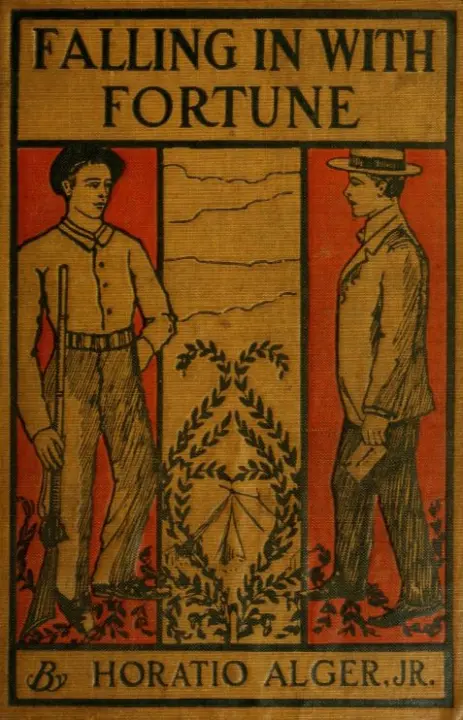
Horatio, Jr. Alger & Edward Stratemeyer
BEHIND THE BOOK
This eBook is for the use of anyone anywhere in the United States and most other parts of the world at no cost and with almost no restrictions whatsoever. You may copy it, give it away or re-use it under the terms of the Project Gutenberg License included with this eBook or online at www.gutenberg.org. If you are not located in the United States, you will have to check the laws of the country where you are located before using this eBook. Read the source licence.
The original source file, including credits and licence, is retained by this library. Request an original-format copy at no charge. Please include the book title and Project Gutenberg identifier #61470.
KEEP YOUR CURIOSITY GOING
Maurice Baring
W. B. (William Butler) Yeats
Edward Martyn

John Brougham & Charlotte Brontë
Marguerite Merington
Leonid Andreyev