
Life of Edwin Forrest, the American Tragedian. Volume 1 (of 2)
William Rounseville Alger & Horatio, Jr. Alger

THE CLASSIC COLLECTION · 1877
"Life of Edwin Forrest, the American Tragedian. Volume 2 (of 2)" by William Rounseville Alger is a historical account written in the late 19th century. The book explores the life and career of Edwin Forrest, one of America's most prominent actors in the 19th century, noting his impact on the dramatic arts as well as the public's and critics' reception of his performances. It delves into his struggles with criticism and the evolution of public perception, highlighting both the acclaim he received and the scorn from detractors. The beginning of this volume presents a rich discussion on the nature of newspaper criticism during Edwin Forrest's career, illustrating how different factions of critics regarded him. It outlines the complexities of dramatic art and the difficulties actors face in responding to public scrutiny. Additionally, it emphasizes Forrest's careful reading of critiques and his aspirations to improve his craft, as well as the influence of personal animosities and societal expectations on the perception of his work. The opening sets the stage for a nuanced exploration of Forrest's challenges and achievements in the theatrical world.
Introduction adapted from the source catalogue; source summaries may be automatically generated.
Free to read · English · 168,377 words · No account needed
MAKE TIME FOR A GOOD BOOK
On by default. Untick to stop anonymous reading totals. Each page counts after 10 seconds in view. How this works.
Anonymous counting is on unless you have switched it off.
“Ah, dear old friend! the cold November days of life have come for both of us, and the dull bars of cloud scowl on the barren stubble-fields, the wind blows inhospitably, and the hills in the distance are bleak and gray and bare, and the winter comes, when we must drop from the tree, and be remembered a little while, and then forgotten almost as soon as the dead leaves.
“Well, what does it matter to us if we are to be forgotten before the spring showers fall a second time on our graves, as Porter was, except by two or three friends? What is it to the leaf that falls, killed by an untimely frost, whether it is remembered or forgotten by its fellows that still cling to the tree, to fall a little later in the season? Men are seldom remembered after death for anything that you or I would care to be remembered for.
“Porter would not have cared to be remembered by many, nor by any one, unless with affection for his unbounded goodness of heart and generosity. Nor am I covetous of large remembrance among men. If I should die before him, I should wish, if I cared for anything here after death more than a dead leaf does, to have Oakes come to my grave, as I wish that he and I could go to that of Porter, and there repeat, in the language to which no translation can do justice, this exquisite threnody of Catullus:
Multas per gentes et multa per æquora vectus, Advenio has miseras, frater, ad inferias, Ut te postremo donarem munere mortis, Et mutum nequicquam alloquerer cinerem, Quandoquidem Fortuna mihi tete abstulit ipsum, Heu miser indigne frater ademte mihi Nunc tamen interea hæc prisco quæ more parentum Tradita sunt tristes munera ad inferias, Accipe fraterno multum manantia fletu, Atque in perpetuum, frater, ave atque vale.
“Discontented with the translations whereof by Lamb, Elton, and Hodgson, I have endeavored this more literal one:
“Through many nations, over many seas, Brother, to this sad sacrifice I come To pay to thee Death’s final offices, And, though in vain, invoke thine ashes dumb, Since Fate’s fell swoop has torn thyself from me,— Alas, poor brother, from me severed ruthlessly!
“Therefore, meanwhile, these offices of sorrow, Which, by old custom of our fathers’ years To the last sacrifice assigned, I borrow, Flowing with torrents of fraternal tears, Accept, though only half my grief they tell,— And so, forever, brother, bless thee, and farewell!”
Your reading position is saved on this browser. Take it to another device with a library code. Reading pages adapt to text, rather than matching a printed edition.
William Rounseville Alger & Horatio, Jr. Alger

Horatio, Jr. Alger

Horatio, Jr. Alger
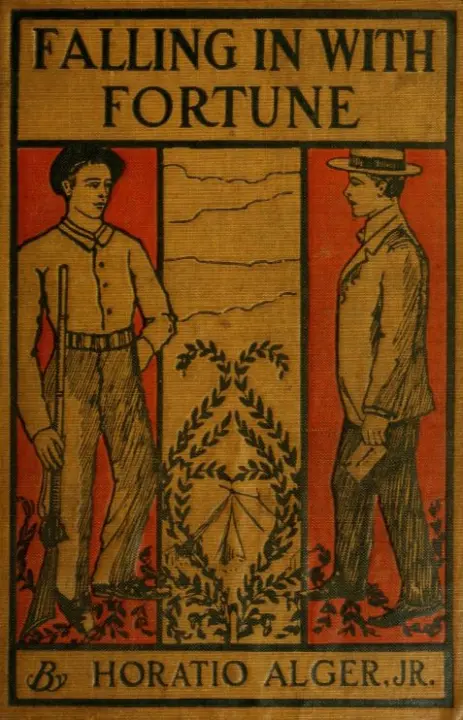
Horatio, Jr. Alger & Edward Stratemeyer
BEHIND THE BOOK
This eBook is for the use of anyone anywhere in the United States and most other parts of the world at no cost and with almost no restrictions whatsoever. You may copy it, give it away or re-use it under the terms of the Project Gutenberg License included with this eBook or online at www.gutenberg.org. If you are not located in the United States, you will have to check the laws of the country where you are located before using this eBook. Read the source licence.
The original source file, including credits and licence, is retained by this library. Request an original-format copy at no charge. Please include the book title and Project Gutenberg identifier #61470.
KEEP YOUR CURIOSITY GOING
Maurice Baring
W. B. (William Butler) Yeats
Edward Martyn

John Brougham & Charlotte Brontë
Marguerite Merington
Leonid Andreyev