
Life of Edwin Forrest, the American Tragedian. Volume 2 (of 2)
William Rounseville Alger & Horatio, Jr. Alger

THE CLASSIC COLLECTION · 1877
"Life of Edwin Forrest, the American Tragedian. Volume 1 (of 2)" by William Rounseville Alger is a biography written in the late 19th century. The book chronicles the life of Edwin Forrest, a prominent American actor, and provides insights into his contributions to the theater, his personality, and the influences that shaped his career. It seeks to not only narrate his experiences but also to explore the broader significance of his life within the narrative of American theater. The opening of the biography establishes the context for Edwin Forrest's life, highlighting his importance as a groundbreaking figure in American acting. Alger reflects on the motivations behind his work, emphasizing the value of detailing the life of someone who had a profound impact on the theatrical world. The initial chapters detail the background of Forrest's family, underscoring the virtues they instilled in him, and hint at the challenges he faced growing up in a struggling household. The author also discusses the societal prejudices against actors during Forrest's time, aiming to address misconceptions about the dramatic profession. Overall, the beginning sets a reflective and analytical tone, suggesting a deep exploration of Forrest's complex character and the tumultuous world of 19th-century American theater.
Introduction adapted from the source catalogue; source summaries may be automatically generated.
Free to read · English · 164,046 words · No account needed
MAKE TIME FOR A GOOD BOOK
On by default. Untick to stop anonymous reading totals. Each page counts after 10 seconds in view. How this works.
Anonymous counting is on unless you have switched it off.
For the defective treatment of the theme of the love of Brutus for his son by the author the actor made the very best amends in his power by improving every opportunity to suggest the depth and fervor of the tie, in look and gesture and tone, in order to exalt the coming catastrophe. Seated calmly in the curule chair as Consul, robed with purple, the lictors with their uplifted axes before him, a messenger announces the seizure of a young man at the head of an insurgent band. Valerius whispers to Brutus,--
"Oh, my friend, horror invades my heart.
I know thy soul, and pray the gods to put
Thee to no trial beyond a mortal bearing."
Mastering his agitation by a mighty effort, Brutus responds,--
"No, they will not,--they cannot."
The unhappy Titus is brought in guarded. The father, all his convulsed soul visible in his countenance and motions, turns from him, rises, walks to his colleague, and says, with tremulous, sobbing voice,--
"That youth, my Titus, was my age's hope,--
I loved him more than language can express,--
I thought him born to dignify the world."
The culprit kneels to him, and begs for clemency:
"A word for pity's sake. Before thy feet,
Humbled in soul, thy son and prisoner kneels.
Love is my plea: a father is my judge;
Nature my advocate!--I can no more:
If these will not appease a parent's heart,
Strike through them all, and lodge thy vengeance here!"
Almost overpowered, Brutus hesitates a moment, rallies, straightens himself up, and exclaims, with lofty dignity,--
"Break off! I will not, cannot hear thee further!
The affliction nature hath imposed on Brutus,
Brutus will suffer as he may.--Enough!
Lictors, secure your prisoner. Point your axes.
To the Senate--On!"
The last scene shows the Senate in the temple of Mars, Brutus in the Consular seat. He speaks, beginning with solemn air and tones of ringing firmness:
"Romans the blood which hath been shed this day
Hath been shed wisely. Traitors, who conspire
Against mature societies, may urge
Their acts as bold and daring; and though villains,
Yet they are manly villains. But to stab
The cradled innocent, as these have done,--
To strike their country in the mother-pangs
Of struggling childbirth, and direct the dagger
To freedom's infant throat,--is a deed so black
That my foiled tongue refuses it a name."
Here he pauses, falters a little, then slowly adds,--
"There is one criminal still left for judgment:
Let him approach."
Titus is led in by the lictors, with the edges of their axes turned
towards him. He kneels.
Your reading position is saved on this browser. Take it to another device with a library code. Reading pages adapt to text, rather than matching a printed edition.
William Rounseville Alger & Horatio, Jr. Alger

Horatio, Jr. Alger

Horatio, Jr. Alger
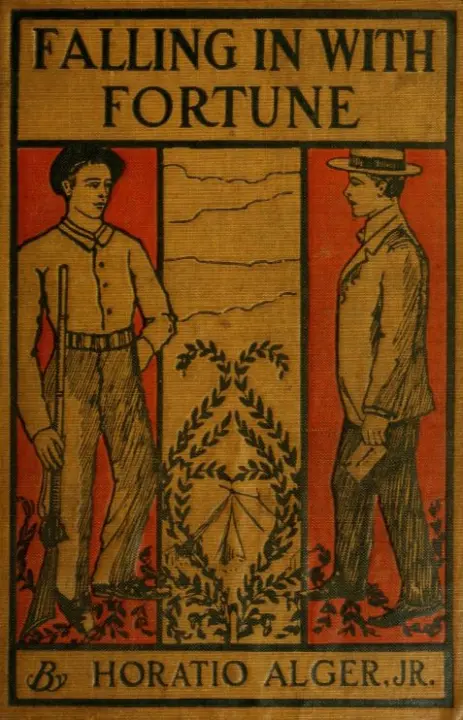
Horatio, Jr. Alger & Edward Stratemeyer
BEHIND THE BOOK
This eBook is for the use of anyone anywhere in the United States and most other parts of the world at no cost and with almost no restrictions whatsoever. You may copy it, give it away or re-use it under the terms of the Project Gutenberg License included with this eBook or online at www.gutenberg.org. If you are not located in the United States, you will have to check the laws of the country where you are located before using this eBook. Read the source licence.
The original source file, including credits and licence, is retained by this library. Request an original-format copy at no charge. Please include the book title and Project Gutenberg identifier #61348.
KEEP YOUR CURIOSITY GOING
Maurice Baring
W. B. (William Butler) Yeats
Edward Martyn

John Brougham & Charlotte Brontë
Marguerite Merington
Leonid Andreyev