
Life of Edwin Forrest, the American Tragedian. Volume 2 (of 2)
William Rounseville Alger & Horatio, Jr. Alger

THE CLASSIC COLLECTION · 1877
"Life of Edwin Forrest, the American Tragedian. Volume 1 (of 2)" by William Rounseville Alger is a biography written in the late 19th century. The book chronicles the life of Edwin Forrest, a prominent American actor, and provides insights into his contributions to the theater, his personality, and the influences that shaped his career. It seeks to not only narrate his experiences but also to explore the broader significance of his life within the narrative of American theater. The opening of the biography establishes the context for Edwin Forrest's life, highlighting his importance as a groundbreaking figure in American acting. Alger reflects on the motivations behind his work, emphasizing the value of detailing the life of someone who had a profound impact on the theatrical world. The initial chapters detail the background of Forrest's family, underscoring the virtues they instilled in him, and hint at the challenges he faced growing up in a struggling household. The author also discusses the societal prejudices against actors during Forrest's time, aiming to address misconceptions about the dramatic profession. Overall, the beginning sets a reflective and analytical tone, suggesting a deep exploration of Forrest's complex character and the tumultuous world of 19th-century American theater.
Introduction adapted from the source catalogue; source summaries may be automatically generated.
Free to read · English · 164,046 words · No account needed
MAKE TIME FOR A GOOD BOOK
On by default. Untick to stop anonymous reading totals. Each page counts after 10 seconds in view. How this works.
Anonymous counting is on unless you have switched it off.
The manner in which, in his fictitious rôle, in his interview with Tullia, the parricidal queen, whose prophetic soul is ominously alive to every alarming hint, he veered along the perilous edges of his feigned and his real character, the sinister alternation of jest and portent, was a passage of exciting interest, sweeping the chords of the breast from sport to awe with facile and forceful hand. The same effect was produced in a still higher degree in the interview with his son Titus, whose patriotism and temper he tested by lifting a little his false garb of folly and letting some tentative gleams of his true nature and purposes appear.
"Brutus. I'll tell a secret to thee
Worth a whole city's ransom. This it is:
Nay, ponder it and lock it in thy heart:--
There are more fools, my son, in this wise world,
Than the gods ever made.
Titus. Sayest thou? Expound this riddle.
Would the kind gods restore thee to thy reason--
Brutus. Then, Titus, then I should be mad with reason.
Had I the sense to know myself a Roman,
This hand should tear this heart from out my ribs,
Ere it should own allegiance to a tyrant.
If, therefore, thou dost love me, pray the gods
To keep me what I am. Where all are slaves,
None but the fool is happy.
Titus. We are Romans--
Not slaves--
Brutus. Not slaves? Why, what art thou?
Titus. Thy son.
Dost thou not know me?
Brutus. You abuse my folly.
I know thee not.--Wert thou my son, ye gods,
Thou wouldst tear off this sycophantic robe,
Tuck up thy tunic, trim these curléd locks
To the short warrior-cut, vault on thy steed,
Then, scouring through the city, call to arms,
And shout for liberty!
Titus. [Starts.] Defend me, gods!
Brutus. Ha! does it stagger thee?"
The simulation had been dropped so gradually, the unconsciously waxing earnestness of purpose and self-betrayal were carried up over such invisible and exquisite steps, that, when the electric climax was touched, he who confronted Brutus on the stage did not affect to be more startled than those who gazed on him from before it really were.
Finding his son is in love with the sister of Sextus, and in no
ripe mood for dangerous enterprise, he turns sorrowfully from him,
murmuring,--
"Said I for liberty? I said it not.
My brain is weak, and wanders. You abuse it."
When left alone, he soliloquizes, beginning with sorrow, and passing in the succeeding parts from sadness to repulsion, then to anxiety, afterwards to hope, and ending with an air of proud joy.
Your reading position is saved on this browser. Take it to another device with a library code. Reading pages adapt to text, rather than matching a printed edition.
William Rounseville Alger & Horatio, Jr. Alger

Horatio, Jr. Alger

Horatio, Jr. Alger
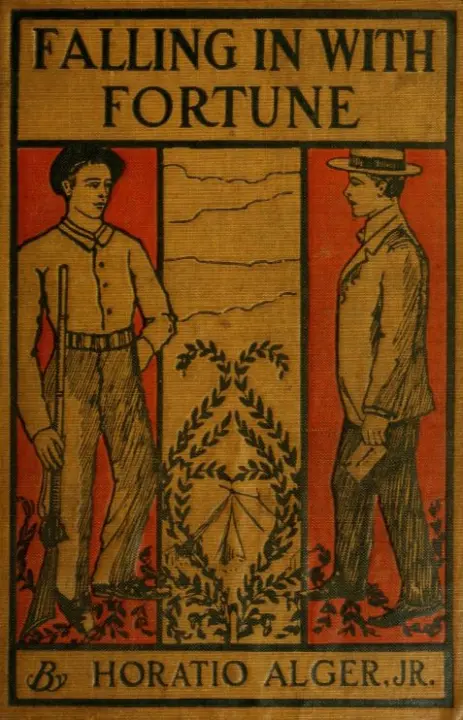
Horatio, Jr. Alger & Edward Stratemeyer
BEHIND THE BOOK
This eBook is for the use of anyone anywhere in the United States and most other parts of the world at no cost and with almost no restrictions whatsoever. You may copy it, give it away or re-use it under the terms of the Project Gutenberg License included with this eBook or online at www.gutenberg.org. If you are not located in the United States, you will have to check the laws of the country where you are located before using this eBook. Read the source licence.
The original source file, including credits and licence, is retained by this library. Request an original-format copy at no charge. Please include the book title and Project Gutenberg identifier #61348.
KEEP YOUR CURIOSITY GOING
Maurice Baring
W. B. (William Butler) Yeats
Edward Martyn

John Brougham & Charlotte Brontë
Marguerite Merington
Leonid Andreyev