
Life of Edwin Forrest, the American Tragedian. Volume 2 (of 2)
William Rounseville Alger & Horatio, Jr. Alger

THE CLASSIC COLLECTION · 1877
"Life of Edwin Forrest, the American Tragedian. Volume 1 (of 2)" by William Rounseville Alger is a biography written in the late 19th century. The book chronicles the life of Edwin Forrest, a prominent American actor, and provides insights into his contributions to the theater, his personality, and the influences that shaped his career. It seeks to not only narrate his experiences but also to explore the broader significance of his life within the narrative of American theater. The opening of the biography establishes the context for Edwin Forrest's life, highlighting his importance as a groundbreaking figure in American acting. Alger reflects on the motivations behind his work, emphasizing the value of detailing the life of someone who had a profound impact on the theatrical world. The initial chapters detail the background of Forrest's family, underscoring the virtues they instilled in him, and hint at the challenges he faced growing up in a struggling household. The author also discusses the societal prejudices against actors during Forrest's time, aiming to address misconceptions about the dramatic profession. Overall, the beginning sets a reflective and analytical tone, suggesting a deep exploration of Forrest's complex character and the tumultuous world of 19th-century American theater.
Introduction adapted from the source catalogue; source summaries may be automatically generated.
Free to read · English · 164,046 words · No account needed
MAKE TIME FOR A GOOD BOOK
On by default. Untick to stop anonymous reading totals. Each page counts after 10 seconds in view. How this works.
Anonymous counting is on unless you have switched it off.
Another cause in Forrest of offence and numerous dislike was the pronounced distinctiveness of his character, his marked and independent manhood. Most people are of the conventional type in personality and manners, each one as the rest are. And their likings are confined to those of their own stamp. A man of fresh and decisive originality, who is and appears just what God and nature have made him, who thinks for himself, speaks for himself, acts himself out with freedom and power, disturbs and repels them. He irritates their prejudices by violating their standards. His frank and flexible spontaneity, his uncovered impulsive revelation of his feelings, and fearless choice of what he will do or will not do, imply a tacit contempt for their meek conformities and spirit of routine. Thus their self-esteem is hurt and they are made angry. Forrest was a man of this kind, not addicted to swear in the polished phrase of the magistrate, but in his own honest vernacular. The true theory of republican America is that the people should not be cast in the monotonous moulds of certain classes or types, the national character a fixed repetition, but that every citizen should be in himself a priest and a king before God, with his own form and color and relish of individuality unrepressed by any foreign dictation. This democratic idea was well realized in Edwin Forrest. It made him all his life a touchstone of hostility to those whose social subserviency it rebuked or whose aristocratic prejudices it set bristling.
He drew forth the animosity and injurious influence of a third set of opponents from among the least noble and successful members of his own profession, with whom, from dissimilarities of tastes and habits and preference for the opportunities of higher intercourse opened to him, he did not intimately associate as an equal. He had an ample supply of friends and comrades endowed with distinguished talents and proud aspirations, scholars, poets, jurists, statesmen, whose fellowship strengthened his ambition, nourished his mind, refined his fancy, gratified his affections, and led him into the ideal world of books and art. Courted by such gentlemen, with his rising fame and fortune he naturally chose their society, to the neglect of that of his fellow-actors whose haunts were low, whose habits loose, and whose professional status a dull and hopeless mediocrity. It is not customary for the distinguished leaders and masters in any profession to associate in close intimacy with the rank and file of workmen in their departments. It is customary, however, for the rank and file to resent the neglect and take their revenge in flouting. Giotto, Lionardo, Raphael, Titian, did not hob-nob and lounge with the ordinary painters of their day. The friends of artists are not artisans, but other artists, their peers, noble patrons, celebrated persons, and inspiring coadjutors. The blame so bitterly and often cast on Forrest in this respect was unjust. The vindictive personal censures which his sometimes absorbed and distant bearing elicited from injured self-love were ignoble. The stock is no doubt often provoked to sneer at the Star; but the action is not beautiful or worthy of deferential attention. If the ordinary members of a profession, instead of looking askance at the extraordinary ones and indulging in detraction, would cultivate admiring sympathy, aspiring intelligence, and nobleness, they would soon bridge the chasm that separates them. It is the absence of generous sensibility and self-respecting application that at once keeps them inferiors and prevents their superiors from becoming their intimates. In the last twenty-five years of his life Forrest had, as a consequence of what he had been through, an explosive irritability of temperament, and not infrequently in moving among theatrical companies betrayed an imperious sense of power. But he was profoundly just, ready instantly to make princely amends when convinced of an error or wrong; and under his harsh and volcanic exterior there always, even to the very last, slept a deep spring of tenderness pure enough to reflect the eyes of angels. It was perfectly natural that he should be misjudged. Not one in a thousand could be expected to have the generous insight, the detachment and gentleness, needed to read him aright. Consequently, a swarm of false accusations and angry remarks pursued him like a buzz of wasps enveloping his head.
Your reading position is saved on this browser. Take it to another device with a library code. Reading pages adapt to text, rather than matching a printed edition.
William Rounseville Alger & Horatio, Jr. Alger

Horatio, Jr. Alger

Horatio, Jr. Alger
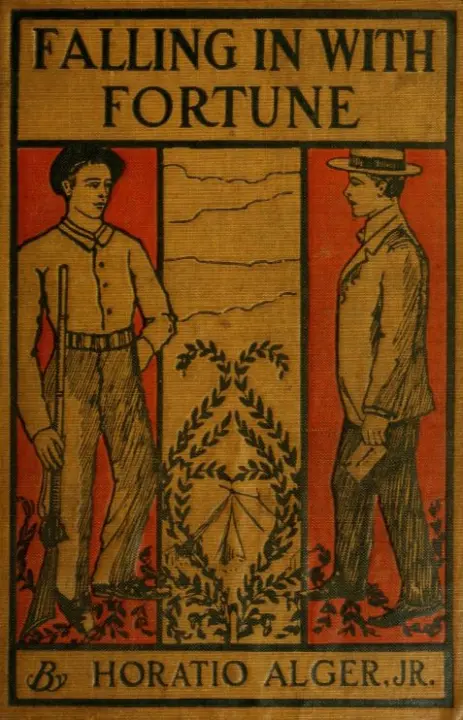
Horatio, Jr. Alger & Edward Stratemeyer
BEHIND THE BOOK
This eBook is for the use of anyone anywhere in the United States and most other parts of the world at no cost and with almost no restrictions whatsoever. You may copy it, give it away or re-use it under the terms of the Project Gutenberg License included with this eBook or online at www.gutenberg.org. If you are not located in the United States, you will have to check the laws of the country where you are located before using this eBook. Read the source licence.
The original source file, including credits and licence, is retained by this library. Request an original-format copy at no charge. Please include the book title and Project Gutenberg identifier #61348.
KEEP YOUR CURIOSITY GOING
Maurice Baring
W. B. (William Butler) Yeats
Edward Martyn

John Brougham & Charlotte Brontë
Marguerite Merington
Leonid Andreyev