
Through the Desert
Henryk Sienkiewicz
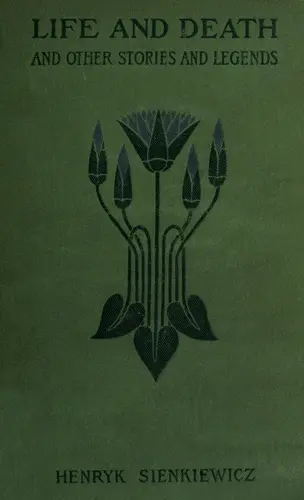
THE CLASSIC COLLECTION · 1897
"Life and Death, and Other Legends and Stories" by Henryk Sienkiewicz is a collection of short stories written in the late 19th century. This book delves into various themes, weaving together elements of mythical storytelling with moral and philosophical reflections, exploring the concepts of life, love, and mortality. Sienkiewicz, a renowned Polish author known for his historical novels, employs a poetic narrative style that adds depth to the legends presented. The collection opens with the titular tale, "Life and Death," which presents a Hindu legend where two realms—Life and Death—exist in parallel, governed by deities Vishnu and Siva. As humans navigate their existence filled with toil and weariness, they are drawn to the serene allure of Death. The dialogue between the gods reveals profound insights into the nature of happiness and suffering. Other stories, such as "Is He the Dearest One?" and "A Legend of the Sea," focus on familial love, sacrifice, and the struggle against nature’s forces. Through vivid imagery and rich symbolism, Sienkiewicz crafts a narrative that resonates with universal truths, showcasing the interplay between joy and sorrow, urging readers to contemplate their own experiences of life and death.
Introduction adapted from the source catalogue; source summaries may be automatically generated.
Free to read · English · 6,838 words · No account needed
MAKE TIME FOR A GOOD BOOK
On by default. Untick to stop anonymous reading totals. Each page counts after 10 seconds in view. How this works.
Anonymous counting is on unless you have switched it off.
Apollo sat down with his lute at the feet of the Apostle. The night became clearer, the jasmine gave out a stronger perfume, the glad fountains sounded, the Muses gathered together like a flock of white swans, and, with voices still quivering from fear, began to sing in low tones marvellous words never heard on the heights of Olympus till that hour:
To thy protection we flee, holy Mother of God.
We come with our prayers; deign thou not to reject us,
But be pleased to preserve us from every evil,
O thou, our Lady!
Thus they sang on the heather, raising their eyes like pious nuns with
heads covered with white.
Other gods came now. Bacchus and his chorus dashed past, wild, unrestrained, crowned with ivy and grapevine, and bearing the cithara and the thyrsus. They rushed on madly, with shouts of despair, and fell into the bottomless pit.
Then before the Apostles stood a lofty, proud, sarcastic divinity, who, without waiting for question or sentence, spoke first. On her lips was a smile of derision.
"I am Pallas Athene. I do not beg life of you. I am an illusion, nothing more. Odysseus honored and obeyed me only when he had become senile. Telemachus listened to me only till hair covered his chin. Ye cannot take immortality from me, and I declare that I have been a shadow, that I am a shadow now, and shall remain a shadow forever."
At last her turn came to the most beautiful, the most honored goddess. As she approached, sweet, marvellous, tearful, the heart under her snow-white breast beat like the heart in a bird, and her lips quivered like those of a child that fears cruel punishment. She fell at their feet, and, stretching forth her divine arms, cried in fear and humility:
"I am sinful, I deserve blame, but I am Joy. Have mercy, forgive; I am the one happiness of mankind." Then sobbing and fear took away her voice.
But Peter looked at the goddess with compassion, and placed his aged palm on her golden hair, while Paul, bending toward a cluster of white field-lilies, broke off one blossom, and touching her with it, said:
"Joy, be henceforth like this flower, and live thou for mankind."
Then came dawn--the divine dawn that looked out from beyond a depression between two peaks. The nightingales stopped singing, and immediately finches, linnets, and wrens began to draw their sleepy little heads from under their moistened wings, shaking the dew from their feathers, and repeating in low voices, "Svit! svit!" ("Light! light!").
The earth awoke, smiled, and was delighted, because Song and Joy had not
been taken from it.
Your reading position is saved on this browser. Take it to another device with a library code. Reading pages adapt to text, rather than matching a printed edition.
Henryk Sienkiewicz

Henryk Sienkiewicz

Henryk Sienkiewicz
Henryk Sienkiewicz
BEHIND THE BOOK
This eBook is for the use of anyone anywhere in the United States and most other parts of the world at no cost and with almost no restrictions whatsoever. You may copy it, give it away or re-use it under the terms of the Project Gutenberg License included with this eBook or online at www.gutenberg.org. If you are not located in the United States, you will have to check the laws of the country where you are located before using this eBook. Read the source licence.
The original source file, including credits and licence, is retained by this library. Request an original-format copy at no charge. Please include the book title and Project Gutenberg identifier #35736.
KEEP YOUR CURIOSITY GOING
Coulson Kernahan

Maurice Baring
Frances Wright
Cécile Tormay
Francis Greenleaf Allinson & Anne C. E. (Anne Crosby Emery) Allinson

Frederic Jesup Stimson