THE CLASSIC COLLECTION✦Poetical Works of William Cullen Bryant Household EditionCLASSIC FREE BOOKS
Poetical Works of William Cullen Bryant Household Edition
William Cullen Bryant
THE CLASSIC COLLECTION · 1850
"Letters of a Traveller; Or, Notes of Things Seen in Europe and America" by William Cullen Bryant is a collection of travel essays written in the mid-19th century. The work captures the author's thoughts and observations from various journeys in Europe and America, presenting a personal and reflective narrative rather than a structured account of tourism. The likely topic revolves around the cultural, historical, and natural landscapes encountered, as well as the author's impressions of the people and customs. At the start of the book, the author introduces his experiences as an American traveler in Europe, beginning with his first impressions of France. He vividly describes the antiquity and charm of French architecture, customs, and landscapes, noting the contrast between the old world and his American upbringing. The opening letters capture the essence of his journey through France, highlighting significant historical landmarks and the vibrancy of Parisian life. He presents detailed observations on regional differences, historical significance, and cultural nuances, laying the groundwork for a travelogue rich in personal reflections and nuanced interpretations of the places and people encountered along the way.
Introduction adapted from the source catalogue; source summaries may be automatically generated.
Free to read · English · 106,255 words · No account needed
MAKE TIME FOR A GOOD BOOK
On by default. Untick to stop anonymous reading totals. Each page counts after 10 seconds in view. How this works.
Anonymous counting is on unless you have switched it off.
I believe I have given you no account of our journey from Paris to this place. That part of it which lay between Paris and Chalons, on the Saone, may be described in a very few words. Monotonous plains, covered with vineyards and wheat-fields, with very few trees, and those spoiled by being lopped for fuel—sunburnt women driving carts or at work in the fields—gloomy, cheerless-looking towns, with narrow, filthy streets—troops of beggars surrounding your carriage whenever you stop, or whenever the nature of the roads obliges the horses to walk, and chanting their requests in the most doleful whine imaginable—such are the sights and sounds that meet you for the greater part of two hundred and fifty miles. There are, however, some exceptions as to the aspect of the country. Autun, one of the most ancient towns of France, and yet retaining some remains of Roman architecture, lies in a beautiful and picturesque region. A little beyond that town we ascended a hill by a road winding along a glen, the rocky sides of which were clothed with an unpruned wood, and a clear stream ran dashing over the stones, now on one side of the road and then on the other—the first instance of a brook left to follow its natural channel which I had seen in France. Two young Frenchmen, who were our fellow-passengers, were wild with delight at this glimpse of unspoiled nature. They followed the meanderings of the stream, leaping from rock to rock, and shouting till the woods rang again.
Of Chalons I have nothing to tell you. Abelard died there, and his tomb was erected with that of Eloise in the church of St. Marcel; but the church is destroyed, and the monument has been transported to the cemetery of Père la Chaise, and with it all the poetry of the place is vanished. But if you would make yourself supremely uncomfortable, travel as I did in a steamboat down the Saone from Chalons to Lyons, on a rainy day. Crowded into a narrow, dirty cabin, with benches on each side and a long table in the middle, at which a set of Frenchmen with their hats on are playing cards and eating déjeuners à la fourchette all day long, and deafening you with their noise, while waiters are running against your legs and treading on your toes every moment, and the water is dropping on your head through the cracks of the deck-floor, you would be forced to admit the superlative misery of such a mode of travelling. The approach to Lyons, however, made some amends for these inconveniences. The shores of the river, hitherto low and level, began to rise into hills, broken with precipices and crowned by castles, some in ruins and others entire, and seemingly a part of the very rocks on which they stood, so old and mossy and strong did they seem. What struck me most in Lyons was the superiority of its people in looks and features to the inhabitants of Paris—the clatter and jar of silk-looms with which its streets resounded—and the picturesque beauty of its situation, placed as it is among steeps and rocks, with the quiet Saone on one side, and the swiftly-running Rhone on the other. In our journey from Lyons to Marseilles we travelled by land instead of taking the steamboat, as is commonly done as far as Avignon. The common books of travels will tell you how numerous are the ruins of feudal times perched upon the heights all along the Rhone, remnants of fortresses and castles, overlooking a vast extent of country and once serving as places of refuge to the cultivators of the soil who dwelt in their vicinity—how frequently also are to be met with the earlier yet scarcely less fresh traces of Roman colonization and dominion, in gateways, triumphal arches, walls, and monuments—how on entering Provence you find yourself among a people of a different physiognomy from those of the northern provinces, speaking a language which rather resembles Italian than French—how the beauty of the women of Avignon still does credit to the taste of the clergy, who made that city for more than half a century the seat of the Papal power—and how, as you approach the shores of the Mediterranean, the mountains which rise from the fruitful valleys shoot up in wilder forms, until their summits become mere pinnacles of rock wholly bare of vegetation.
Your reading position is saved on this browser. Take it to another device with a library code. Reading pages adapt to text, rather than matching a printed edition.
William Cullen Bryant
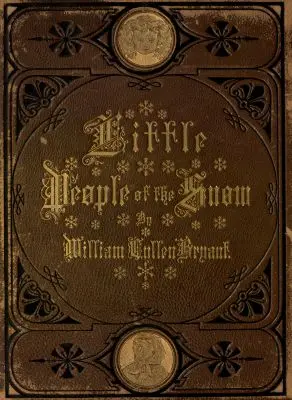
William Cullen Bryant
William Cullen Bryant
William Cullen Bryant
BEHIND THE BOOK
This eBook is for the use of anyone anywhere in the United States and most other parts of the world at no cost and with almost no restrictions whatsoever. You may copy it, give it away or re-use it under the terms of the Project Gutenberg License included with this eBook or online at www.gutenberg.org. If you are not located in the United States, you will have to check the laws of the country where you are located before using this eBook. Read the source licence.
The original source file, including credits and licence, is retained by this library. Request an original-format copy at no charge. Please include the book title and Project Gutenberg identifier #11013.
KEEP YOUR CURIOSITY GOING
Wilfrid Scawen Blunt
Wilfrid Scawen Blunt

E. W. (Edgar Watson) Howe

David Patterson (Spirit) Hatch

David Patterson (Spirit) Hatch

David Patterson (Spirit) Hatch