THE CLASSIC COLLECTION✦Poetical Works of William Cullen Bryant Household EditionCLASSIC FREE BOOKS
Poetical Works of William Cullen Bryant Household Edition
William Cullen Bryant
THE CLASSIC COLLECTION · 1850
"Letters of a Traveller; Or, Notes of Things Seen in Europe and America" by William Cullen Bryant is a collection of travel essays written in the mid-19th century. The work captures the author's thoughts and observations from various journeys in Europe and America, presenting a personal and reflective narrative rather than a structured account of tourism. The likely topic revolves around the cultural, historical, and natural landscapes encountered, as well as the author's impressions of the people and customs. At the start of the book, the author introduces his experiences as an American traveler in Europe, beginning with his first impressions of France. He vividly describes the antiquity and charm of French architecture, customs, and landscapes, noting the contrast between the old world and his American upbringing. The opening letters capture the essence of his journey through France, highlighting significant historical landmarks and the vibrancy of Parisian life. He presents detailed observations on regional differences, historical significance, and cultural nuances, laying the groundwork for a travelogue rich in personal reflections and nuanced interpretations of the places and people encountered along the way.
Introduction adapted from the source catalogue; source summaries may be automatically generated.
Free to read · English · 106,255 words · No account needed
MAKE TIME FOR A GOOD BOOK
On by default. Untick to stop anonymous reading totals. Each page counts after 10 seconds in view. How this works.
Anonymous counting is on unless you have switched it off.
Disciarem lu dol,
Cantarem anb' alagria,
Y n'arem a dá
Las pascuas a Maria.
O Maria!
Sant Grabiel,
Qui portaba la anbasciada;
Des nostre rey del cel
Estarau vos preñada.
Ya omiliada,
Tu o vais aqui serventa,
Fia del Deu contenta,
Para fe lo que el vol.
Disciarem lu dol, &c.
Y a milla nit,
Pariguero vos regina;
A un Deu infinit,
Dintra una establina.
Y a millo dia,
Que los Angles van cantant
Pau y abondant
De la gloria de Deu sol.
Disciarem lu dol, &c.
Y a Libalam,
Allá la terra santa,
Nu nat Jesus,
Anb' alagria tanta.
Infant petit
Que tot lu mon salvaria;
Y ningu y bastaria,
Nu mes un Deu tot sol.
Disciarem lu dol, &c.
Cuant d'Orien lus
Tres reys la stralla veran,
Deu omnipotent,
Adorá lo vingaran.
Un present inferan,
De mil encens y or,
A lu beneit Señó,
Que conesce cual se vol.
Disciarem lu dol, &c.
Tot fu gayant
Para cumpli lu prumas;
Y lu Esperit sant
De un angel fan gramas.
Gran foc ences,
Que crama lu curagia;
Deu nos da lenguagia,
Para fe lo que Deu vol.
Disciarem lu dol, &c.
Cuant trespasá
De quest mon nostra Señora,
Al cel s'empugiá
Sun fil la matescia ora.
O emperadora,
Que del cel sou eligida!
Lu rosa florida,
Mé resplanden que un sol.
Disciarem lu dol, &c.
Y el tercer giorn
Que Jesus resuntá,
Deu y Aboroma,
Que la mort triumfá.
De alli se ballá
Para perldrá Lucife,
An tot a seu peudá,
Que de nostro ser el sol.
Disciarem lu dol, &c[1]
After this hymn, the following stanzas, soliciting the customary gift of cakes or eggs, are sung:
Ce set sois que vain cantant,
Regina celastial!
Dunus pan y alagria,
Y bonas festas tingau.
Yo vos dou sus bonas festas,
Danaus dinés de sus nous;
Sempre tarem lus mans llestas
Para recibí un grapat de ous.
Y el giorn de pascua florida
Alagramos y giuntament;
As qui es mort par darnos vida
Ya viú gloriosament.
Aquesta casa está empedrada,
Bien halla que la empedró;
Sun amo de aquesta casa
Baldria duná un do.
Furmagiada, o empanada,
Cucutta o flaó;
Cual se vol cosa me grada,
Sol que no me digas que no[2].
The shutters are then opened by the people within, and a supply of cheese-cakes, or other pastry, or eggs, is dropped into a bag carried by one of the party, who acknowledge the gift in the following lines, and then depart:
Aquesta casa está empedrada,
Empedrada de cuatro vens;
Sun amo de aquesta casa,
Es omo de compliment[3].
If nothing is given, the last line reads thus:
No es omo de compliment.
Letter XV.
Your reading position is saved on this browser. Take it to another device with a library code. Reading pages adapt to text, rather than matching a printed edition.
William Cullen Bryant
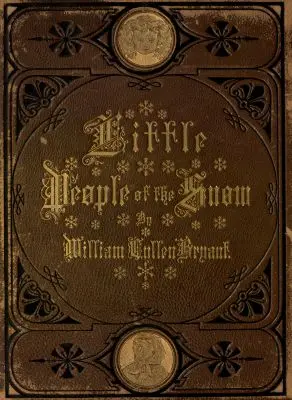
William Cullen Bryant
William Cullen Bryant
William Cullen Bryant
BEHIND THE BOOK
This eBook is for the use of anyone anywhere in the United States and most other parts of the world at no cost and with almost no restrictions whatsoever. You may copy it, give it away or re-use it under the terms of the Project Gutenberg License included with this eBook or online at www.gutenberg.org. If you are not located in the United States, you will have to check the laws of the country where you are located before using this eBook. Read the source licence.
The original source file, including credits and licence, is retained by this library. Request an original-format copy at no charge. Please include the book title and Project Gutenberg identifier #11013.
KEEP YOUR CURIOSITY GOING
Wilfrid Scawen Blunt
Wilfrid Scawen Blunt

E. W. (Edgar Watson) Howe

David Patterson (Spirit) Hatch

David Patterson (Spirit) Hatch

David Patterson (Spirit) Hatch