THE CLASSIC COLLECTION✦A dead man’s diaryCLASSIC FREE BOOKS
A dead man’s diary
Coulson Kernahan
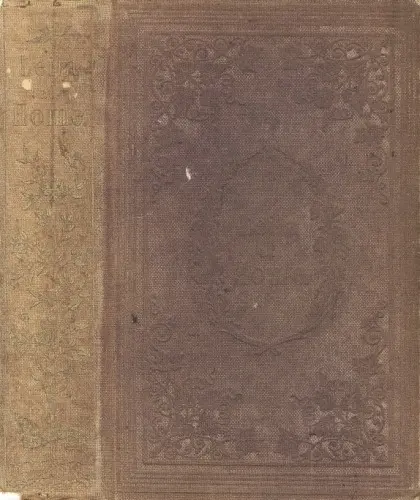
THE CLASSIC COLLECTION · 1852
"Leila at Home" by Ann Fraser Tytler is a fictional novel written in the mid-19th century. This work continues the adventures of its titular character, Leila, who reflects on her past experiences and navigates her new life in England. It explores themes of childhood, the importance of family, and the challenges of growing up, particularly focusing on Leila's relationships with her cousins Selina and Matilda. The opening of "Leila at Home" introduces readers to Leila as she arrives at Woodlands, a family residence close to her uncle’s home. The atmosphere is cheerful as she reunites with her cousins and their excitement fills the air. With her regained speech, Selina shares a deep connection with Leila, emphasizing their shared joy. However, Leila's contemplative nature soon reveals her struggles with emotions tied to her past, particularly her memories of a lost home and the impending responsibilities that come with her new life. Through moments of happiness and reflection, the narrative sets the stage for Leila's development as she learns to deal with the complexities of her emotions and family dynamics.
Introduction adapted from the source catalogue; source summaries may be automatically generated.
Free to read · English · 63,955 words · No account needed
MAKE TIME FOR A GOOD BOOK
On by default. Untick to stop anonymous reading totals. Each page counts after 10 seconds in view. How this works.
Anonymous counting is on unless you have switched it off.
“Yes, Peggy,” Matilda said, “you are forgetting to tell us how your money lasted, and what you did when it was done. Oh! it must have been so dreadful when you began to be starved to death.”
“‘Deed, and it was no ways pleasant; but it was no just sae bad as that; and I aye keepit a thought on Him who feedeth the fowls o’ the air, and was no that down-hearted; still it was a serious thought, and I was at my last shilling when the pedlar was graciously sent to me.”
“The pedlar, Peggy, how was that?”
“You see, Miss Matilda, I was sitting by the road-side one morning, taking counsel wi’ my ain thoughts and looking at the shilling, and turning it round and round in my hand wi’ a serious countenance, nae doubt, when an honest man wi’ a pack upon his back came up to me. ‘Mistress,’ he said, ‘you are looking at that shilling as if there werena mony ahint it, and you were loath to part company.’ ‘’Deed,’ I said, ‘you hae made a gude guess and are no far wrong; for it’s the very last shilling I hae in the world, and a long journey, I reckon, is still afore me.’ Wi’ that we fell into discourse, and I telt him all my story; for he was frae my ain country, and my heart warmed to him. He said that for that day and the next our road lay in the same direction, and that he would be blythe o’ my company. Was I to refuse sic a civil invitation?--by no means. So we gaed on our way thegither, and had muckle pleasant discourse; for he was far travelled, and had great learning and experience o’ the world, and was, forbye, a God-fearing and civil man, and had but one fault that I could discern, he was ower fond o’ beer; preserve me, but I would hae sleepit sound, and ower sound, as he, puir man, found that night, if I had ta’en all he offered me, for he was no ways niggardly; and when I spoke o’ asking up-pitting for the night at a farm-house, he would na hear it; he would treat me, he said, baith to a supper and a bed, and be blythe to do so. Weel, when night came on, we turned into a comfortable-looking house by the road-side, where they selt the beer he was ower fond o’; and it was a canty scene that big kitchen, that lifted the very heart o’ me. There was the mistress frying bacon on the warm red fire, and mair than one hungry man sitting on low stools, listening wi’ delight to the hissing sound o’ it; and a wee baby in a cradle, no thinking o’ sleep, but lying so pleased, wi’ the great een o’ it wide open, and staring at its brothers and sisters, dancing in a corner o’ the room to the music o’ a blind fiddler; they were near to a table where some men were drinking, and there was a man sat there wi’ a face I could no get out o’ my mind at all. He had a down look and an ill look to my thought; and I noticed that though he had his tankard o’ beer afore him like the rest, when he thought nae body was looking that way, he lifted the tankard that had been put down afore the puir blind fiddler, and took a lang pull out o’ it. I would na hae been that sorry if it had choked him, and I felt in my mind that the man would surely come to shame and want. Aweel, when the mistress showed me the room I was to sleep in, I could na get this man’s ill face out o’ my mind, and I asked her if the men that were drinking at the table were to bide all night. ‘Some of them might,’ she said, ‘and some might not; but I need not be frightened, for my friend the pedlar was to sleep in the next room to me, and there was a door through frae my room to his. You see,’ she said, ‘there is only a latch to it, for the key has been lost; but as he is an honest man nae doubt, and your friend, you will no mind that; but this is a decent house, and you need fear no disturbance;’ and wi’ that she left me. I had not been long in bed afore I heard the pedlar, honest man, snoring soundly. I was weary, weary, and yet for a lang time I could no get to sleep, for the fiddle seemed aye sounding in my ears, and the bit bairnies dancing afore me, and that man’s ill face aye taking anither look at me, but after a time I heard steps passing up the stairs, and the front door was barred in, and quietness fell upon the house; and then, though it was no just sleep that came over me, it was a kind o’ a dover, and how lang it lasted I canna tell, but suddenly it seemed to me as if I heard a step in the passage and some one stopping at my door,--I started up in my bed and listened; a lock turned, but it was na in my room, but in the next; and then I saw a light under the door that had the latch. I sprang up and looked through the key-hole; the ill face o’ that awfu’ man seemed glaring on me, I could scarcely breathe, for I felt sure he saw me, but he turned away and went straight up to the bed; he seemed to listen for a moment, bending over it, then softly lifting up a worsted plaid that was lying over a chair by the bed-side, he seized the pack which the plaid was covering, and turned to the door again. He had his back to me then; I lifted the latch and sprang in, and the next moment I had him by the throat, the ill rascal, wi’ a scream that wakened the whole house. He let fall the pack, shook me off as if I had been a feather, and darted along the passage. He took me for a ghaist, nae doubt; for, for decency’s sake, I had put the white sheet about me. Aweel, we looked for him all over the house, but saw naething but a window wide open, and doubtless out o’ that window the ill-conditioned creature had gone on his evil way. It was na muckle sleep that either the pedlar or me got that night, I reckon, for I heard nae mair snoring.”
Your reading position is saved on this browser. Take it to another device with a library code. Reading pages adapt to text, rather than matching a printed edition.
BEHIND THE BOOK
This eBook is for the use of anyone anywhere in the United States and most other parts of the world at no cost and with almost no restrictions whatsoever. You may copy it, give it away or re-use it under the terms of the Project Gutenberg License included with this eBook or online at www.gutenberg.org. If you are not located in the United States, you will have to check the laws of the country where you are located before using this eBook. Read the source licence.
The original source file, including credits and licence, is retained by this library. Request an original-format copy at no charge. Please include the book title and Project Gutenberg identifier #49220.
KEEP YOUR CURIOSITY GOING
Coulson Kernahan

Maurice Baring
Frances Wright
Cécile Tormay

Frederic Jesup Stimson

W. H. P. (William Henry Pope) Jarvis