THE CLASSIC COLLECTION✦A dead man’s diaryCLASSIC FREE BOOKS
A dead man’s diary
Coulson Kernahan
THE CLASSIC COLLECTION · 1852
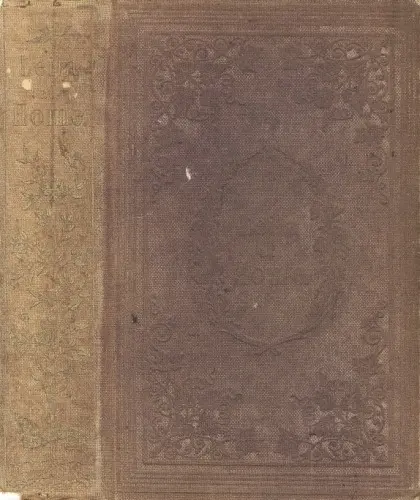
"Leila at Home" by Ann Fraser Tytler is a fictional novel written in the mid-19th century. This work continues the adventures of its titular character, Leila, who reflects on her past experiences and navigates her new life in England. It explores themes of childhood, the importance of family, and the challenges of growing up, particularly focusing on Leila's relationships with her cousins Selina and Matilda. The opening of "Leila at Home" introduces readers to Leila as she arrives at Woodlands, a family residence close to her uncle’s home. The atmosphere is cheerful as she reunites with her cousins and their excitement fills the air. With her regained speech, Selina shares a deep connection with Leila, emphasizing their shared joy. However, Leila's contemplative nature soon reveals her struggles with emotions tied to her past, particularly her memories of a lost home and the impending responsibilities that come with her new life. Through moments of happiness and reflection, the narrative sets the stage for Leila's development as she learns to deal with the complexities of her emotions and family dynamics.
Introduction adapted from the source catalogue; source summaries may be automatically generated.
Free to read · English · 63,955 words · No account needed
MAKE TIME FOR A GOOD BOOK
On by default. Untick to stop anonymous reading totals. Each page counts after 10 seconds in view. How this works.
Anonymous counting is on unless you have switched it off.
At that moment Amy entered the room, but seeing it occupied was retreating again, when Mrs. Stanley called to her. “Amy,” she said, “come here. Do you know any thing of this? did you overturn that flower-pot?”
“Miss Leila’s favourite flowers! O no, no, I did not. I was not aware it had been overturned.”
Her look of perfect truthfulness it was impossible to doubt.
When the flowers fell to the ground, Leila had hidden her face on her papa’s shoulder, and was struggling with her emotion; she now looked up, and turning to Mrs. Stanley, she said, “Aunt, there is still one plant left, and it must have been an accident. O don’t say any thing more about it.”
But Mrs. Stanley would not yield to this. “No, my love,” she said, “it is quite necessary that I should endeavour to discover the truth. The overturning of the flower-pot might have been an accident, but the attempt to deceive, the replanting the flowers in the earth, could not have been accidental. Now, Amy, recollect yourself, and tell me if you have seen any one leaving this room lately?”
Amy was silent.
“I insist upon knowing,” Mrs. Stanley said.
“I saw Miss Matilda come out of the room, ma’am,” Amy answered in a
trembling voice.
“Was it before Miss Mildmay went home, or after?” Mrs. Stanley inquired.
“It was after, ma’am.”
“And did you observe any thing particular in Miss Matilda’s appearance? Did she look distressed?”
Amy was again silent.
“Speak out, Amy, I desire you,” Mrs. Stanley said.
“Miss Matilda was crying, ma’am.”
“You may go, Amy, and send Miss Matilda to me.”
Amy left the room. Mr. Howard also rose and quitted the room just as Matilda was entering it; she came in trembling excessively, and looking very pale, but the moment Mrs. Stanley placed the flower-pot before her and said, “Matilda, do you know any thing of this?” the deepest colour suffused her face, and mounted to her temples. She remained silent.
“You were in your cousin’s room after dinner, were you not?” Mrs.
Stanley inquired.
“Yes, mamma.” The words were scarcely audible.
Mrs. Stanley fixed her eyes upon her face. “Matilda,” she said, “I happened to be in your cousin’s room immediately before dinner; I went to look for a book. The flowers then looked perfectly fresh; you must have overturned the flower-pot when Amy saw you coming out of the room this evening.”
Matilda’s agitation increased; she tried to speak, but Mrs. Stanley with difficulty could make out the words, “No, mamma.”
Your reading position is saved on this browser. Take it to another device with a library code. Reading pages adapt to text, rather than matching a printed edition.
BEHIND THE BOOK
This eBook is for the use of anyone anywhere in the United States and most other parts of the world at no cost and with almost no restrictions whatsoever. You may copy it, give it away or re-use it under the terms of the Project Gutenberg License included with this eBook or online at www.gutenberg.org. If you are not located in the United States, you will have to check the laws of the country where you are located before using this eBook. Read the source licence.
The original source file, including credits and licence, is retained by this library. Request an original-format copy at no charge. Please include the book title and Project Gutenberg identifier #49220.
KEEP YOUR CURIOSITY GOING
Coulson Kernahan

Maurice Baring
Frances Wright
Cécile Tormay

Frederic Jesup Stimson

W. H. P. (William Henry Pope) Jarvis