
My study windows
James Russell Lowell
THE CLASSIC COLLECTION · 1897
"Lectures on English Poets" by James Russell Lowell is a collection of scholarly lectures on poetry written in the late 19th century. The work analyzes key figures in English poetry and the qualities that define their contributions, reflecting on the rich literary tradition of England. It likely covers a range of poets, with Lowell's unique insights blending historical context, personal anecdotes, and critical observation, making it a valuable text for readers interested in literary analysis. The opening of the book sets the stage for Lowell's exploration of English poetry, outlining his qualifications and the context of his lectures at the Lowell Institute. He acknowledges the challenge of discussing poetry, noting that it transcends mere understanding and requires a deep emotional response. Lowell introduces themes such as the imaginative and emotional depth of poetry, the poetic faculty versus mere literary ability, and the inherent beauty and power of poetic expression. As he begins his first lecture, he emphasizes that poetry captures feelings and insights that enrich the human experience, thus challenging the audience to engage with the deeper meanings behind the works of the poets he will discuss.
Introduction adapted from the source catalogue; source summaries may be automatically generated.
Free to read · English · 40,783 words · No account needed
MAKE TIME FOR A GOOD BOOK
On by default. Untick to stop anonymous reading totals. Each page counts after 10 seconds in view. How this works.
Anonymous counting is on unless you have switched it off.
There is none of this nonsense in the Old Romances, though sometimes they are tediously sentimental, and we wonder as much at the capacity of our ancestors in bearing dry verses as dry blows. Generally, however, they show an unaffected piety and love of nature. The delight of the old minstrels in the return of Spring is particularly agreeable, and another argument in favor of the Northern origin of this class of poems. Many of them open with passages like this:
Merry it is in the month of May,
When the small fowls sing their lay,
Then flowers the apple-tree and perry,
And the little birds sing merry;
Then the ladies strew their bowers
With red roses and lily flowers,
The damisels lead down the dance,
And the knights play with shield and lance.
Some of the comparisons, also, drawn from Nature, are as fresh as dew. For example, when a lady sees her lover:
She is as glad at that sight
As the birds are of the light.
Or,
As glad as grass is of the rain.
A knight is said to be
As weary as water in a weir,
a simile full of imagination.
The most airy glimpses of the picturesque occur sometimes; as
describing a troop of knights:
They rode away full serriedly,
Their gilded pennons of silk of Ind
Merrily rattled with the wind;
The steeds so noble and so wight
Leaped and neighed beneath each knight.
After quoting various specimens of these poems, Mr. Lowell gave the following sketch of the manners and customs of Romance-land, “condensed from the best authorities.”
If you are born in this remarkable country and destined for a hero, the chances are that by the time you are seven years old your father will have gone off to fight the infidels, and a neighboring earl will have taken possession of his estates and his too-hastily-supposed widow. You resent this in various ways, especially by calling your step-father all the proper names you can think of that are improper. He, for some unexplained reason, is unable to get rid of you, though he tries a variety of plots level with the meanest capacity. You, being of uncommon sagacity, are saved by the aid of three or four superfluous miracles. Meanwhile you contrive to pick up a good knightly education, and by the time you are seventeen are bigger and stronger and handsomer than anybody else, except, of course, the giants. So, one day you buckle on your armor, mount your horse, who is as remarkable in his way as yourself, and go adventuring. Presently you come to a castle where you are most courteously received. Maidens as white as whale’s bone and fair as flowers (they are all so in Romance-land) help you off with your armor, and dress you in richest silks. You then go to dine with the Lord of the Castle, who is a knight of very affable manners and agreeable conversation, but with an aversion to religious topics. His daughter, the fairest lady on the ground, assists at the meal. You are conducted to your chamber, and after a refreshing sleep meet your host and hostess at breakfast. At a suitable time you return thanks for your kind treatment and ask for your horse. The knight, however, in the blandest manner tells you that a little custom of his will interfere with your departure. He is in the habit of fighting with all his guests, and has hitherto been successful in killing them all to the number of several hundred. This is precisely the account which you are fond of settling, and after a few allusions to Mahomed and Termagant and Alcoban, you accept the challenge and, of course, come off victor. This seems to settle the matter for the young lady whom your lance has just promoted to her inheritance, and she immediately offers herself and her estates to you, telling you, at the same time, that she had long been secretly a Christian. Though madly in love with her, and interested in her religious views, which she details to you at some length, you mount your steed and ride away, but without being expected to give any reasons. You have a particular mission nowhere, and on your way to that interesting country you kill a megalosaurus (for whose skeleton Professor Owen would have given his ears), and two or three incidental giants. Riding on, you come to a Paynim-land, ruled over by a liberally-minded Soldan, who receives you into favor after you have slain some thousands of his subjects to get an appetite for dinner. The Soldan, of course, has a daughter, who is converted by you, and, of course, offers you her hand. This makes you think of the other lady, and you diplomatize. But there is another Paynim-land, and another Soldan, who sends word that he intends to marry your beautiful convert.
Your reading position is saved on this browser. Take it to another device with a library code. Reading pages adapt to text, rather than matching a printed edition.
James Russell Lowell
James Russell Lowell

James Russell Lowell
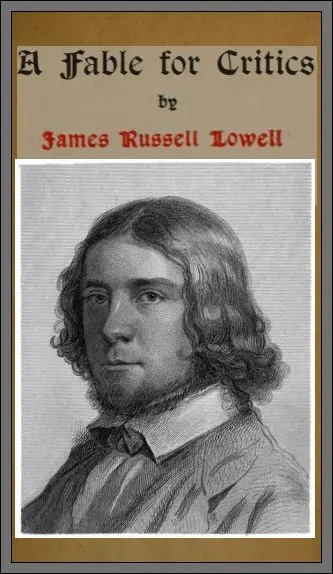
James Russell Lowell
BEHIND THE BOOK
This eBook is for the use of anyone anywhere in the United States and most other parts of the world at no cost and with almost no restrictions whatsoever. You may copy it, give it away or re-use it under the terms of the Project Gutenberg License included with this eBook or online at www.gutenberg.org. If you are not located in the United States, you will have to check the laws of the country where you are located before using this eBook. Read the source licence.
The original source file, including credits and licence, is retained by this library. Request an original-format copy at no charge. Please include the book title and Project Gutenberg identifier #72324.
KEEP YOUR CURIOSITY GOING

David Patterson (Spirit) Hatch

David Patterson (Spirit) Hatch

David Patterson (Spirit) Hatch
Cécile Tormay

Moritz Busch
John L. Ransom