
Letters of Marque
Rudyard Kipling
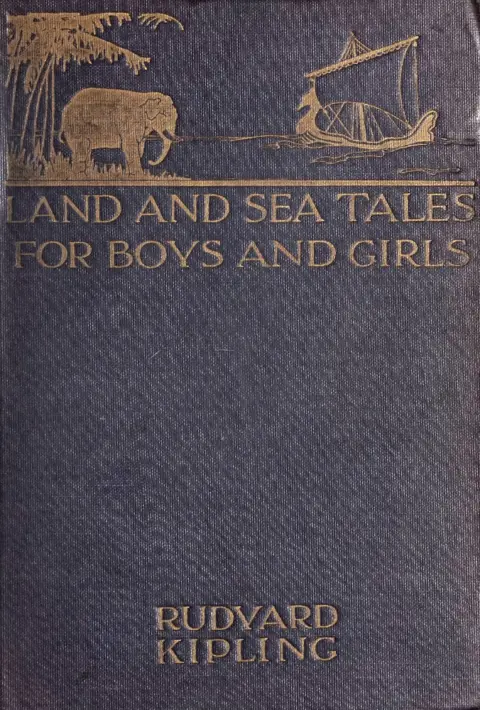
THE CLASSIC COLLECTION · 1893
"Land and Sea Tales for Boys and Girls" by Rudyard Kipling is a collection of short stories written in the late 19th century. This compilation features adventure tales that explore themes of bravery, character, and heroism, often drawing on Kipling's experiences with British colonial culture and the sea. The stories can be enjoyed by younger readers, making them a delightful read for both children and adults alike. The opening of the collection begins with a preface that sets the tone for the tales to follow, emphasizing the importance of being fit—both in mind and body. It introduces the idea that true valor comes in various forms, whether in quiet acts of courage or on the battlefield. The first story, "Winning the Victoria Cross," recounts the history and significance of the prestigious military honor awarded for acts of bravery, with examples illustrating the diverse ways in which heroism manifests. This establishes a framework for the subsequent tales, which promise to celebrate valor and the adventurous spirit of young and old alike against the backdrop of land and sea.
Introduction adapted from the source catalogue; source summaries may be automatically generated.
Free to read · English · 57,228 words · No account needed
MAKE TIME FOR A GOOD BOOK
On by default. Untick to stop anonymous reading totals. Each page counts after 10 seconds in view. How this works.
Anonymous counting is on unless you have switched it off.
He waited, boiling with impatience, till Olaf came in, and the two went off together, old Olaf clucking, “Look! Look! Look!” like a hen, all down the Sheds, and they chose a nearly new Hawthorne, No. 239, which Olaf highly recommended. Then Olaf went away, to give young Ottley his chance to order her to the cleaning-pit, and jerk his thumb at the cleaner and say, as he turned magnificently on his heel, “Thursday, eight o’clock. Mallum? Understand?”
That was almost the proudest moment of his life. The very proudest was when he pulled out of Atami Junction through the brick-field on the way to his loop, and passed the Down Mail, with Olaf in the cab.
They say in the Sheds that you could have heard Number Two hundred and Thirty-nine’s whistle from Raneegunge clear to Calcutta.
When, with a pain he desires to explain to the multitude, Baby howls Himself black in the face, toothlessly striving to curse; And the six-month-old Mother begins to enquire of the Gods if it may be Tummy, or Temper, or Pins—what does the adequate Nurse?
See! At one turn of her head the trouble is guessed; and, thereafter She juggles (unscared by his throes) with drops of hot water and spoons, Till the hiccoughs are broken by smiles, and the smiles pucker up into laughter, And he lies o’er her shoulder and crows, and she, as she nurses him, croons!
When, at the head of the grade, tumultuous out of the cutting, Pours the belated Express, roars at the night, and draws clear, Redly obscured or displayed by her fire-door’s opening and shutting— Symbol of strength under stress—what does her small engineer?
Clamour and darkness encircle his way. Do they deafen or blind him? No!—nor the pace he must keep. He, being used to these things, Placidly follows his work, which is laying his mileage behind him, While his passengers trustfully sleep, and he, as he handles her, sings!
When, with the gale at her heel, the barque lies down and recovers— Rolling through forty degrees, combing the stars with her tops, What says the man at the wheel, holding her straight as she hovers On the shoulders of wind-screening seas, steadying her as she drops?
Behind him the blasts without check from the Pole to the Tropic, pursue him, Heaving up, heaping high, slamming home, the surges he must not regard:
Beneath him the crazy wet deck, and all Ocean on end to undo him; Above him one desperate sail, thrice-reefed but still buckling the yard!
Your reading position is saved on this browser. Take it to another device with a library code. Reading pages adapt to text, rather than matching a printed edition.
Rudyard Kipling

Rudyard Kipling
Rudyard Kipling

Rudyard Kipling
BEHIND THE BOOK
This eBook is for the use of anyone anywhere in the United States and most other parts of the world at no cost and with almost no restrictions whatsoever. You may copy it, give it away or re-use it under the terms of the Project Gutenberg License included with this eBook or online at www.gutenberg.org. If you are not located in the United States, you will have to check the laws of the country where you are located before using this eBook. Read the source licence.
The original source file, including credits and licence, is retained by this library. Request an original-format copy at no charge. Please include the book title and Project Gutenberg identifier #63619.
KEEP YOUR CURIOSITY GOING
Coulson Kernahan

Maurice Baring
Frances Wright
Cécile Tormay

Frederic Jesup Stimson

W. H. P. (William Henry Pope) Jarvis