
Matt: A Story of A Caravan
Robert Williams Buchanan
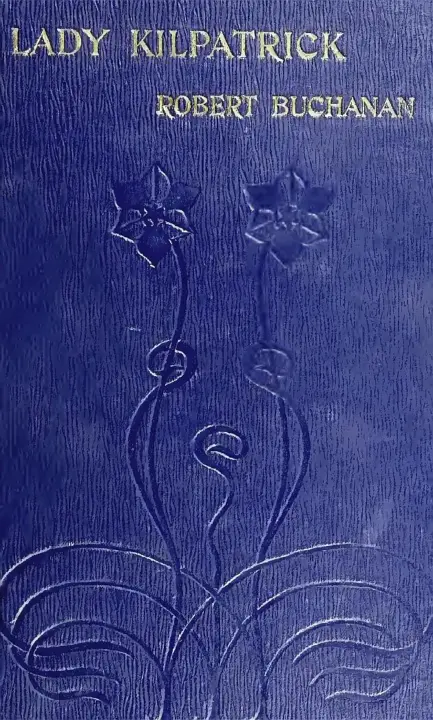
THE CLASSIC COLLECTION · 1898
"Lady Kilpatrick" by Robert Williams Buchanan is a novel written in the late 19th century. The story is set in Ireland and revolves around Desmond Macartney, a young man with a mysterious parentage, and his friendship with Lady Dulcie, the niece of Lord Kilpatrick. As their relationship develops against a backdrop of complex social dynamics and family secrets, the narrative explores themes of love, identity, and social class. The opening of the novel introduces us to a summer evening stroll along the beach, where Desmond and Dulcie converse. Desmond's playful demeanor contrasts with the deeper elements of his character revealed as he reflects on his childhood and the absence of his parents. This sets the stage for the unfolding drama as their conversation touches on serious subjects, including Desmond's feelings of longing and loss connected to his parents' past. Moreover, the appearance of a drunken man named Mr. Blake adds to the tension, hinting at the personal and societal conflicts to come. As the chapter progresses, we begin to trace the intricate web of relationships and past secrets that will shape Desmond's destiny, particularly as the implications of his unknown heritage emerge.
Introduction adapted from the source catalogue; source summaries may be automatically generated.
Free to read · English · 41,611 words · No account needed
MAKE TIME FOR A GOOD BOOK
On by default. Untick to stop anonymous reading totals. Each page counts after 10 seconds in view. How this works.
Anonymous counting is on unless you have switched it off.
‘For your lordship’s orders.’
Kilpatrick sat twisting his fingers in a nervous silence for a second or two, and then abruptly asked:
‘Where’s Desmond? I suppose you’ve seen him lately?’
‘Ay!’ said Peebles, ‘I saw him last night.’
‘And what had the young scamp to say for himself? Still on the high horse, I suppose? When does he propose to honour my house with his presence again?’ ‘God forgive us!’ said Peebles, shaking his head at his master with a mournful reproof. ‘“Still on his high horse,” quotha! ’Tis you that are walking wi’ the bare feet o’ conscience in the mire o’ repentance, if your silly pride would let ye own till it.’
Kilpatrick tried to look angrily at the old man, but the continued slow shake of Peebles’ head, and the calm penetration of the eyes that dwelt on his, cowed him.
‘I ask you, Peebles,’ he cried suddenly, ‘is not my position a hard
one?’
‘Sair hard,’ said Peebles; ‘but ye made it yoursel’, and ye hae nae
right to grumble.’
‘It’s harder than I deserve,’ cried Kilpatrick. ‘If--if it was the--the just measure of punishment for--for that silly indiscretion of years ago, I should not complain, but----’
‘My lord!’ said Peebles, ‘dinna gang beyond God’s patience. “Just measure o’ punishment!” “too hard!” I wonder ye hae the presumption to sit in that chair, and talk to me that ken the circumstances.’
‘Hold your tongue, confound you!’ said his master.
‘That will I no’,’ returned Peebles, ’till as your speeritual weelwisher and your carnal servant I hae done my best to purge your heart o’ the black vanity ye cherish.’
‘Go to the devil, you canting old scoundrel!’ screamed Kilpatrick.
‘After your lordship,’ said Peebles suavely, and flowed on before the angry old gentleman could stop him. ‘You say your lot’s a hard one? You complain that Providence is punishing you too severely? Man, ye are just like a spoiled child, that sets a house afire in his wantonness, and then thinks he’s badly treated because he gets his fingers burnt. Your lot a hard one! What about the lot o’ the innocent lass that trusted ye, and that ye ruined and slew? What about the bright bonny lad that God put it into his mither’s heart to send here t’ ye, that should hae been a sound o’ peace in your ears, a light unto your eyes, a sermon to your understanding, ilka day this eighteen years bygone? What about his shame and anguish, his loss of respect and belief in all his kind, because you, the one man he loved and trusted most, turned to base metal in his sight? And ye are hardly treated! Gin ye had your deserts, Henry Conseltine, Lord Kilpatrick, ye’d be on the treadmill at this minute. There’s many an honester man than you that’s praying God this minute for bread and water to stay his carnal pangs, while ye sit here, full o’ meat, and puffed out wi’ idleness. Ill treated! Ma certie!’ cried the old man, with a fall from an almost Biblical solemnity of phrase to latter-day colloquialism which would have seemed ludicrous to any third person. ‘Ye’re no blate! Perhaps ye’d like a step up in the peerage for havin’ ruined an honest lassie and broken a poor lad’s heart?’
Your reading position is saved on this browser. Take it to another device with a library code. Reading pages adapt to text, rather than matching a printed edition.
Robert Williams Buchanan
Robert Williams Buchanan
Robert Williams Buchanan
Robert Williams Buchanan
BEHIND THE BOOK
This eBook is for the use of anyone anywhere in the United States and most other parts of the world at no cost and with almost no restrictions whatsoever. You may copy it, give it away or re-use it under the terms of the Project Gutenberg License included with this eBook or online at www.gutenberg.org. If you are not located in the United States, you will have to check the laws of the country where you are located before using this eBook. Read the source licence.
The original source file, including credits and licence, is retained by this library. Request an original-format copy at no charge. Please include the book title and Project Gutenberg identifier #55337.
KEEP YOUR CURIOSITY GOING
Coulson Kernahan

Maurice Baring
Frances Wright
Cécile Tormay

Frederic Jesup Stimson

W. H. P. (William Henry Pope) Jarvis