THE CLASSIC COLLECTION✦La cuisine creoleCLASSIC FREE BOOKS
La cuisine creole
Lafcadio Hearn
THE CLASSIC COLLECTION · 1902
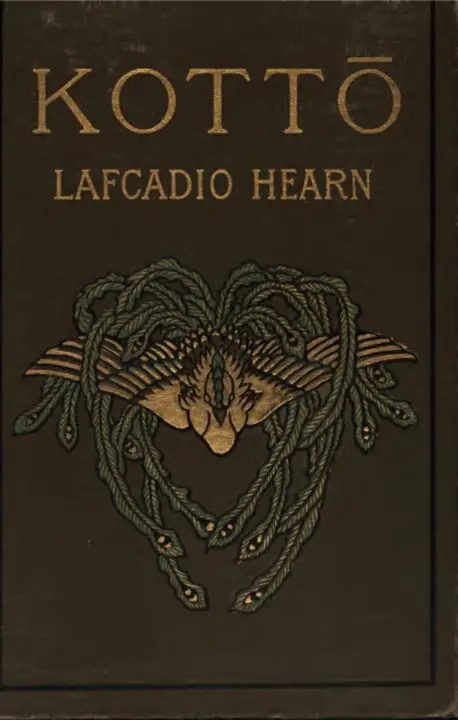
"Kotto: Being Japanese Curios, with Sundry Cobwebs" by Lafcadio Hearn is a collection of Japanese folklore and stories written in the early 20th century. The work encapsulates a variety of intriguing tales that delve into supernatural themes, cultural beliefs, and moral lessons reflective of Japanese society at the time. Through these narratives, Hearn provides a glimpse into the mysterious and fantastical elements of Japanese culture, often weaving in deeper philosophical insights. The opening of the book begins with a focus on various old stories, starting with "The Legend of Yurei-Daki," which tells of a haunting waterfall and a courageous woman named O-Katsu. As the tale unfolds, she is challenged by her friends to retrieve a money-box from the ghostly cascade, prompting a night-time venture filled with suspense and supernatural occurrences. The story juxtaposes elements of bravery against the harrowing realities of loss and the unknown, setting the tone for the exploration of curious themes in Hearn’s collection.
Introduction adapted from the source catalogue; source summaries may be automatically generated.
Free to read · English · 36,579 words · No account needed
MAKE TIME FOR A GOOD BOOK
On by default. Untick to stop anonymous reading totals. Each page counts after 10 seconds in view. How this works.
Anonymous counting is on unless you have switched it off.
[Footnote 20: Lit. "there never yet having been any waves nor even wind
between us."
[Footnote 21: The Shinto parish-temple, or more correctly, district-temple of the Yotsuya] quarter. Each quarter, or district, of the city has its tutelar divinity, or Ujigami. Suga-jinja is the Ujigami-temple of Yotsuya.]
[Footnote 22: Iyogasuri is the name given to a kind of dark-blue cotton-cloth, with a sprinkling of white in small patterns, manufactured at Iyo, in Shikoku.]
[Footnote 23: The Kanazawa-tei is a public hall in the Yotsuya quarter. Harimadayū is the professional name of a celebrated chanter of the dramatic recitations called jōruri and gidayū,--in which the reciter, or chanter, mimes the voices and action of many different characters.]
[Footnote 24: She alludes to a popular saying of Buddhist origin:--Jishin, kwaji, kaminari, misoka, kikin, yamai no naki kuni é yuku ("Let us go to the Land where there is neither earthquake, nor fire, nor lightning, nor any last day of the month, nor famine, nor sickness").]
[Footnote 25: Ujigami of the Ushigomé district.]
[Footnote 26: Festival of the "Further Shore" (that is to say, Paradise). There are two great Buddhist festivals thus called,--the first representing a period of seven days during the spring equinox; the second, a period of seven days during the autumnal equinox.]
[Footnote 27: This drama is founded upon the history of a famous rice merchant named Matsumaëya Gorōbei.]
[Footnote 28: Shiogama-Daimyōjin, a Shinto deity, to whom women pray for easy delivery in child-birth. Shrines of this divinity may be found in almost every province of Japan.]
[Footnote 29: Uréshiki ma wa wazuka nité, mata kanashimi to henzuru; umaréru mono wa kanarazu shizu.--A Buddhist text that has become a Japanese proverb.]
[Footnote 30: Composed by the bereaved mother herself, as a discipline
against grief.]
[Footnote 31: Nadéshiko literally means a pink; but in poetry the word is commonly used in the meaning of "baby."]
[Footnote 32: Samidaré is the name given to the old fifth month, or, more strictly speaking, to a rainy period occurring in that month. The verses are, of course, allusive, and their real meaning might be rendered thus: "Oh! the season of grief! All things now seem sad: the sleeves of my robe are moist with my tears!"]
[Footnote 33: The sotoba is a tall wooden lath, inscribed with Buddhist texts, and planted above a grave. For a full account of the sotoba, see the article entitled "The Literature of the Dead," in my Exotics and Retrospectives, p. 102. I am not able to give any account or explanation of the curious superstition here referred to; but it is probably of the same class with the strange custom recorded in my Gleanings in Buddha-Fields, p. 126.]
Your reading position is saved on this browser. Take it to another device with a library code. Reading pages adapt to text, rather than matching a printed edition.
Lafcadio Hearn
Lafcadio Hearn

Lafcadio Hearn

Lafcadio Hearn
BEHIND THE BOOK
This eBook is for the use of anyone anywhere in the United States and most other parts of the world at no cost and with almost no restrictions whatsoever. You may copy it, give it away or re-use it under the terms of the Project Gutenberg License included with this eBook or online at www.gutenberg.org. If you are not located in the United States, you will have to check the laws of the country where you are located before using this eBook. Read the source licence.
The original source file, including credits and licence, is retained by this library. Request an original-format copy at no charge. Please include the book title and Project Gutenberg identifier #55473.
KEEP YOUR CURIOSITY GOING
Coulson Kernahan

Maurice Baring
Frances Wright
Cécile Tormay
Francis Greenleaf Allinson & Anne C. E. (Anne Crosby Emery) Allinson

Frederic Jesup Stimson