THE CLASSIC COLLECTION✦A dead man’s diaryCLASSIC FREE BOOKS
A dead man’s diary
Coulson Kernahan
THE CLASSIC COLLECTION · 1920
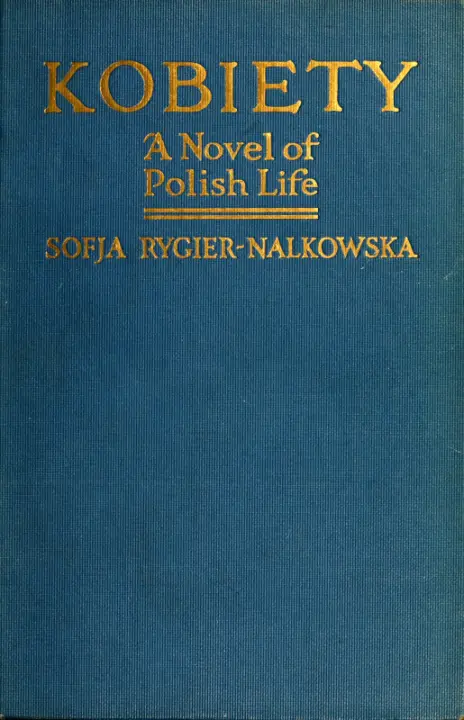
"Kobiety (Women): A Novel of Polish Life" by Zofia Nałkowska is a novel written in the early 20th century. The narrative revolves around a young woman's exploration of love, individuality, and the complexities of feminine existence in a changing Polish society. The protagonist, Janina, is depicted as a vibrant character who grapples with her emotions as she interacts with several influential male figures, particularly Janusz and Roslawski. The opening of the novel introduces readers to the lush, evocative imagery of nature, showcasing Janina in a moment of introspection amidst the forest. As she engages in playful banter with Janusz, the tension between their romantic undertones becomes palpable, revealing her conflicting feelings about love and independence. Janina expresses a desire to embrace life while simultaneously reflecting on her internal struggles and the expectations placed upon her as a woman. The dialogue skillfully foreshadows the interpersonal dynamics that will develop throughout the story, setting the stage for Janina's journey of self-discovery amid societal constraints.
Introduction adapted from the source catalogue; source summaries may be automatically generated.
Free to read · English · 63,336 words · No account needed
MAKE TIME FOR A GOOD BOOK
On by default. Untick to stop anonymous reading totals. Each page counts after 10 seconds in view. How this works.
Anonymous counting is on unless you have switched it off.
This time, Imszanski went home with me. I overheard Czolhanski say, on taking leave of him: “You may rely upon me absolutely; I will manage everything.”
It has been terribly cold, and now there is a thaw. At such times, I love to wander up and down the avenues in the park, which then are completely deserted.
My nostrils inhale that peculiar scent of bare moist earth, and the effluvium from the buds as yet invisible; and I muse upon those incomparable and marvellously beautiful things that have never been realized.
On the yellow background of dry dead grass, there appeared in the distance a young man to whom, as to myself, loneliness was no doubt pleasant, and who enjoyed walking along the avenues oversprinkled with last year’s fallen leaves.
He came up with me, and on passing by, looked keenly into my eyes, and with something of astonishment.
I did not return his glance, but walked more slowly, so as to lag behind
him.
The young man stopped presently, and waited until I came up; then he passed by me again with a protracted stare.
This manœuvre was repeated several times. Presently I was seized with an unaccountable desire to burst into a fit of nervous laughter, which I smothered down as best I could. At any rate, I had the full control of my eyes, the expression of which was mere indifference and disdain. Presently I looked him steadily in the face, to stare him out of countenance; so that he could see my attitude to be unmistakably hostile.
“But why,” I was thinking all the time, “why should I look upon him—this handsome slender stripling—as my foe? He certainly does not mean to harm me in any way; his interest is simply aroused in finding a person who has the same taste for solitude as himself, whilst he naturally has a friendly feeling towards a good-looking woman.”
The young fellow, at first kindly disposed, was nettled by the look of hostility in my eyes. He came up close to me, with a flippant laugh, and said in an ironical tone of sympathy:
“I would give anything in reason to know what sorrows of the heart have driven you to take so very romantic a walk as this.”
I was silent, and knit my brows.
“Souls that pine in loneliness,” he went on, as sarcastic as before, “ought to comfort each other, I think: don’t you?”
There was a pause, as we walked side by side.
“But why knit those fair eyebrows so? Oh, really, you frighten me.... Such malignant eyes! Come, come, I shall do you no harm; why be so cantankerous?”
Your reading position is saved on this browser. Take it to another device with a library code. Reading pages adapt to text, rather than matching a printed edition.
BEHIND THE BOOK
This eBook is for the use of anyone anywhere in the United States and most other parts of the world at no cost and with almost no restrictions whatsoever. You may copy it, give it away or re-use it under the terms of the Project Gutenberg License included with this eBook or online at www.gutenberg.org. If you are not located in the United States, you will have to check the laws of the country where you are located before using this eBook. Read the source licence.
The original source file, including credits and licence, is retained by this library. Request an original-format copy at no charge. Please include the book title and Project Gutenberg identifier #61618.
KEEP YOUR CURIOSITY GOING
Coulson Kernahan

Maurice Baring
Frances Wright
Cécile Tormay

Frederic Jesup Stimson

W. H. P. (William Henry Pope) Jarvis