THE CLASSIC COLLECTION✦A dead man’s diaryCLASSIC FREE BOOKS
A dead man’s diary
Coulson Kernahan
THE CLASSIC COLLECTION · 1920
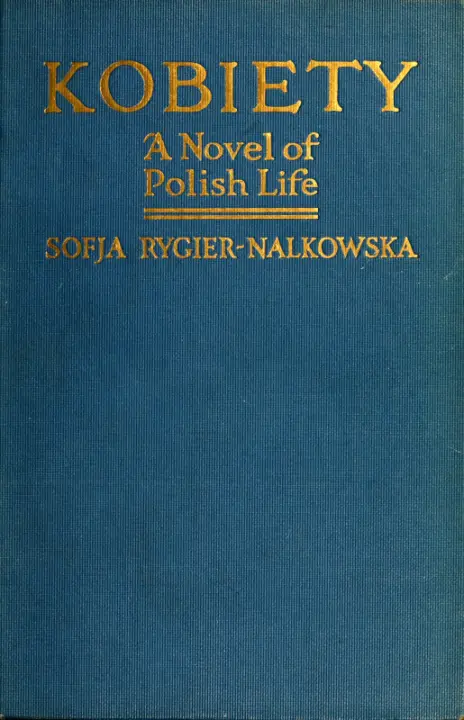
"Kobiety (Women): A Novel of Polish Life" by Zofia Nałkowska is a novel written in the early 20th century. The narrative revolves around a young woman's exploration of love, individuality, and the complexities of feminine existence in a changing Polish society. The protagonist, Janina, is depicted as a vibrant character who grapples with her emotions as she interacts with several influential male figures, particularly Janusz and Roslawski. The opening of the novel introduces readers to the lush, evocative imagery of nature, showcasing Janina in a moment of introspection amidst the forest. As she engages in playful banter with Janusz, the tension between their romantic undertones becomes palpable, revealing her conflicting feelings about love and independence. Janina expresses a desire to embrace life while simultaneously reflecting on her internal struggles and the expectations placed upon her as a woman. The dialogue skillfully foreshadows the interpersonal dynamics that will develop throughout the story, setting the stage for Janina's journey of self-discovery amid societal constraints.
Introduction adapted from the source catalogue; source summaries may be automatically generated.
Free to read · English · 63,336 words · No account needed
MAKE TIME FOR A GOOD BOOK
On by default. Untick to stop anonymous reading totals. Each page counts after 10 seconds in view. How this works.
Anonymous counting is on unless you have switched it off.
I started by complaining of things in general, and with but little of personal feeling. He has hitherto known nothing about my relations with Witold. And I am also ashamed of this love, in which I have been playing so ludicrous a part.
“... And to think of the years, the golden years of youth, gliding, gliding, gliding by, beautiful, but empty as some marble bath of ancient days!...”
“But I told you once that men of modern times do not care to bathe in those waters. They are too clear, too cold; they run with too swift a stream, and with too many, oh! far too many an eddy and deep hollow. Janka, they fail to attract.”
“Let me say, Stephen, that I am unhappy, and therefore come to you. You, as a friend, have some responsibilities toward me; you can’t get out of them. All that I am is going to pieces at this time; and I do not know whether life or death will come of the change which is taking place.”
I had never yet yearned for Witold as at that moment, though I knew perfectly well that no one had done me the wrong which he had done.
“What about Helen?” I asked, with friendly interest.
“There again! I have been disappointed in her.”
“What, she! Unfaithful to you? Can that be?”
“Ah, no! I, rather than she, have been at fault in that respect.”
“Well then?”
“Well, what shall I say? I have broken with her.”
Forsaken! She too had then come to swell the list, after Martha, Gina,
and myself!
“That’s horrible. She was so very much in love with you.”
“Whereas I, alas! have a preference for women who care for nothing very
much.”
“Yet I know you have been moody of late.”
“And you are right: yes, I have.”
“Well, what was it that troubled your Olympian calm? The parting scene—tears—upbraiding?”
“Pas le moins du monte. She went away without uttering a word.”
“Then what was it?”
“That I have simply lost my belief in the last dogma left to me from childhood. Everybody complains that women are too devoid of heart and brains and soul; and I now find that it is in vain I have sought for a woman bereft of those superfluous appendages.”
“But Helen, as I understood, answered your ideal of a woman to
perfection?”
“I fondly thought she did. Oh, you cannot imagine what I would give to meet a woman really soulless, primitive: you know,—a creature absolutely and bewilderingly unenlightened.”
“Really, I quite dislike you to-day, Stephen. You are positively in bad
form!”
“Please forgive me.”
Your reading position is saved on this browser. Take it to another device with a library code. Reading pages adapt to text, rather than matching a printed edition.
BEHIND THE BOOK
This eBook is for the use of anyone anywhere in the United States and most other parts of the world at no cost and with almost no restrictions whatsoever. You may copy it, give it away or re-use it under the terms of the Project Gutenberg License included with this eBook or online at www.gutenberg.org. If you are not located in the United States, you will have to check the laws of the country where you are located before using this eBook. Read the source licence.
The original source file, including credits and licence, is retained by this library. Request an original-format copy at no charge. Please include the book title and Project Gutenberg identifier #61618.
KEEP YOUR CURIOSITY GOING
Coulson Kernahan

Maurice Baring
Frances Wright
Cécile Tormay

Frederic Jesup Stimson

W. H. P. (William Henry Pope) Jarvis