THE CLASSIC COLLECTION✦A dead man’s diaryCLASSIC FREE BOOKS
A dead man’s diary
Coulson Kernahan
THE CLASSIC COLLECTION · 1920
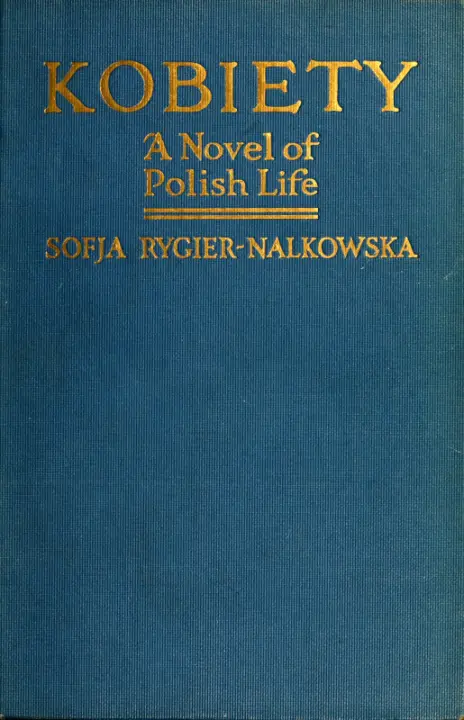
"Kobiety (Women): A Novel of Polish Life" by Zofia Nałkowska is a novel written in the early 20th century. The narrative revolves around a young woman's exploration of love, individuality, and the complexities of feminine existence in a changing Polish society. The protagonist, Janina, is depicted as a vibrant character who grapples with her emotions as she interacts with several influential male figures, particularly Janusz and Roslawski. The opening of the novel introduces readers to the lush, evocative imagery of nature, showcasing Janina in a moment of introspection amidst the forest. As she engages in playful banter with Janusz, the tension between their romantic undertones becomes palpable, revealing her conflicting feelings about love and independence. Janina expresses a desire to embrace life while simultaneously reflecting on her internal struggles and the expectations placed upon her as a woman. The dialogue skillfully foreshadows the interpersonal dynamics that will develop throughout the story, setting the stage for Janina's journey of self-discovery amid societal constraints.
Introduction adapted from the source catalogue; source summaries may be automatically generated.
Free to read · English · 63,336 words · No account needed
MAKE TIME FOR A GOOD BOOK
On by default. Untick to stop anonymous reading totals. Each page counts after 10 seconds in view. How this works.
Anonymous counting is on unless you have switched it off.
The great saloon was filled as usual with specimens of the jeunesse dorée, with financiers, and with courtesans. We attracted a good deal of attention. I had assumed the gay mien of a girl desperately bent on fun, and looked about on all sides, with lively glances at everybody.—Several men spoke to me.
In the passage on to which the doors of the private supper-rooms opened, we were met by a young but full-grown satyr, who slipped his arm under mine, and looked into my face. And yet I did not cease to laugh. It was revenge I craved—debauch—oblivion of all!
Gina’s terrified looks were expostulating with me.
“We have nothing to lose,” I returned to their speechless appeal. And thereupon she too fell a-laughing strangely.
The creature whose arm was in mine kept chattering incessantly ... about I know not what. A waiter respectfully opened the door of a small private room, and we all three went in.
“I presume, ladies, you have been at the play?” our gentleman inquired, having remarked the dresses we wore.
“Ha, ha!” I answered. “Right you are. Been at one play, and come to another.” There was not less coarse ribaldry in my tones than in my words.
“That’s first-rate.—The bill of fare, waiter!—What will you take?”
“To eat, nothing. We want to drink, to drink, to drink!”
“Very good!” he exclaimed, in a tone of pleased surprise. “Coffee and liqueur—cognac—champagne?”
“All right: anything and everything, my dear man!”
Several bottles were standing on the table. Our companion, having leisurely prepared a mayonnaise, set to munching the lobster with great relish, showing his white teeth in a grin.—Gina drank, but was mute.—I babbled incessantly, endeavouring to pass for a cocotte. We were a puzzle to the young man nevertheless, and his behaviour towards us was lacking in assurance.
“Do you know, Madame,” he at last blurted out, addressing me, “it will be better fun if we make a quartette.... I have an acquaintance in the saloon here: a capital fellow he is.”
Then, turning to Gina: “You also, Madame,” he said, “should have a
little diversion.”
I protested very strongly.
“Not the least need for him; let him stay where he is. You are what we
want.”
I held him back, putting my hands upon his shoulders, and my face close to the animal face of that unknown man.
He smiled, much flattered: his white teeth gleamed.
“We shall not keep you long, if you wish to leave us. But for the present, you have to stay with us.”
Your reading position is saved on this browser. Take it to another device with a library code. Reading pages adapt to text, rather than matching a printed edition.
BEHIND THE BOOK
This eBook is for the use of anyone anywhere in the United States and most other parts of the world at no cost and with almost no restrictions whatsoever. You may copy it, give it away or re-use it under the terms of the Project Gutenberg License included with this eBook or online at www.gutenberg.org. If you are not located in the United States, you will have to check the laws of the country where you are located before using this eBook. Read the source licence.
The original source file, including credits and licence, is retained by this library. Request an original-format copy at no charge. Please include the book title and Project Gutenberg identifier #61618.
KEEP YOUR CURIOSITY GOING
Coulson Kernahan

Maurice Baring
Frances Wright
Cécile Tormay

Frederic Jesup Stimson

W. H. P. (William Henry Pope) Jarvis