THE CLASSIC COLLECTION✦A dead man’s diaryCLASSIC FREE BOOKS
A dead man’s diary
Coulson Kernahan
THE CLASSIC COLLECTION · 1920
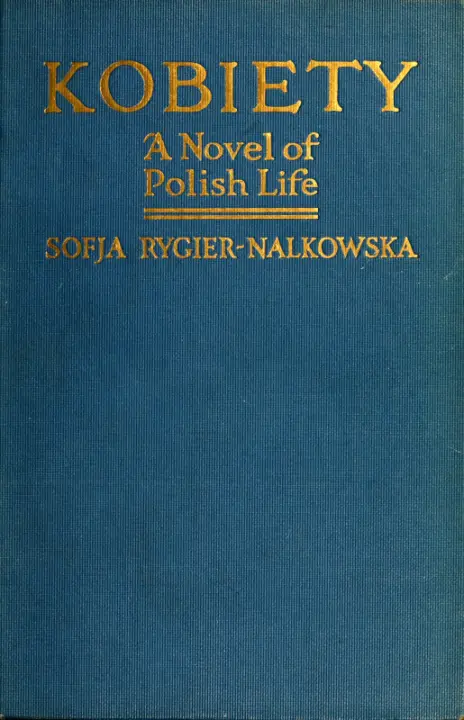
"Kobiety (Women): A Novel of Polish Life" by Zofia Nałkowska is a novel written in the early 20th century. The narrative revolves around a young woman's exploration of love, individuality, and the complexities of feminine existence in a changing Polish society. The protagonist, Janina, is depicted as a vibrant character who grapples with her emotions as she interacts with several influential male figures, particularly Janusz and Roslawski. The opening of the novel introduces readers to the lush, evocative imagery of nature, showcasing Janina in a moment of introspection amidst the forest. As she engages in playful banter with Janusz, the tension between their romantic undertones becomes palpable, revealing her conflicting feelings about love and independence. Janina expresses a desire to embrace life while simultaneously reflecting on her internal struggles and the expectations placed upon her as a woman. The dialogue skillfully foreshadows the interpersonal dynamics that will develop throughout the story, setting the stage for Janina's journey of self-discovery amid societal constraints.
Introduction adapted from the source catalogue; source summaries may be automatically generated.
Free to read · English · 63,336 words · No account needed
MAKE TIME FOR A GOOD BOOK
On by default. Untick to stop anonymous reading totals. Each page counts after 10 seconds in view. How this works.
Anonymous counting is on unless you have switched it off.
Idalia is not averse to having company at her lodgings, where I have met several characters in the artistic world.
Wiazewski cannot hear “Bohemianism.” Yet in spite of this he not unwillingly comes, too, to see us, and to “observe.”
“Look well at all those men,” he says. “For the most part ill-shaped, ill-favoured, sitting in corners and smoking cigarettes, and paying no attention whether ladies are present or not. All of them sceptical and pessimistic, taking no interest in any but exaggerated views, and in most deadly earnest about all their convictions. That is the type of men I most abhor. If intelligent, they grow narrow-minded; and, if dull, utterly impossible in society. You have surely noticed that the greatest fool, so long as he has no convictions of his own, may be a very nice gentlemanly fellow.”
“And what about the women?”
“They are less unendurable. They don’t talk of feminism, they don’t approve of women’s emancipation, and (best of all) they practise it very effectively indeed. They have a great deal of intuition, but for all that—and luckily so—not a grain of conscious experience.”
“Whom do you like best of all?”
“Miss Janina Dernowicz.”
“I was asking about artists; I am not one.”
“Ah, I see.—Artists? The prettiest is Miss Wartoslawska, whom I have known for a good long space of time. But just now she is far from looking as well as usual.—Why does not Owinski come here with her now?”
“Owinski?” I hesitated for a moment. Then: “Well, the engagement has been broken off for a month,” I said.
“Has it? Yes, I had heard something about his being affianced to some one, but fancied it was only gossip.... Why, he seemed to be a very passive sort of fellow, and bore the yoke meekly enough.”
“I don’t know who is responsible for what has taken place.”
“Oh, you have but to look at her, and you can’t help guessing.... Besides, women always love longer and more deeply. It is through love that they attain their highest degree of culture; and I must acknowledge that, so far as culture goes, they have outstripped men; a woman’s instinct stands higher than the wisdom of a man.”
“Why, Stephen, from where have you got this attitude of benevolent
optimism towards woman?”
“Of tragical pessimism, I should say,” he answered, gayly, but then was lost in a brown study.
How am I to know? Very likely this also is love. And a good thing, too, that it came to me: I was so lonely then and so crushed with longing!
Your reading position is saved on this browser. Take it to another device with a library code. Reading pages adapt to text, rather than matching a printed edition.
BEHIND THE BOOK
This eBook is for the use of anyone anywhere in the United States and most other parts of the world at no cost and with almost no restrictions whatsoever. You may copy it, give it away or re-use it under the terms of the Project Gutenberg License included with this eBook or online at www.gutenberg.org. If you are not located in the United States, you will have to check the laws of the country where you are located before using this eBook. Read the source licence.
The original source file, including credits and licence, is retained by this library. Request an original-format copy at no charge. Please include the book title and Project Gutenberg identifier #61618.
KEEP YOUR CURIOSITY GOING
Coulson Kernahan

Maurice Baring
Frances Wright
Cécile Tormay

Frederic Jesup Stimson

W. H. P. (William Henry Pope) Jarvis