THE CLASSIC COLLECTION✦SalmagundiCLASSIC FREE BOOKS
Salmagundi
William Irving & Washington Irving & James Kirke Paulding
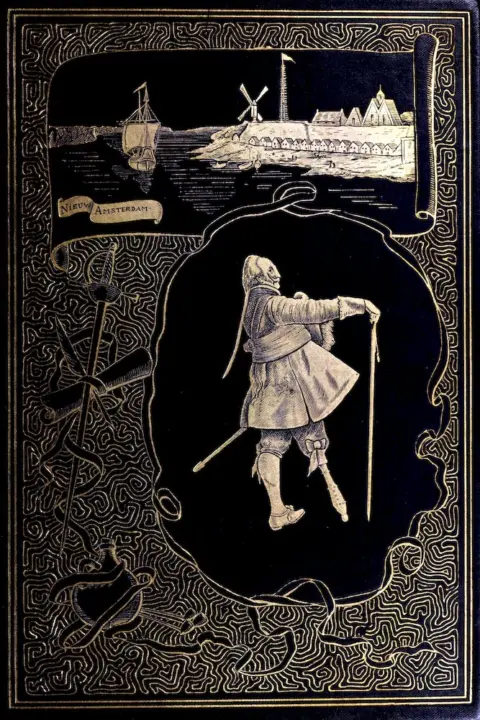
THE CLASSIC COLLECTION · 1893
A History of New York, subtitled From the Beginning of the World to the End of the Dutch Dynasty, is an 1809 literary parody on the early history of New York City by Washington Irving. Originally published under the pseudonym Diedrich Knickerbocker, later editions that acknowledged Irving's authorship were printed as Knickerbocker's History of New York.
The book is significant as early media describing what became modern Christmas traditions in the United States. (This summary is from Wikipedia.)
Introduction adapted from the source catalogue; source summaries may be automatically generated.
Free to read · English · 64,058 words · No account needed
MAKE TIME FOR A GOOD BOOK
On by default. Untick to stop anonymous reading totals. Each page counts after 10 seconds in view. How this works.
Anonymous counting is on unless you have switched it off.
The very first movements of the great Peter, on taking the reins of government, displayed his magnanimity, though they occasioned not a little marvel and uneasiness among the people of the Manhattoes. Finding himself constantly interrupted by the opposition, and annoyed by the advice of his privy council, the members of which had acquired the unreasonable habit of thinking and speaking for themselves during the preceding reign, he determined at once to put a stop to such grievous abominations. Scarcely, therefore, had he entered upon his authority, than he turned out of office all the meddlesome spirits of the factious cabinet of William the Testy; in place of whom he chose unto himself counsellors from those fat, somniferous, respectable burghers who had flourished and slumbered under the easy reign of Walter the Doubter. All these he caused to be furnished with abundance of fair long pipes, and to be regaled with frequent corporation dinners, admonishing them to smoke, and eat, and sleep for the good of the nation, while he took the burden of government upon his own shoulders—an arrangement to which they all gave hearty acquiescence.
Nor did he stop here, but made a hideous rout among the inventions and expedients of his learned predecessor,—rooting up his patent gallows, where caitiff vagabonds were suspended by the waistband,—demolishing his flagstaffs and wind-mills, which, like mighty giants, guarded the ramparts of New Amsterdam,—pitching to the duyvel whole batteries of quaker guns,—and, in a word, turning topsy-turvy the whole philosophic, economic, and wind-mill system of the immortal sage of Saardam.
The honest folk of New Amsterdam began to quake now for the fate of their matchless champion, Antony the Trumpeter, who had acquired prodigious favor in the eyes of the women, by means of his whiskers and his trumpet. Him did Peter the Headstrong cause to be brought into his presence, and eying him a moment from head to foot, with a countenance that would have appalled anything else than a sounder of brass,—“Pr’ythee, who and what art thou?” said he. “Sire,” replied the other, in no wise dismayed, “for my name, it is Antony Van Corlear; for my parentage, I am the son of my mother; for my profession, I am champion and garrison of this great city of New Amsterdam.” “I doubt me much,” said Peter Stuyvesant, “that thou art some scurvy costard-monger knave. How didst thou acquire this paramount honor and dignity?” “Marry, sir,” replied the other, “like many a great man before me, simply by sounding my own trumpet.” “Ay, is it so?” quoth the governor; “why, then let us have a relish of thy art.” Whereupon the good Antony put his instrument to his lips, and sounded a charge with such a tremendous outset, such a delectable quaver, and such a triumphant cadence, that it was enough to make one’s heart leap out of one’s mouth only to be within a mile of it. Like as a war-worn charger, grazing in peaceful plains, starts at a strain of martial music, pricks up his ears, and snorts, and paws, and kindles at the noise, so did the heroic Peter joy to hear the clangor of the trumpet; for of him might truly be said, what was recorded of the renowned St. George of England, “there was nothing in all the world that more rejoiced his heart than to hear the pleasant sound of war, and see the soldiers brandish forth their steeled weapons.” Casting his eye more kindly, therefore, upon the sturdy Van Corlear, and finding him to be a jovial varlet, shrewd in his discourse, yet of great discretion and immeasurable wind, he straightway conceived a vast kindness for him, and discharged him from the troublesome duty of garrisoning, defending, and alarming the city, ever after retained him about his person, as his chief favorite, confidential envoy, and trusty squire. Instead of disturbing the city with disastrous notes, he was instructed to play so as to delight the governor while at his repasts, as did the minstrels of yore in the days of glorious chivalry,—and on all public occasions to rejoice the ears of the people with warlike melody,—thereby keeping alive a noble and martial spirit.
Your reading position is saved on this browser. Take it to another device with a library code. Reading pages adapt to text, rather than matching a printed edition.
William Irving & Washington Irving & James Kirke Paulding
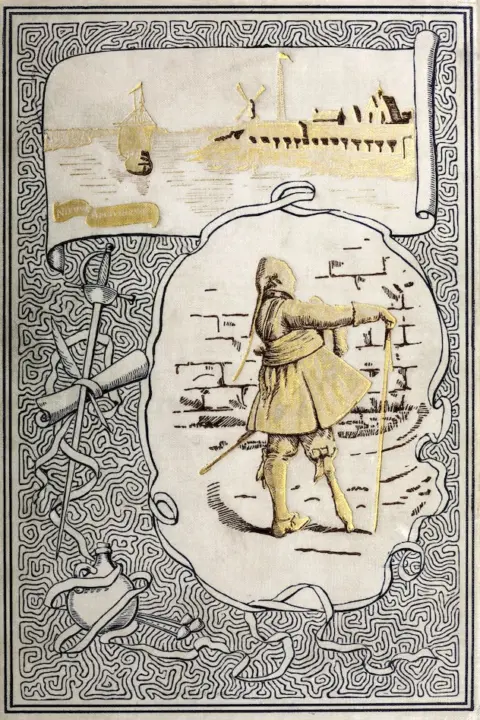
Washington Irving
Washington Irving

Washington Irving
BEHIND THE BOOK
This eBook is for the use of anyone anywhere in the United States and most other parts of the world at no cost and with almost no restrictions whatsoever. You may copy it, give it away or re-use it under the terms of the Project Gutenberg License included with this eBook or online at www.gutenberg.org. If you are not located in the United States, you will have to check the laws of the country where you are located before using this eBook. Read the source licence.
The original source file, including credits and licence, is retained by this library. Request an original-format copy at no charge. Please include the book title and Project Gutenberg identifier #78730.
KEEP YOUR CURIOSITY GOING
Cécile Tormay

Moritz Busch
John L. Ransom
Frances Wright
Cécile Tormay

Mabel Potter Daggett