
The lost dirigible
Ralph Henry Barbour
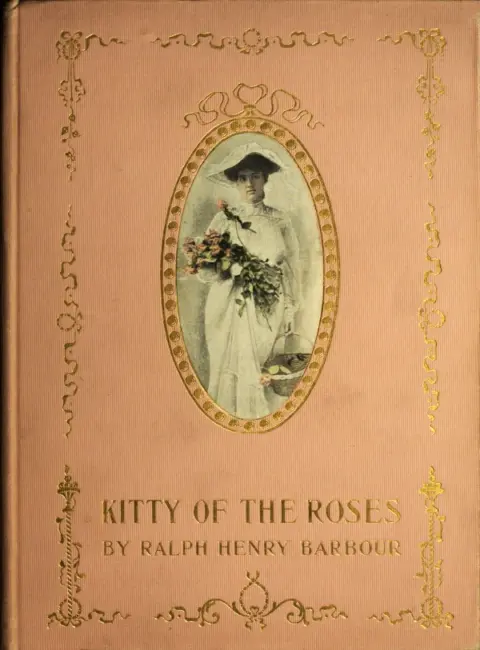
THE CLASSIC COLLECTION · 1904
"Kitty of the Roses" by Ralph Henry Barbour is a romantic novel written in the early 20th century. The book centers around a man named Stephen Burton, who is an architect staying in the quaint town of Belle Harbour, Virginia. The charming and enchanting Kitty, whom Burton encounters while admiring the local rose garden, captivates his heart and serves as the focal point of his affection and the plot. The opening of the novel vividly introduces the serene beauty of Belle Harbour, highlighting Burton's initial observations of the town and his fascination with Kitty and the vibrant garden she tends to. As Burton observes her delicate actions while picking roses, a mixture of admiration and desire envelops him. The narrative blends deep appreciation for nature with budding romance, setting up the interaction between Kitty and Burton that unfolds throughout the story. The beginning sets an inviting tone, foreshadowing the development of their relationship amidst the picturesque backdrop of idyllic southern life.
Introduction adapted from the source catalogue; source summaries may be automatically generated.
Free to read · English · 18,325 words · No account needed
MAKE TIME FOR A GOOD BOOK
On by default. Untick to stop anonymous reading totals. Each page counts after 10 seconds in view. How this works.
Anonymous counting is on unless you have switched it off.
“But I’m not sure I wouldn’t rather give you the cake,” she replied thoughtfully. “You see, the roses mean more to me.” Her eyes ranged slowly, lovingly over the garden. The shadow of her hat cast a warmer tone over one clear, creamy cheek, and Burton’s heart thumped immoderately.
“They would mean more, much more, to me, too,” he said softly, and his voice was not quite even. Perhaps she caught his meaning; at least the shadowed cheek found new color, and she made a little movement as though to go on her way up the path towards the house. But--and perhaps, after all, she was not altogether displeased--she only bent her warm face over a tempting spray of golden blossoms, and Burton, who had noted the impulse toward flight, went on hurriedly:
“One hears so much, and rightly, of Southern hospitality,” he said, “that certainly I am not mistaken in thinking you will give me, out of your vast wealth, one little rose a day?”
“You wouldn’t rather have the cake?” she asked, raising her head and viewing him quite calmly.
“No, the rose, if you please.”
“But it was delicious cake,” she went on musingly. “It was really the best I ever made, and Aunt Amanda says I make very good cake.”
“I could never doubt that,” he answered gallantly.
“It was very high, and it had four layers of lovely chocolate cream filling and lots and lots of chocolate icing on top. Don’t you like chocolate icing?”
“Awfully, but I like roses--some roses--far more.”
“Oh! But--every day? Don’t you think that’s rather often? Fresh roses will easily last three days without wilting, and if I gave you one this morning it ought to do until--let me see”--she counted the tips of three gloved fingers--“why, until Thursday!”
But he shook his head with decision.
“It must be one a day.”
“Must?” she repeated with a tinge of emphasis and a slight lifting of
her brows.
“Pardon me, should was what I meant to say. I shall soon begin to think you a miser. Perhaps if I look out into the garden some moonlight night I shall see you here counting your roses, as a miser counts his gold.”
She smiled at the picture he drew. Then, tossing some loose petals from her hand with a gesture of surrender,--
“Very well,” she said, “you shall have your one rose a day while you’re here. I reckon it won’t impoverish me, for no one never stays in Belle Harbour very long at a time--unless one lives here.”
Your reading position is saved on this browser. Take it to another device with a library code. Reading pages adapt to text, rather than matching a printed edition.
Ralph Henry Barbour
Ralph Henry Barbour

Ralph Henry Barbour

Ralph Henry Barbour
BEHIND THE BOOK
This eBook is for the use of anyone anywhere in the United States and most other parts of the world at no cost and with almost no restrictions whatsoever. You may copy it, give it away or re-use it under the terms of the Project Gutenberg License included with this eBook or online at www.gutenberg.org. If you are not located in the United States, you will have to check the laws of the country where you are located before using this eBook. Read the source licence.
The original source file, including credits and licence, is retained by this library. Request an original-format copy at no charge. Please include the book title and Project Gutenberg identifier #56652.
KEEP YOUR CURIOSITY GOING
Coulson Kernahan

Maurice Baring
Frances Wright
Cécile Tormay

Frederic Jesup Stimson

W. H. P. (William Henry Pope) Jarvis