
Last letters from the living dead man
David Patterson (Spirit) Hatch
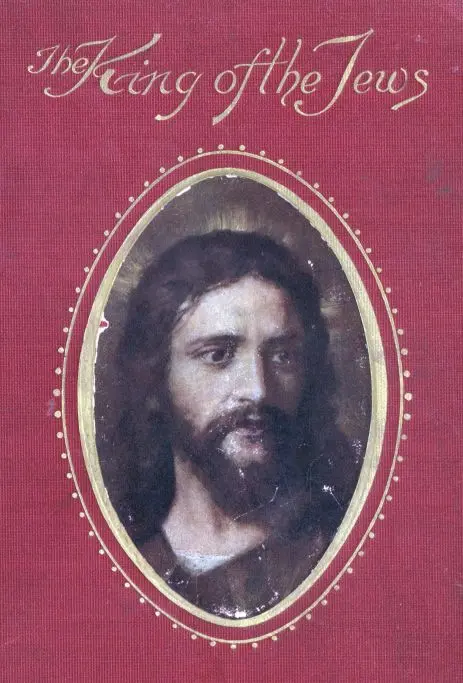
THE CLASSIC COLLECTION · 1900
"King of the Jews: A Story of Christ's Last Days on Earth" by W. T. Stead is a narrative retelling of the final days of Jesus Christ, adapted from the Oberammergau Passion Play, likely written in the late 19th century. This work captures significant moments from Christ's life, including his triumphal entry into Jerusalem, the Last Supper, and the betrayal by Judas. Through the lens of biblical events, the author aims to illuminate the emotional and dramatic aspects surrounding the figure of Jesus and the context of his sacrifice. The opening of the story begins with Jesus' powerful act of driving out the money changers from the temple, displaying his commitment to restoring the sanctity of God's house. As Jesus rides into Jerusalem on a colt, he is met with a jubilant crowd shouting "Hosanna," reflecting the hopes and expectations of the people. The narrative quickly shifts to the hostile reactions of the religious leaders who conspire against him, feeling threatened by his influence and teachings. Jesus' actions and words provoke both admiration from the crowd and ire from the priests, establishing the tension that unfolds in the lead-up to his crucifixion. This section sets the stage for the conflicts and themes of loyalty, sacrifice, and betrayal that permeate the rest of Stead's adaptation.
Introduction adapted from the source catalogue; source summaries may be automatically generated.
Free to read · English · 45,750 words · No account needed
MAKE TIME FOR A GOOD BOOK
On by default. Untick to stop anonymous reading totals. Each page counts after 10 seconds in view. How this works.
Anonymous counting is on unless you have switched it off.
Caiaphas said, "I did not wish to trouble all the members of the Sanhedrin to come hither in the night time. But there was present the necessary number of judges to pronounce as the law prescribes. All as with one mouth declared the accused worthy of death, for all had heard with their own ears how this man blasphemed God in the most terrible way, and was impious enough to call himself the Son of God."
The priests and Pharisees who had previously been present answered, "Yea, we bear witness to it. We have ourselves heard the impious blasphemy from his lips."
"Then," said Caiaphas, "I will have the criminal brought before you once more, so that you may be convinced of his being worthy of death. Then may the whole council pronounce the just sentence."
As he was speaking, Judas, looking haggard and distracted, rushed into the midst of the council, crying wildly, "Is it true? Have you condemned my Master to death?"
Then said the rabbi unto him, "Why dost thou force thyself uncalled for in this assembly? Be off. We will call thee if we have need of thee."
But Judas took no heed. "I must know it," he said. "Have you
condemned him?"
Then all in the council cried aloud, "He must die."
"Woe, woe!" said Judas. "I have sinned. I have betrayed innocent blood. Oh, you blood-thirsty judges, to condemn the innocent blood."
"Peace, peace, Judas," cried the council.
"There will never, never more be peace for me," said Judas, bitterly,
"and none for you. The blood of the innocent cries aloud for
vengeance."
"What has driven you crazy? Speak, but speak with reverence--thou standest before the Sanhedrin," said Caiaphas.
Then said Judas passionately: "You are determined to deliver him up to death; him who is free from all guilt. You must not do it. I have a protest to make against it. You have made me a traitor. Your accursed pieces of silver!"
Annas interrupted him, saying, "Thou didst propose it thyself and close
the bargain."
Then said the priest unto him, "Recollect thyself, Judas, thou hast received what thou didst desire; and if thou behavest thyself decently thou canst still----"
Judas interrupted him. "I will have nothing more. I tear up your shameful bargain. Let the innocent go."
"Be off, madman," said a rabbi angrily.
But Judas, taking no heed, knelt and stretched his hands toward Caiaphas. "I demand the release of the innocent. My hands shall be free from his blood."
"What," said the rabbi, "thou contemptible traitor, wilt thou dictate to the Sanhedrin? Know this, thy Master must die, and thou hast delivered him to death."
Your reading position is saved on this browser. Take it to another device with a library code. Reading pages adapt to text, rather than matching a printed edition.
BEHIND THE BOOK
This eBook is for the use of anyone anywhere in the United States and most other parts of the world at no cost and with almost no restrictions whatsoever. You may copy it, give it away or re-use it under the terms of the Project Gutenberg License included with this eBook or online at www.gutenberg.org. If you are not located in the United States, you will have to check the laws of the country where you are located before using this eBook. Read the source licence.
The original source file, including credits and licence, is retained by this library. Request an original-format copy at no charge. Please include the book title and Project Gutenberg identifier #22735.
KEEP YOUR CURIOSITY GOING
David Patterson (Spirit) Hatch

David Patterson (Spirit) Hatch

David Patterson (Spirit) Hatch

Edwin Abbott Abbott

Richard Watson
Maurice Baring