
Dead letters
Maurice Baring
THE CLASSIC COLLECTION · 1882
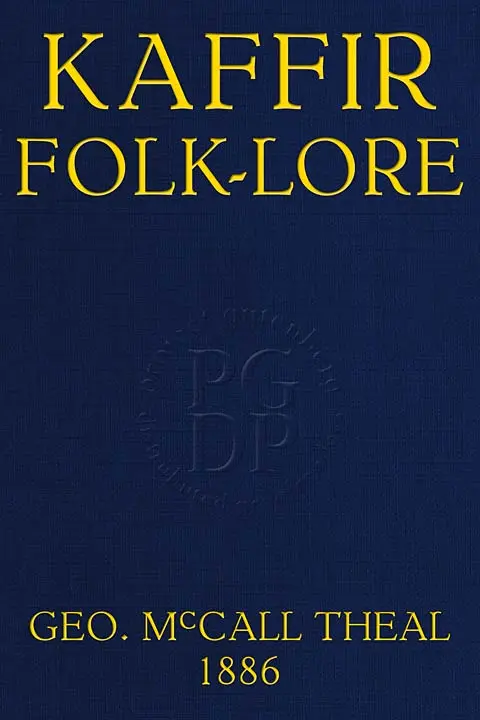
"Kaffir Folk-Lore: A Selection from the Traditional Tales Current Among the People Living on the Eastern Border of the Cape Colony" by Geo. McCall Theal is a collection of traditional folklore written in the late 19th century. The book presents a variety of tales from the Amaxosa tribe, providing insight into their culture, beliefs, and social practices through these narratives that serve as reflections of their imaginative faculties and societal norms. The opening of the work includes a preface and an introductory chapter that establish the significance of folklore in understanding the customs and beliefs of the Kaffir people. The author emphasizes the importance of these stories, suggesting that they not only entertain but also serve as critical indicators of the tribe's historical context, governance, and religious beliefs. The introduction includes various remarks about the changes in traditions due to European influence and sets the stage for the tales that follow, highlighting the adaptability and evolution of folklore among the Kaffirs, showcasing a blend of both ancient traditions and more contemporary influences.
Introduction adapted from the source catalogue; source summaries may be automatically generated.
Free to read · English · 44,798 words · No account needed
MAKE TIME FOR A GOOD BOOK
On by default. Untick to stop anonymous reading totals. Each page counts after 10 seconds in view. How this works.
Anonymous counting is on unless you have switched it off.
Little Jackal let down a rope made of mouse skins, and when Lion climbed a little way up, the rope broke, and he fell and was hurt. He then went home.
The language of a Kaffir is adorned with figurative expressions, some of which are readily understood by an Englishman, but others, when literally interpreted, are to us meaningless. Such expressions, however, are found upon inquiry to refer to some circumstance in their mode of living, or some event in their traditional history, which makes the meaning very clear. A few of their commonest proverbs and figurative expressions are here given:—
Isikuni sinyuka nomkwezeli.
A brand burns him who stirs it up.
This proverb is an exact equivalent to our English one, Let sleeping
dogs lie.
Njengo mdudo ka Mapassa.
Like the marriage feast of Mapassa.
This saying is used to denote anything unusually grand. The marriage festivities of one of the ancients, Mapassa by name, are said to have been carried on for a whole year.
Ishwa lomhluzi wamanqina.
Misfortune of soup made of shanks and feet.
Applied to any person who never does well, but is always getting into scrapes. The kind of soup spoken of is very lightly esteemed by the Kaffirs.
Akuko mpukane inqakulela enye.
One fly does not provide for another.
A saying of the industrious to the idle, meaning that each should work for himself as the flies do.
Kude e-Bakuba, akuyiwanga mntu.
Bakuba is far away, no person ever reached it.
Bakuba is an ideal country. This proverb is used as a warning against undue ambition, or as advice to be content with that which is within reach. It is equivalent to our English saying, It is no use building castles in the air.
Kuxeliwe e-Xukwane apo kumaqasho makulu.
They have slaughtered at Kukwane where much meat is obtainable.
According to tradition, there was once a very rich chief who lived at Kukwane (near King William’s Town), and who was in the habit of entertaining strangers in a more liberal manner than any who went before or who came after him. This proverb is used to such as ask too much from others, as if to say, It was only at Kukwane that such expectations were realized.
Qabu Unoqolomba efile.
I rejoice that Kolomba’s mother is dead.
The mother of Kolomba was, according to tradition, a very disagreeable person. This saying is used when anything that one dreads or dislikes has passed away.
Izinto azimntaka Ngqika zonke.
It is not every one who is a son of Gaika.
Your reading position is saved on this browser. Take it to another device with a library code. Reading pages adapt to text, rather than matching a printed edition.
BEHIND THE BOOK
This eBook is for the use of anyone anywhere in the United States and most other parts of the world at no cost and with almost no restrictions whatsoever. You may copy it, give it away or re-use it under the terms of the Project Gutenberg License included with this eBook or online at www.gutenberg.org. If you are not located in the United States, you will have to check the laws of the country where you are located before using this eBook. Read the source licence.
The original source file, including credits and licence, is retained by this library. Request an original-format copy at no charge. Please include the book title and Project Gutenberg identifier #71335.
KEEP YOUR CURIOSITY GOING
Maurice Baring
Francis Greenleaf Allinson & Anne C. E. (Anne Crosby Emery) Allinson
Stuart Dodgson Collingwood
Percy Keese Fitzhugh
Mary Macleod & Edmund Spenser

Cooke Don-Carlos