THE CLASSIC COLLECTION✦A dead man’s diaryCLASSIC FREE BOOKS
A dead man’s diary
Coulson Kernahan
THE CLASSIC COLLECTION · 1895
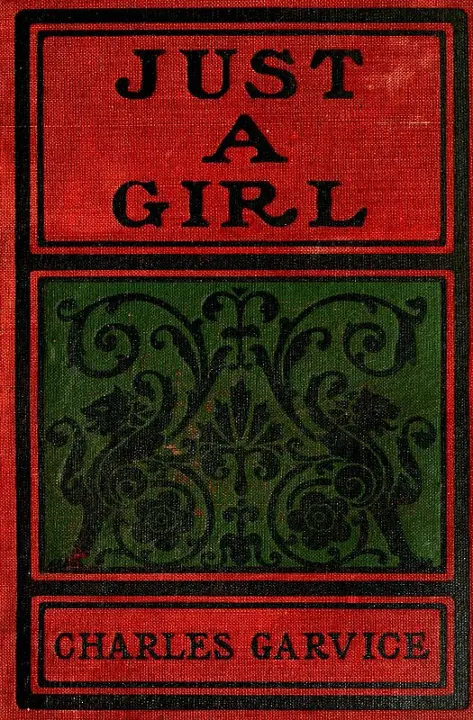
"Just a Girl" by Charles Garvice is a novel written in the late 19th century. The story unfolds primarily in the rough and rowdy setting of a gold mining camp in Australia, focusing on the life of Esmeralda, a young girl who is raised by the camp's miners after being found orphaned. This tale explores themes of identity, belonging, and the challenges of transitioning from a carefree life to one defined by wealth and societal expectations. The opening of the novel introduces readers to the chaotic environment of the Eldorado Saloon, where a rowdy crowd of miners ignites a brawl fueled by the oppressive heat and the search for excitement. In the midst of this turbulence, an unexpected arrival shifts the focus: an old postman walks in carrying a bundle that reveals a sleeping child, a foundling whom the camp's rough patrons come to cherish. Esmeralda's character is introduced as she grows up in this unconventional setting, watched over by the jaded yet tender-hearted gambler Varley Howard, who inadvertently becomes her guardian. As the story progresses, Esmeralda learns about her past and her new identity as an heiress, leading to tensions between her old life in the camp and expectations for her future. The narrative is rich with colorful characters and social dynamics, setting the stage for Esmeralda's development and the inevitable challenges she will face.
Introduction adapted from the source catalogue; source summaries may be automatically generated.
Free to read · English · 145,749 words · No account needed
MAKE TIME FOR A GOOD BOOK
On by default. Untick to stop anonymous reading totals. Each page counts after 10 seconds in view. How this works.
Anonymous counting is on unless you have switched it off.
“It’s not usual--in England--to shake hands with one’s servants, dear,” she said. “But you’ll learn all that in time, and--other things. Go and put your things on, and we’ll go down to Madame Cerise’s.”
Esmeralda ran down-stairs, and Lady Wyndover, as she listened to her, sunk into a chair--collapsed perhaps would be the better word--for a few minutes, until she recovered from the series of shocks which Esmeralda had, all unconsciously, administered.
Esmeralda slipped on her hat and jacket, and then went into the boudoir and waited, for, what seemed to her, hours. At last Lady Wyndover appeared, in the latest of Redfern’s outdoor costumes, and Esmeralda, as she looked at her, began to understand why the dresses she had bought in Melbourne were unsatisfactory.
They went down-stairs, where a perfectly appointed brougham awaited them. A footman stood at the bottom of the stairs, a porter held the door open, another footman stood by the open door of the brougham, and touched his hat as the ladies appeared.
“I thought you said it wasn’t far?” said Esmeralda, as they went
off.
“Nor is it,” said Lady Wyndover. “It is only in the next
street--Mount Street.”
“Oh!” said Esmeralda, with puzzled surprise; “then why did we want this carriage and these two men?”
“I don’t know,” said Lady Wyndover, helplessly. “Would you rather have walked? I never walk anywhere, if I can help it.”
“Are you lame? Is there anything the matter with you?” asked
Esmeralda.
“No,” said Lady Wyndover, faintly.
The brougham pulled up at what looked like a private house, and they entered, and were shown into a room on the ground floor. It would have looked like an ordinary sitting-room, but for two or three dresses and costumes which lay about on the chairs and sofas.
Madame Cerise entered. It is scarcely necessary to say that she was an English woman--or, rather, an Irish woman. She was short and fat, with a round, good-natured face, and she and Lady Wyndover greeted each other almost as if they were friends.
She looked at Esmeralda with intent interest and admiration, and when Lady Wyndover mentioned Esmeralda’s name, Madame Cerise’s interest grew quite vivid, for the story of Esmeralda’s fortune had already got into the society papers.
Lady Wyndover conferred with Madame Cerise for some time, in
whispers, during which madame glanced at Esmeralda, and nodded
intelligently.
“She is superb! She is magnificent!” she exclaimed in hushed staccato. “She will do your ladyship credit. Ah! what a sensation she will create! You leave it to me!”
Your reading position is saved on this browser. Take it to another device with a library code. Reading pages adapt to text, rather than matching a printed edition.
BEHIND THE BOOK
This eBook is for the use of anyone anywhere in the United States and most other parts of the world at no cost and with almost no restrictions whatsoever. You may copy it, give it away or re-use it under the terms of the Project Gutenberg License included with this eBook or online at www.gutenberg.org. If you are not located in the United States, you will have to check the laws of the country where you are located before using this eBook. Read the source licence.
The original source file, including credits and licence, is retained by this library. Request an original-format copy at no charge. Please include the book title and Project Gutenberg identifier #57166.
KEEP YOUR CURIOSITY GOING
Coulson Kernahan

Maurice Baring
Frances Wright
Cécile Tormay

Frederic Jesup Stimson

W. H. P. (William Henry Pope) Jarvis