THE CLASSIC COLLECTION✦A dead man’s diaryCLASSIC FREE BOOKS
A dead man’s diary
Coulson Kernahan
THE CLASSIC COLLECTION · 1895
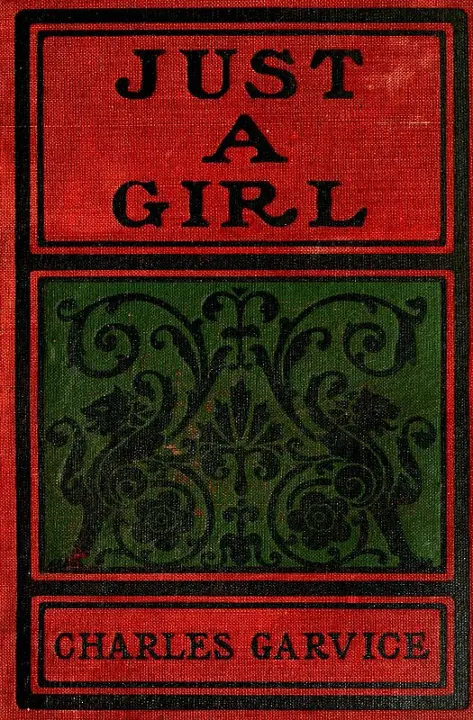
"Just a Girl" by Charles Garvice is a novel written in the late 19th century. The story unfolds primarily in the rough and rowdy setting of a gold mining camp in Australia, focusing on the life of Esmeralda, a young girl who is raised by the camp's miners after being found orphaned. This tale explores themes of identity, belonging, and the challenges of transitioning from a carefree life to one defined by wealth and societal expectations. The opening of the novel introduces readers to the chaotic environment of the Eldorado Saloon, where a rowdy crowd of miners ignites a brawl fueled by the oppressive heat and the search for excitement. In the midst of this turbulence, an unexpected arrival shifts the focus: an old postman walks in carrying a bundle that reveals a sleeping child, a foundling whom the camp's rough patrons come to cherish. Esmeralda's character is introduced as she grows up in this unconventional setting, watched over by the jaded yet tender-hearted gambler Varley Howard, who inadvertently becomes her guardian. As the story progresses, Esmeralda learns about her past and her new identity as an heiress, leading to tensions between her old life in the camp and expectations for her future. The narrative is rich with colorful characters and social dynamics, setting the stage for Esmeralda's development and the inevitable challenges she will face.
Introduction adapted from the source catalogue; source summaries may be automatically generated.
Free to read · English · 145,749 words · No account needed
MAKE TIME FOR A GOOD BOOK
On by default. Untick to stop anonymous reading totals. Each page counts after 10 seconds in view. How this works.
Anonymous counting is on unless you have switched it off.
“I am very grateful to you,” said Trafford, after a silence, broken only by the breathing of the two horses and the shrill cry of a bird fishing in the stream. “May I ask your name?”
“My name is Howard--Varley Howard,” said Varley.
Trafford started, with his cigarette half-way to his mouth.
“Varley Howard?” he echoed. “Of Three Star Camp?”
“Of Three Star Camp, and very much at your service,” said Varley, with his little drawl. “May I ask the same question?”
Trafford rose.
“My name is Belfayre,” he said.
Varley’s fingers closed over his cigarette, and the red flamed in his face for a second, to leave it deathly pale.
“The Duke of Belfayre?” he said in a perfectly expressionless voice.
“Yes; I am the Duke of Belfayre,” said Trafford.
There was a moment’s silence, Varley breathing hard and looking just above Trafford’s head. The blood was beginning to burn in his veins as Esmeralda’s wrongs rose before him. This man standing there was the man who had deceived her and wrecked the child’s life.
“It seems I am not unknown to you, Mr. Howard.”
Varley drew a long breath.
“You are not,” he said. “I have heard of you. Will you think me impertinently inquisitive if I ask your business in Three Star?”
The blood began to mount to Trafford’s face.
“You have every right to ask me that question, Mr. Howard. It is my duty to answer. I have come in search of my wife.”
“My ward--adopted daughter?”
Trafford inclined his head.
“Yes; I am in search of her, Mr. Howard,” he said.
“What do you want with her?” asked Varley; and if Trafford had known him he would have recognized the ominous significance of his quiet, languid tone.
It was a strange question to put to a husband, and for a moment
Trafford could find no answer.
“Surely that lies between her and me,” he said at last.
Varley’s dark eyes flashed.
“Pardon me,” he said, with frigid courtesy. “My ward has left you; she is under my protection.”
Trafford’s eyes flashed across to the other man.
“Yes, she has left me,” he repeated; “but I am desirous of finding her, and I am going to Three Star for that purpose.”
“You will waste your time,” said Varley. “She is not there.”
“That is a lie!” said Trafford, deliberately.
Varley’s hand went to his revolver; but he checked himself, and, with a smile which would have made any man who knew him tremble, raised his hat an inch or two.
“Your grace is polite,” he said.
Your reading position is saved on this browser. Take it to another device with a library code. Reading pages adapt to text, rather than matching a printed edition.
BEHIND THE BOOK
This eBook is for the use of anyone anywhere in the United States and most other parts of the world at no cost and with almost no restrictions whatsoever. You may copy it, give it away or re-use it under the terms of the Project Gutenberg License included with this eBook or online at www.gutenberg.org. If you are not located in the United States, you will have to check the laws of the country where you are located before using this eBook. Read the source licence.
The original source file, including credits and licence, is retained by this library. Request an original-format copy at no charge. Please include the book title and Project Gutenberg identifier #57166.
KEEP YOUR CURIOSITY GOING
Coulson Kernahan

Maurice Baring
Frances Wright
Cécile Tormay

Frederic Jesup Stimson

W. H. P. (William Henry Pope) Jarvis