THE CLASSIC COLLECTION✦A dead man’s diaryCLASSIC FREE BOOKS
A dead man’s diary
Coulson Kernahan
THE CLASSIC COLLECTION · 1895
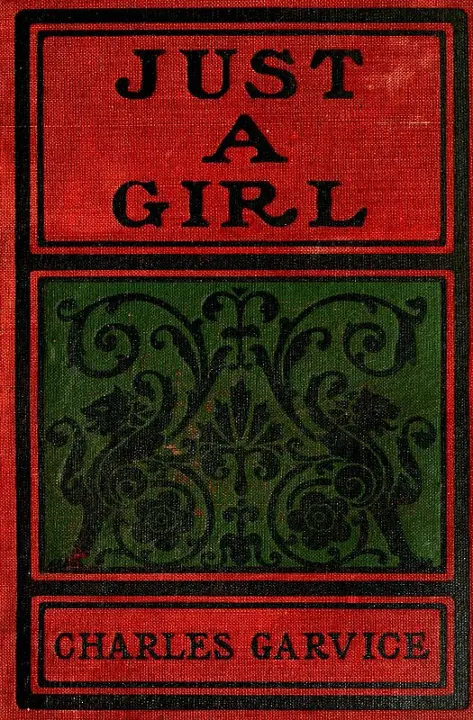
"Just a Girl" by Charles Garvice is a novel written in the late 19th century. The story unfolds primarily in the rough and rowdy setting of a gold mining camp in Australia, focusing on the life of Esmeralda, a young girl who is raised by the camp's miners after being found orphaned. This tale explores themes of identity, belonging, and the challenges of transitioning from a carefree life to one defined by wealth and societal expectations. The opening of the novel introduces readers to the chaotic environment of the Eldorado Saloon, where a rowdy crowd of miners ignites a brawl fueled by the oppressive heat and the search for excitement. In the midst of this turbulence, an unexpected arrival shifts the focus: an old postman walks in carrying a bundle that reveals a sleeping child, a foundling whom the camp's rough patrons come to cherish. Esmeralda's character is introduced as she grows up in this unconventional setting, watched over by the jaded yet tender-hearted gambler Varley Howard, who inadvertently becomes her guardian. As the story progresses, Esmeralda learns about her past and her new identity as an heiress, leading to tensions between her old life in the camp and expectations for her future. The narrative is rich with colorful characters and social dynamics, setting the stage for Esmeralda's development and the inevitable challenges she will face.
Introduction adapted from the source catalogue; source summaries may be automatically generated.
Free to read · English · 145,749 words · No account needed
MAKE TIME FOR A GOOD BOOK
On by default. Untick to stop anonymous reading totals. Each page counts after 10 seconds in view. How this works.
Anonymous counting is on unless you have switched it off.
“’Pears to me, Varley,” said Taffy, as Varley missed a point which would have won the game for him, “that you’d better chuck up cards and take to dominoes. They’re a nice, child-like game, and don’t make no call on your brain. Or how would skittles suit you? ‘Mr. Varley Howard presents his compliments to the nobility an’ gentry of Three Star an’ other camps, an’ begs to inform ’em that, findin’ cards too much for his constitootion, he has opened a saloon for skittles an’ other infant games, where he ’opes to meet his former patrons at hop-scotch an’ peg-top. No playin’ for money allowed.’”
Varley smiled listlessly.
“Yes, I’m a little off color to-night, Taffy,” he said. “We’ll double the stakes if no gentleman objects.”
This characteristic proposal meeting with no objection, the game proceeded; but Varley’s ill luck stuck to him, and not even the high stakes improved his play. A kind of presentiment of coming evil hung over him; and, like all gamblers, Varley was superstitious. He looked just as careless and was as impassive as ever, but the weight was upon him; and as he lost steadily, he called for some whisky--an unusual thing for him to do.
“Yes, bring a couple of gallons,” said Taffy, with solemn gravity. “’Ave a bath in it, Varley; it might pull yer round.”
Varley smiled in harmony with the laugh evoked by Taffy’s witticism, and dealt the cards as slowly and carefully as usual; then, presently, having silently noted his losings, he said, with his little drawl:
“The game’s up, gentlemen; the bank’s broke.”
A roar of not unsympathetic laughter arose from the players.
“’Tain’t often we get the best of you, Varley,” said Taffy, smiting him on the shoulder. “I’ll celebrate the event by calling for whisky all round.”
But Varley declined his glass, and with a pleasant, musical “Good-night, boys,” sauntered out of the saloon.
The light was burning in Esmeralda’s hut, and he looked toward it
with a little sigh.
As he made his way along the rough foot-path, he heard the sound of a horse’s hoofs. He stopped, and instinctively slid his hand upon his revolver. It is a trick which one very soon acquires in the wilds.
The sound came nearer, and a horseman rode past Varley--that is, he would have ridden past; but Varley stretched out his left hand and gripped the bridle, his right hand holding his revolver ready.
The rider was almost thrown from his seat, but he pulled himself
together and stuck on.
“What’s your hurry?” said Varley.
Your reading position is saved on this browser. Take it to another device with a library code. Reading pages adapt to text, rather than matching a printed edition.
BEHIND THE BOOK
This eBook is for the use of anyone anywhere in the United States and most other parts of the world at no cost and with almost no restrictions whatsoever. You may copy it, give it away or re-use it under the terms of the Project Gutenberg License included with this eBook or online at www.gutenberg.org. If you are not located in the United States, you will have to check the laws of the country where you are located before using this eBook. Read the source licence.
The original source file, including credits and licence, is retained by this library. Request an original-format copy at no charge. Please include the book title and Project Gutenberg identifier #57166.
KEEP YOUR CURIOSITY GOING
Coulson Kernahan

Maurice Baring
Frances Wright
Cécile Tormay

Frederic Jesup Stimson

W. H. P. (William Henry Pope) Jarvis