THE CLASSIC COLLECTION✦A dead man’s diaryCLASSIC FREE BOOKS
A dead man’s diary
Coulson Kernahan
THE CLASSIC COLLECTION · 1895
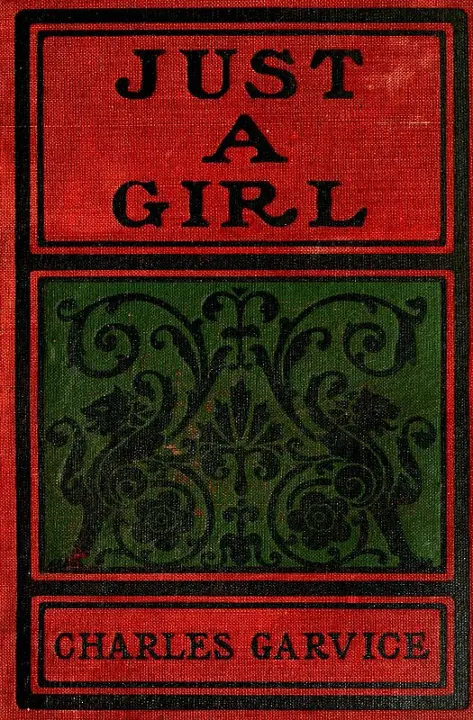
"Just a Girl" by Charles Garvice is a novel written in the late 19th century. The story unfolds primarily in the rough and rowdy setting of a gold mining camp in Australia, focusing on the life of Esmeralda, a young girl who is raised by the camp's miners after being found orphaned. This tale explores themes of identity, belonging, and the challenges of transitioning from a carefree life to one defined by wealth and societal expectations. The opening of the novel introduces readers to the chaotic environment of the Eldorado Saloon, where a rowdy crowd of miners ignites a brawl fueled by the oppressive heat and the search for excitement. In the midst of this turbulence, an unexpected arrival shifts the focus: an old postman walks in carrying a bundle that reveals a sleeping child, a foundling whom the camp's rough patrons come to cherish. Esmeralda's character is introduced as she grows up in this unconventional setting, watched over by the jaded yet tender-hearted gambler Varley Howard, who inadvertently becomes her guardian. As the story progresses, Esmeralda learns about her past and her new identity as an heiress, leading to tensions between her old life in the camp and expectations for her future. The narrative is rich with colorful characters and social dynamics, setting the stage for Esmeralda's development and the inevitable challenges she will face.
Introduction adapted from the source catalogue; source summaries may be automatically generated.
Free to read · English · 145,749 words · No account needed
MAKE TIME FOR A GOOD BOOK
On by default. Untick to stop anonymous reading totals. Each page counts after 10 seconds in view. How this works.
Anonymous counting is on unless you have switched it off.
“There’s the entry; you can see for yourself, sir,” he said, rather sullenly, and pointing to the book. Trafford looked at it, and for a moment could see nothing; then he read the line, “Lord Norman Druce, two berths. Nos. 128, 129. Paid.”
The blood surged to his face, and he gripped the edge of the desk.
The young man altered his opinion of the gentleman’s character.
“Did--was Lord Druce alone? Was he accompanied by a lady?” Trafford
asked in a thick voice.
“Can’t say, sir,” replied the clerk. “The berths were booked with the agent himself. I only came on for the nightwork, and didn’t see the gentleman.”
“Is--is there any one here who did?” asked Trafford. The clerk
considered for a moment.
“I’ll go and see; one of the porters or the dock-man might have noticed. Just wait a moment, sir.”
He was gone five minutes, which seemed five years to Trafford, who could not remove his eyes from the significant entry.
“I can’t find out for certain, sir,” said the clerk, upon his return. “There’s always such confusion in starting; but one of our men says he saw a gentleman, a tall, fair man, talking with a lady in the saloon deck, and he fancies they went aboard together; but he couldn’t swear to it.”
Trafford wiped the sweat from his forehead.
“Thank you,” he said, as steadily as he could. “I have given you a great deal of trouble. One more question. Could I catch that vessel that sails from Liverpool to-morrow?”
The clerk glanced at the office clock.
“Well--you could,” he said, succinctly.
Trafford thanked him again and went out to the cab. He reeled slightly as the cool air met his face, and he passed his hand over his eyes. There was no doubt now. Since seeing Lady Wyndover he had permitted himself now and again to hope; but there was no doubt now. Norman and Esmeralda had gone back to Three Star, where they had met and learned to love each other.
He stood looking at the cab, his brain whirling. Common sense said: “Let them go; apply for a divorce; forget her.” But he was not in the mood to listen to common sense. He wanted--thirsted--to find them, to confront Norman, to exact the vengeance due to him. The blood was coursing through his veins like fire. “Follow them--follow them!” something seemed to whisper, to shout, in his ear.
He got into the cab and told the man to drive to Euston--and fast. The man looked at him curiously.
“Anywhere after that, sir?” he asked. “’Cause I’d get another horse or borrow a steam fire-engine.”
Your reading position is saved on this browser. Take it to another device with a library code. Reading pages adapt to text, rather than matching a printed edition.
BEHIND THE BOOK
This eBook is for the use of anyone anywhere in the United States and most other parts of the world at no cost and with almost no restrictions whatsoever. You may copy it, give it away or re-use it under the terms of the Project Gutenberg License included with this eBook or online at www.gutenberg.org. If you are not located in the United States, you will have to check the laws of the country where you are located before using this eBook. Read the source licence.
The original source file, including credits and licence, is retained by this library. Request an original-format copy at no charge. Please include the book title and Project Gutenberg identifier #57166.
KEEP YOUR CURIOSITY GOING
Coulson Kernahan

Maurice Baring
Frances Wright
Cécile Tormay

Frederic Jesup Stimson

W. H. P. (William Henry Pope) Jarvis