THE CLASSIC COLLECTION✦A dead man’s diaryCLASSIC FREE BOOKS
A dead man’s diary
Coulson Kernahan
THE CLASSIC COLLECTION · 1895
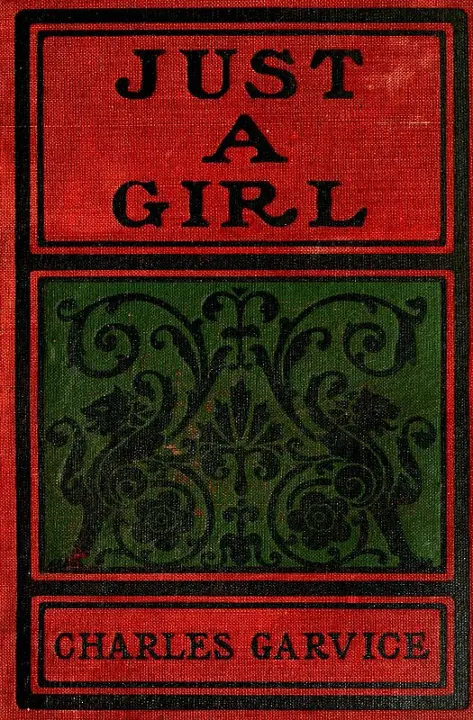
"Just a Girl" by Charles Garvice is a novel written in the late 19th century. The story unfolds primarily in the rough and rowdy setting of a gold mining camp in Australia, focusing on the life of Esmeralda, a young girl who is raised by the camp's miners after being found orphaned. This tale explores themes of identity, belonging, and the challenges of transitioning from a carefree life to one defined by wealth and societal expectations. The opening of the novel introduces readers to the chaotic environment of the Eldorado Saloon, where a rowdy crowd of miners ignites a brawl fueled by the oppressive heat and the search for excitement. In the midst of this turbulence, an unexpected arrival shifts the focus: an old postman walks in carrying a bundle that reveals a sleeping child, a foundling whom the camp's rough patrons come to cherish. Esmeralda's character is introduced as she grows up in this unconventional setting, watched over by the jaded yet tender-hearted gambler Varley Howard, who inadvertently becomes her guardian. As the story progresses, Esmeralda learns about her past and her new identity as an heiress, leading to tensions between her old life in the camp and expectations for her future. The narrative is rich with colorful characters and social dynamics, setting the stage for Esmeralda's development and the inevitable challenges she will face.
Introduction adapted from the source catalogue; source summaries may be automatically generated.
Free to read · English · 145,749 words · No account needed
MAKE TIME FOR A GOOD BOOK
On by default. Untick to stop anonymous reading totals. Each page counts after 10 seconds in view. How this works.
Anonymous counting is on unless you have switched it off.
Norman wondered why she objected; but said, hastily:
“I beg your pardon. Since I left Three Star Camp, of course, I hadn’t heard of you. How should I?”
“How should you?” she repeated, absently.
“And I wanted to tell you, Esmeralda--I may call you Esmeralda, may
I not?”
“Oh, yes,” said Esmeralda; “you may call me what you like. We are cousins, or something of that sort, are we not?”
“Thank you--yes. I wanted to say--I wanted to ask you to forgive me for--for what happened that night. It was presumptuous of me, and--and you were right to be angry and offended,” he added, humbly and penitently.
A faint color had risen to Esmeralda’s eyes.
“I was not angry--offended,” she said in a low voice.
“Weren’t you?” he said, gratefully. “I thought you were--you left
me without a word.”
“I-- But what does it matter?” she broke off, with a kind of weary impatience. “It is all so long ago, it is as if it had never happened. Why do you talk of it, and bring back the past?”
She spoke almost fiercely, and Norman was filled with remorse.
“You’re quite right,” he said. “I’m an idiot to go back to it. I beg your pardon. As you say, what does it matter? You are married now, and to the best fellow in the world. There’s no one like Trafford--no one--and you are sure to be happy.”
“Yes,” she said, quietly, “I am sure to be happy.” Then she laughed. “Is any one in the wide world quite happy? I doubt it. Are you?”
Norman started.
“Oh, I don’t know,” he said. “But why did you say that? You spoke as if--oh! it’s stupid of me, of course,” he laughed apologetically--“as if you weren’t quite happy.”
“That would be so very ridiculous and impossible, wouldn’t it?” she said, with a mirthless smile.
“Well, I think it would,” he said, candidly. “With Trafford for a husband and everybody loving you”--he colored and stammered as a man does when he speaks of love.
“And being a countess and having plenty of money,” continued Esmeralda, with a hard laugh, “I could not be anything but happy, could I? Why, all the women envy me, as Lady Wyndover says, and what more could I want?”
He looked at her with a troubled frown on his face.
“I don’t know whether you are chaffing me or not; I suppose you
are,” he said.
“What does it matter?” she said, with the same weary impatience.
Your reading position is saved on this browser. Take it to another device with a library code. Reading pages adapt to text, rather than matching a printed edition.
BEHIND THE BOOK
This eBook is for the use of anyone anywhere in the United States and most other parts of the world at no cost and with almost no restrictions whatsoever. You may copy it, give it away or re-use it under the terms of the Project Gutenberg License included with this eBook or online at www.gutenberg.org. If you are not located in the United States, you will have to check the laws of the country where you are located before using this eBook. Read the source licence.
The original source file, including credits and licence, is retained by this library. Request an original-format copy at no charge. Please include the book title and Project Gutenberg identifier #57166.
KEEP YOUR CURIOSITY GOING
Coulson Kernahan

Maurice Baring
Frances Wright
Cécile Tormay

Frederic Jesup Stimson

W. H. P. (William Henry Pope) Jarvis