THE CLASSIC COLLECTION✦A dead man’s diaryCLASSIC FREE BOOKS
A dead man’s diary
Coulson Kernahan
THE CLASSIC COLLECTION · 1895
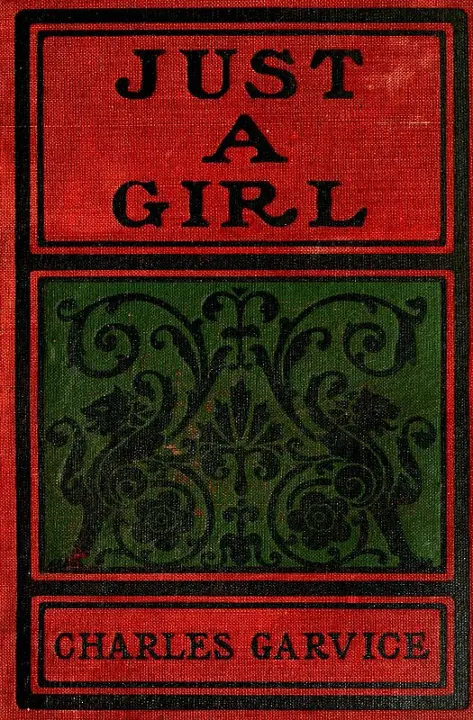
"Just a Girl" by Charles Garvice is a novel written in the late 19th century. The story unfolds primarily in the rough and rowdy setting of a gold mining camp in Australia, focusing on the life of Esmeralda, a young girl who is raised by the camp's miners after being found orphaned. This tale explores themes of identity, belonging, and the challenges of transitioning from a carefree life to one defined by wealth and societal expectations. The opening of the novel introduces readers to the chaotic environment of the Eldorado Saloon, where a rowdy crowd of miners ignites a brawl fueled by the oppressive heat and the search for excitement. In the midst of this turbulence, an unexpected arrival shifts the focus: an old postman walks in carrying a bundle that reveals a sleeping child, a foundling whom the camp's rough patrons come to cherish. Esmeralda's character is introduced as she grows up in this unconventional setting, watched over by the jaded yet tender-hearted gambler Varley Howard, who inadvertently becomes her guardian. As the story progresses, Esmeralda learns about her past and her new identity as an heiress, leading to tensions between her old life in the camp and expectations for her future. The narrative is rich with colorful characters and social dynamics, setting the stage for Esmeralda's development and the inevitable challenges she will face.
Introduction adapted from the source catalogue; source summaries may be automatically generated.
Free to read · English · 145,749 words · No account needed
MAKE TIME FOR A GOOD BOOK
On by default. Untick to stop anonymous reading totals. Each page counts after 10 seconds in view. How this works.
Anonymous counting is on unless you have switched it off.
It was tiny but exquisitely dainty, with its decoration of white and gold and its light Japanese furniture. Another bowl of roses stood on a side table near the Lilliputian piano.
He took Esmeralda’s hand.
“It is fairyland!” he said, with a laugh. “Let us explore.”
They crossed the hall into the dining-room, and found it to be almost as small as the drawing-room. The furniture was of light oak, and the tidy sideboard glistened with silver and cut glass. There were flowers there also. There was a small morning- and smoking-room behind it, and a conservatory glowing with simple plants; no orchids anywhere.
Trafford looked round with a smile of satisfaction and anticipation.
“I have often dreamed of this kind of house,” he said.
Esmeralda said nothing. Its petite beauty and rusticity would have filled her with delight under other circumstances; but it seemed just a prison to her, and no more.
“Will you come upstairs, my lady?” said Barker, who had hovered
about them.
Esmeralda looked round to see who “my lady” was, then started to realize that it was herself, and she followed Barker up the narrow stairs, built and balustrated like a baronial staircase in miniature.
Trafford looked up after her.
“Get some rest, Esmeralda,” he said. “We shall not dine till--what
hour, Barker?”
“Seven, Lady Wyndover said, my lord,” said the housekeeper, an elderly woman, who looked like a dean’s widow at the very least.
“Look after your mistress, Barker,” Trafford said; and the
delighted Barker bowed, and said:
“Yes, my lord.”
Esmeralda’s room was small like the others, and like the others as dainty as a piece of Dresden china. It was all white and sea-blue, and flowers were everywhere and filled the air with their perfume. Esmeralda sunk into a chair, and looked round her dreamily.
“Isn’t it a pretty little place, miss--I beg your ladyship’s pardon--my lady?” said Barker, as she took off Esmeralda’s hat and jacket. “I’ve often heard of it, but I’d no idea it was so beautiful. And it’s all the same all through. And there’s a dairy--a tiny little place like a doll’s house. And there’s an orchard at the back, and some meadows with cows and a donkey in them. I’ve unpacked some of your ladyship’s things--I’m sure I don’t know where I shall put them--and what will your ladyship wear this evening?”
Esmeralda roused herself.
“Anything--it does not matter,” she said.
Barker looked rather shocked, as if Esmeralda had been guilty of
profanity.
“Oh, my lady!” she murmured, “I was thinking that the black lace of
Worth’s--”
Your reading position is saved on this browser. Take it to another device with a library code. Reading pages adapt to text, rather than matching a printed edition.
BEHIND THE BOOK
This eBook is for the use of anyone anywhere in the United States and most other parts of the world at no cost and with almost no restrictions whatsoever. You may copy it, give it away or re-use it under the terms of the Project Gutenberg License included with this eBook or online at www.gutenberg.org. If you are not located in the United States, you will have to check the laws of the country where you are located before using this eBook. Read the source licence.
The original source file, including credits and licence, is retained by this library. Request an original-format copy at no charge. Please include the book title and Project Gutenberg identifier #57166.
KEEP YOUR CURIOSITY GOING
Coulson Kernahan

Maurice Baring
Frances Wright
Cécile Tormay

Frederic Jesup Stimson

W. H. P. (William Henry Pope) Jarvis