THE CLASSIC COLLECTION✦A dead man’s diaryCLASSIC FREE BOOKS
A dead man’s diary
Coulson Kernahan
THE CLASSIC COLLECTION · 1895
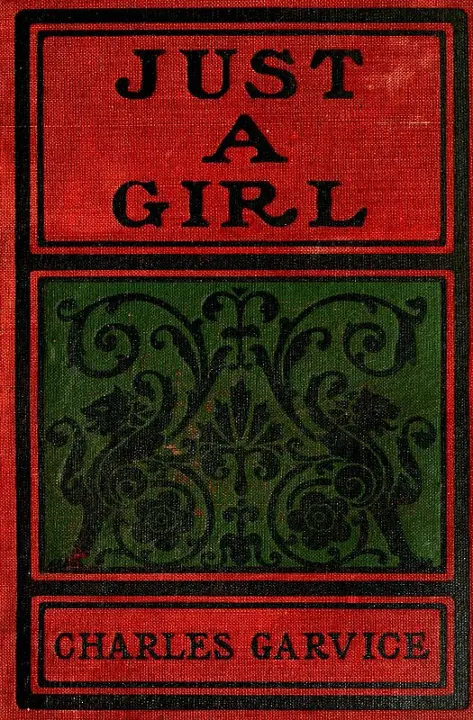
"Just a Girl" by Charles Garvice is a novel written in the late 19th century. The story unfolds primarily in the rough and rowdy setting of a gold mining camp in Australia, focusing on the life of Esmeralda, a young girl who is raised by the camp's miners after being found orphaned. This tale explores themes of identity, belonging, and the challenges of transitioning from a carefree life to one defined by wealth and societal expectations. The opening of the novel introduces readers to the chaotic environment of the Eldorado Saloon, where a rowdy crowd of miners ignites a brawl fueled by the oppressive heat and the search for excitement. In the midst of this turbulence, an unexpected arrival shifts the focus: an old postman walks in carrying a bundle that reveals a sleeping child, a foundling whom the camp's rough patrons come to cherish. Esmeralda's character is introduced as she grows up in this unconventional setting, watched over by the jaded yet tender-hearted gambler Varley Howard, who inadvertently becomes her guardian. As the story progresses, Esmeralda learns about her past and her new identity as an heiress, leading to tensions between her old life in the camp and expectations for her future. The narrative is rich with colorful characters and social dynamics, setting the stage for Esmeralda's development and the inevitable challenges she will face.
Introduction adapted from the source catalogue; source summaries may be automatically generated.
Free to read · English · 145,749 words · No account needed
MAKE TIME FOR A GOOD BOOK
On by default. Untick to stop anonymous reading totals. Each page counts after 10 seconds in view. How this works.
Anonymous counting is on unless you have switched it off.
“You must take your habit with you,” he said; “and I will choose a horse for you, and I will send down this pair, so that you can ride and drive as often as you please. We must try and make you happy.”
Esmeralda smiled.
“I am nearly always happy,” she said.
“Yes, I think you are,” he assented in a low voice; and her innocence smote him with a feeling of guilt and shame--it was as if he were deceiving a child.
They had turned down a hill, and were approaching West Wickham. The horses were going at a rattling pace; but he noticed, with an admiration that he could not withhold, that she kept them in hand firmly and with perfect ease.
“You drive well,” he said. “You must be very strong.”
His praise brought the light to her eyes.
“I am strong,” she said. “But they are not hard to drive. I have ridden and driven young colts that get up on their hind legs and waltz all round the place; these are quite tame. But they are good horses,” conscientiously. “I’ve never driven a pair so handsome as this.”
“You shall drive as many as you like,” he said. “I’ll get you a
pair.”
“No, don’t,” she said; “or, if you do, you must let me pay for them. I’m very rich, you know.” She laughed easily.
He bit his lip, and looked at her. Did she know how poor he was? But a glance at her face showed him that she spoke quite innocently.
They pulled up at the door of the inn, and he got down. He stood, with his arms out, to help her alight, and, as he took her hands, he, half unconsciously, pressed them tightly. She blushed.
They found Lady Wyndover half asleep.
“What a time you’ve been,” she said, rubbing her eyes very delicately. “I declare, I was nearly dozing! Have you enjoyed yourself, Esmeralda?”
“Very much,” said Esmeralda, demurely. “It was a lovely view, and Lord Trafford let me drive.”
Lady Wyndover looked at her curiously. The girl’s face vibrated strangely; her eyes were bright; her usually ivory-white face had taken to itself a rose-like flush.
They started.
“Good heavens. Are you going to let Esmeralda drive?” asked Lady
Wyndover.
“Don’t be alarmed,” said Trafford. “She can manage them quite as well as I can.” Lady Wyndover sighed, and wrapped herself in her furs.
Your reading position is saved on this browser. Take it to another device with a library code. Reading pages adapt to text, rather than matching a printed edition.
BEHIND THE BOOK
This eBook is for the use of anyone anywhere in the United States and most other parts of the world at no cost and with almost no restrictions whatsoever. You may copy it, give it away or re-use it under the terms of the Project Gutenberg License included with this eBook or online at www.gutenberg.org. If you are not located in the United States, you will have to check the laws of the country where you are located before using this eBook. Read the source licence.
The original source file, including credits and licence, is retained by this library. Request an original-format copy at no charge. Please include the book title and Project Gutenberg identifier #57166.
KEEP YOUR CURIOSITY GOING
Coulson Kernahan

Maurice Baring
Frances Wright
Cécile Tormay

Frederic Jesup Stimson

W. H. P. (William Henry Pope) Jarvis