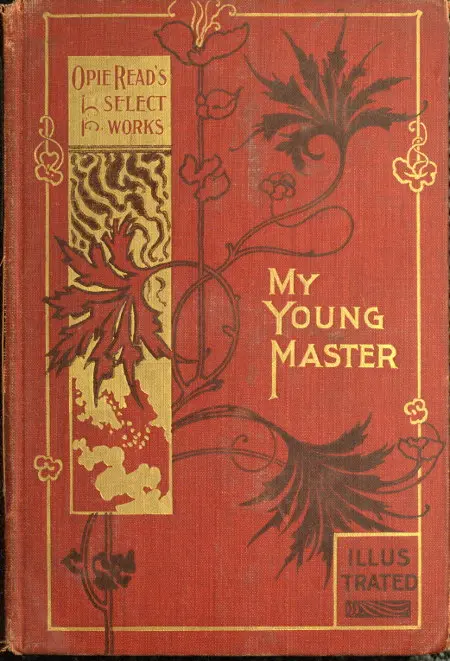
My Young Master: A Novel
Opie Percival Read
THE CLASSIC COLLECTION · 1899
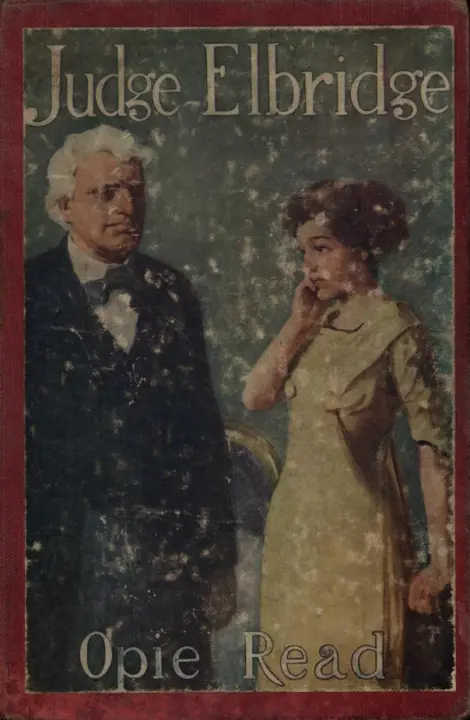
"Judge Elbridge" by Opie Percival Read is a novel written in the late 19th century. The story revolves around the life of John Elbridge, a retired judge who has taken in the children of a deceased law partner, while navigating the complexities of family dynamics and moral dilemmas. Central to the narrative are Elbridge's son, Howard, and his foster siblings, as well as various other characters whose motivations become intertwined with the judge's past decisions. The opening of the novel introduces us to John Elbridge, a respected judge now reflecting on his life and past choices following his retirement. The narrative paints a picture of old Chicago, detailing his partnership with the orator Bodney and hints at tumultuous relationships within the family unit, particularly the tension surrounding Howard’s aspirations and the influence of a friend named Goyle. As the plot unfolds, we witness Bodney struggling with moral corruption and a conspiracy involving stolen money that comes to a head with profound implications for Howard, leading to deep secrets and strained relationships. The stage is set for a dramatic exploration of loyalty, betrayal, and the quest for redemption amid the complexities of familial love.
Introduction adapted from the source catalogue; source summaries may be automatically generated.
Free to read · English · 60,150 words · No account needed
MAKE TIME FOR A GOOD BOOK
On by default. Untick to stop anonymous reading totals. Each page counts after 10 seconds in view. How this works.
Anonymous counting is on unless you have switched it off.
"Don't let it be any closer kin, Agnes. There is always danger in a
first cousin."
Agnes, still rippling, sniffed contemptuously. "He's been following me around all the morning. How I love to hate him."
The voice of Mrs. Elbridge was heard, calling Florence, who answered that she was coming, but she halted long enough to say to Agnes, mischievously, that she might learn to love him if she loved to hate him. Both love and hate were kindred passions, with but a thin partition between them. As she was going out, Agnes shouted after her that, if she ever loved him she would hate herself, and then, just as Goyle and Bodney entered the room, she added: "We tar and feather such fellows in Quincy."
"You do what in Quincy?" Bodney asked.
And Agnes, without looking round, repeated: "Tar and feather such
fellows."
Goyle knew that she meant him, but instead of kindling resentment, her words aroused in him an additional interest in her. He looked at her as in the rhythmic sway of her graceful form, the nodding of her shapely head, she kept time with a tune, half remembered, half improvised; and, turning to Bodney, he asked in tones too low for the girl to hear: "Has she got any money?"
"I think she has."
"Leave me alone with her."
"Do you want to snatch her purse?"
"Do you suppose I want a hair pin, a pearl button, a scrap of verse, and a three-cornered piece of silk that no man can match? I mean, has she got any money in her own name?"
"I haven't asked her, but I think she has."
"Then leave me alone with her."
Bodney stood looking at him. There was a continuous fascination in the fellow's affrontery. "All right," he said, but quickly added: "We've got to go down town, you know. I'll step into the office and wait till she gets through with you. You may hypnotize me, but--"
Goyle cut him off with a gesture. "Nonsense! When she gets through with me! Cool, coming from a man whose honor I have saved at the risk of my own. But no cooler than the bullet you threatened me with."
"I wish I had given it to you," said Bodney.
"Do you? It's not too late, if you are bent on murder. But that's all right," he broke off, with a wave of the hand. "Leave me alone with her."
Bodney went out and Goyle sat down on a sofa, gazed at the girl, cleared his throat, coughed; but she did not look round. "What are you playing? May I ask?"
"You have asked," she replied, without looking round.
Your reading position is saved on this browser. Take it to another device with a library code. Reading pages adapt to text, rather than matching a printed edition.
Opie Percival Read
Opie Percival Read
Opie Percival Read
Opie Percival Read
BEHIND THE BOOK
This eBook is for the use of anyone anywhere in the United States and most other parts of the world at no cost and with almost no restrictions whatsoever. You may copy it, give it away or re-use it under the terms of the Project Gutenberg License included with this eBook or online at www.gutenberg.org. If you are not located in the United States, you will have to check the laws of the country where you are located before using this eBook. Read the source licence.
The original source file, including credits and licence, is retained by this library. Request an original-format copy at no charge. Please include the book title and Project Gutenberg identifier #46699.
KEEP YOUR CURIOSITY GOING
Coulson Kernahan

Maurice Baring
Frances Wright
Cécile Tormay

Frederic Jesup Stimson

W. H. P. (William Henry Pope) Jarvis