THE CLASSIC COLLECTION✦My diaries, being a personal narrative of events 1888-1914, Part 2 (1900-1914)CLASSIC FREE BOOKS
My diaries, being a personal narrative of events 1888-1914, Part 2 (1900-1914)
Wilfrid Scawen Blunt
THE CLASSIC COLLECTION · 1784
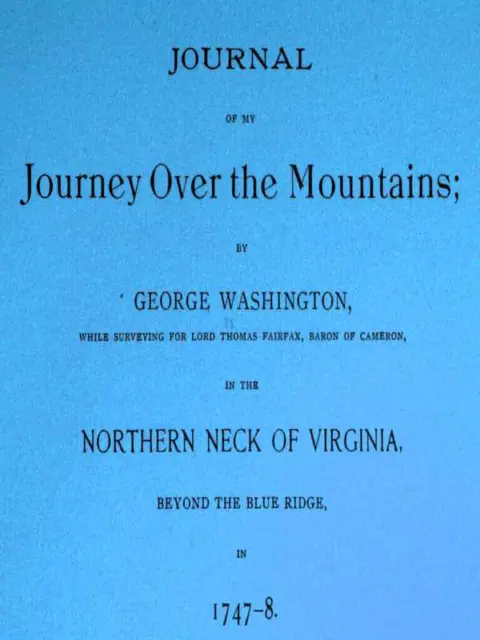
"Journal of My Journey Over the Mountains" by George Washington is a historical account written in the mid-19th century. The journal chronicles Washington's early experiences as a surveyor while working for Lord Fairfax in Virginia's Northern Neck region from 1747 to 1748. It presents a firsthand glimpse into Washington's formative years, highlighting his observations of the land and people he encountered during this significant expedition. The opening of the journal introduces readers to Washington at just over sixteen years old as he embarks on a journey with George Fairfax to survey land across the Blue Ridge Mountains. It provides insight into his daily experiences, including the rigorous travel, conditions of lodging, and the natural beauty that captivated him. Initial entries reveal his unvarnished reflections on the adventure, showcasing both his youthful curiosity and emerging capabilities as a leader, setting the stage for his eventual role in shaping American history. Overall, this work serves as a fascinating historical document that offers a window into Washington's character and the environment of colonial America.
Introduction adapted from the source catalogue; source summaries may be automatically generated.
Free to read · English · 39,238 words · No account needed
MAKE TIME FOR A GOOD BOOK
On by default. Untick to stop anonymous reading totals. Each page counts after 10 seconds in view. How this works.
Anonymous counting is on unless you have switched it off.
[Footnote 55: A Pistole.--This coin was worth, at the time
Washington wrote this journal, about $3.60. A doubloon was worth
twice that amount.]
Mem To Survey the Lands at the Mouth of Little Cacapehon[56] &
the Mouth of Fifteen Mile Creek[57] for the Gentlemen of the Ohio
Com:[58]
[Footnote 56: Cacapehon, now generally written Capon.--There are two streams in the same vicinity known by this name, and to distinguish them, one is called "Great Capon" and the other "Little Capon." Both are tributaries to the Potomac.]
[Footnote 57: Fifteen Mile creek rises in Maryland and flows in a south-easterly direction, emptying into the Potomac river between Sideling Hill creek and Town creek, about 15 miles above Hancock, Md.]
[Footnote 58: "The Ohio Company" grew into existence out of efforts by Virginians, dated as early as 1746 or 1747, to secure a share in the lucrative Indian trade, and with the prospect of opening to settlement the lands on the upper waters of the Ohio. An early move in this direction had been made by Colonel Thomas Cresap, a man of courage, judgment and enterprise--qualities required for trading successfully with the Indians. He had erected his cabin at Oldtown, Md. About 1746 Lawrence and Augustine Washington, after making some cautious business ventures in the Indian trade, with others assisted to organize "this Ohio Company." Thomas Lee, whose second son, Richard Henry Lee, was to become so conspicuous a patriot of the Revolution, and John Hanbury, a wealthy London merchant, were original members of this company, into which still other men of substance and standing were admitted, and to which, in 1749, the British government gave a charter, as "The Ohio Company," with a grant of half a million acres of land, to be located between the Monongahela and Kanawha rivers, on the south side of the Ohio. With but twenty shares of stock at first issue, the company's prosperity seemed assured, and both Governor Dinwiddie and George Mason, at a later date purchased an interest in it. Among the early Washington manuscripts appears the above memorandum of a survey for this company. Although this entry is without date it must have been earlier, judging from its position in the note-book, than the charter. This document imposed, as conditions of the land grant, that the company should at once survey two hundred thousand acres, and within seven years secure the settlement of not less than one hundred families, erect forts, and maintain a garrison against the Indians,--conditions on the fulfilment of which they were to be for ten years exempt from the payment of quit-rents. Mr. Christopher Gist was employed as the company's agent, and on October 19, 1749, entered upon his duties of inspecting the country, contiguous to the Ohio river, reporting upon the character of the lands, making surveys, keeping a journal of his observations, drawing plans of the territory, etc. In 1750 the company built a small store-house at Will's creek and stocked it with goods from London to the value of £4,000. In 1752 Mr. Gist held a council with the Indians on the Ohio in behalf of the company, and secured their permission to lay out a town and erect a fort at McKee's Rocks at the mouth of Chartier's creek, upon the east side of the Ohio, a few miles below Pittsburg. Washington, in his diary, alludes to this, and says of the position: "I think it greatly inferior, either for defense or advantage, especially the latter: For a fort at the forks would be equally well situated on the Ohio, and have the entire command of the Monongahela." In 1751 the company began making a road to the mouth of the Monongahela, but for lack of adequate resources, made only slow progress. The company looked upon the lands around Will's creek as being within their grant. They also erected a store-house at the mouth of Redstone on the Monongahela and began some improvements at the forks of the Ohio, immediately after completing those at Will's creek. At the latter place they had the adjacent lands surveyed on both sides the stream, above and below the forks, and laid out a town to which they gave the name of Charlottesburg in honor of the Princess Charlotte, afterward wife of King George. The French and Indian war, with other stirring political events, compelled the company to be cautious and to contract its operations, but, its embarrassments increasing from the course pursued toward it by the English government, prompted by envious rival interests, the consent of its agent, George Mercer, Esq., was finally gained to merge the Ohio Company into a Grand Company, under what was known as the Walpole Grant or Company. Their proposal was as follows: "We, the Committee of the Purchasers of a Tract of Country for a new Province on the Ohio in America, do hereby admit the Ohio Company as a Co-Purchaser with us for two shares of the said Purchase,[A] in Consideration of the Engagement of their Agent, Col. Mercer, to withdraw the application of the said Company for a separate Grant within the Limits of the said Purchase.
Your reading position is saved on this browser. Take it to another device with a library code. Reading pages adapt to text, rather than matching a printed edition.
BEHIND THE BOOK
This eBook is for the use of anyone anywhere in the United States and most other parts of the world at no cost and with almost no restrictions whatsoever. You may copy it, give it away or re-use it under the terms of the Project Gutenberg License included with this eBook or online at www.gutenberg.org. If you are not located in the United States, you will have to check the laws of the country where you are located before using this eBook. Read the source licence.
The original source file, including credits and licence, is retained by this library. Request an original-format copy at no charge. Please include the book title and Project Gutenberg identifier #52395.
KEEP YOUR CURIOSITY GOING
Wilfrid Scawen Blunt
Wilfrid Scawen Blunt

E. W. (Edgar Watson) Howe
Cécile Tormay

Moritz Busch
John L. Ransom